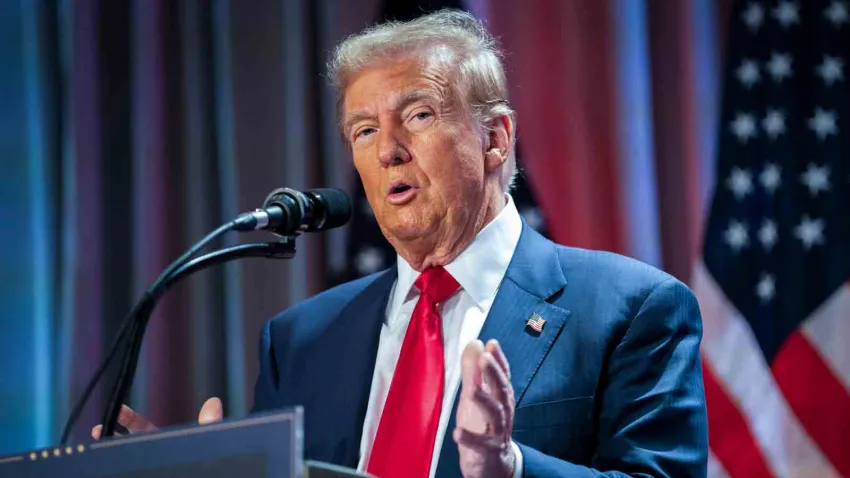
President-elect Donald Trump has issued a stark warning to BRICS nations—Brazil, Russia, India, China, and South Africa—over their efforts to reduce reliance on the US dollar in global trade. Trump threatened to impose 100% tariffs on these countries should they proceed with plans to establish a new BRICS currency or promote alternative currencies to challenge the dominance of the US dollar.
Trump’s Message to BRICS Nations
In a post on his Truth Social platform, Trump wrote:
“We require a commitment… that they will neither create a new BRICS currency nor back any other currency to replace the mighty US dollar or they will face 100 percent tariffs.”
This statement underscores Trump’s protectionist stance as he prepares to take office in January. The warning comes on the heels of the BRICS summit held in October in Kazan, Russia, where member nations explored strategies to boost non-dollar transactions and strengthen local currencies.
BRICS Currency Plans and Challenges
The BRICS group, which has grown significantly since its inception in 2009 to include nations like Iran, Egypt, and the UAE, represents a substantial share of the global economy. At the Kazan summit, the coalition endorsed measures to enhance local currency settlements and expand correspondent banking networks within member states as part of the BRICS Cross-Border Payments Initiative.
However, Russian President Vladimir Putin tempered expectations for a unified BRICS currency or an alternative to the SWIFT financial messaging system.
“As for SWIFT and any alternatives, we have not created and are not creating any alternatives,” Putin stated. “As for a unified BRICS currency, we are not considering that question at the moment.”
Trump’s Protectionist Agenda
Despite the lack of immediate progress on a BRICS currency, Trump’s comments reflect his concern over potential challenges to the dollar’s supremacy in international trade.
“If BRICS countries continue with their plans, they should expect to say goodbye to selling into the wonderful US economy,” Trump warned. “There is no chance that the BRICS will replace the US dollar in international trade, and any country that tries should wave goodbye to America.”
The remarks align with Trump’s broader protectionist policies, which include threats of hefty tariffs on both neighboring countries and economic rivals.
Economic and Diplomatic Implications
Trump’s rhetoric signals potential trade confrontations with BRICS nations, which could exacerbate global economic tensions. The BRICS coalition’s push for alternatives to dollar-dominated trade stems from dissatisfaction with perceived US financial hegemony and sanctions policies.
Observers suggest that the growing emphasis on local currencies and reduced reliance on the dollar reflects a shifting global economic landscape. Still, the feasibility of these plans remains uncertain, with many hurdles to overcome before a unified BRICS currency or alternative financial system can be realized.
As Trump prepares to take office, his protectionist stance and aggressive trade policies could define US relations with the BRICS nations, setting the stage for a potentially volatile period in international trade and diplomacy.