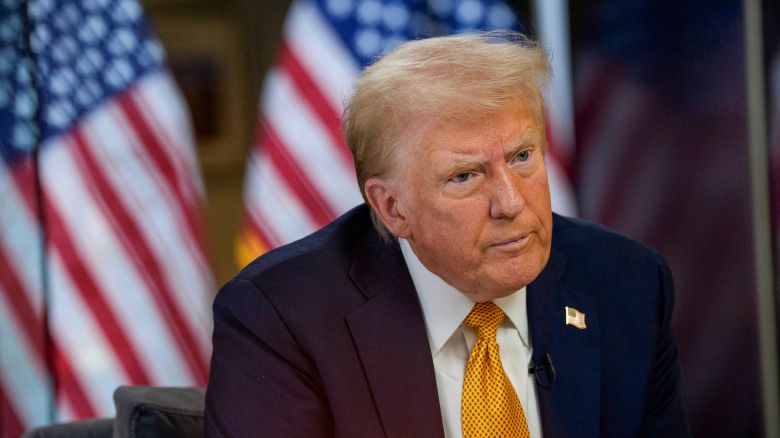
United States President-elect Donald Trump has announced an ambitious and controversial plan to crack down on illegal immigration during his upcoming term, including ending birthright citizenship and initiating mass deportations.
In an interview aired Sunday on NBC’s Meet the Press, Trump outlined his vision for a stringent immigration policy, which he intends to declare a national emergency immediately after taking office on January 20, 2025. His proposals include the deportation of millions of unauthorized immigrants and the revocation of citizenship for children born on U.S. soil to undocumented parents.
Sweeping Deportation Plan
Trump’s administration plans to deport over 11 million undocumented immigrants residing in the U.S., according to estimates by the Department of Homeland Security as of January 2022. Acknowledging the difficulty of the task, Trump said:
“I think you have to do it. It’s a very tough thing to do. You know, you have rules, regulations, laws.”
The President-elect has promised to bolster immigration enforcement with significant funding increases and has tapped Tom Homan, his incoming border czar, to lead the efforts. The plan would require Congress to approve an additional $88 billion annually to facilitate mass deportations, according to the American Immigration Council.
Ending Birthright Citizenship
A cornerstone of Trump’s immigration reform is his pledge to end birthright citizenship on his first day in office. This policy, enshrined in the 14th Amendment of the U.S. Constitution and reaffirmed by an 1898 Supreme Court ruling, grants citizenship to anyone born on American soil, regardless of their parents’ immigration status.
Trump has criticized the policy as a loophole exploited by undocumented immigrants and vowed to address it through an executive order. However, he acknowledged the legal complexities, suggesting the possibility of pursuing a constitutional amendment:
“We’ll maybe have to go back to the people,” he said, referencing the potential need for public or legislative support to make the change.
Consideration for “Dreamers”
While advocating for strict enforcement, Trump hinted at possible protections for “Dreamers,” individuals brought to the U.S. as children who qualify under the Deferred Action for Childhood Arrivals (DACA) program. During his first term, Trump attempted to dismantle DACA but faced resistance from the Supreme Court. His latest remarks suggest a willingness to negotiate limited safeguards for this group as part of broader immigration reforms.
Cost and Criticism
The implementation of Trump’s immigration policies would require substantial resources and likely face significant legal and political hurdles. Critics argue that ending birthright citizenship would violate constitutional principles and exacerbate social divisions.
Additionally, mass deportations on the scale proposed by Trump could disrupt families and strain local economies reliant on immigrant labor. Advocacy groups, legal experts, and civil rights organizations have already signaled plans to challenge these measures in court.
Global Repercussions
Trump’s proposals are expected to spark international debate, with potential diplomatic ramifications. Countries with high emigration rates to the U.S. may face increased pressure to reintegrate large numbers of deportees, while human rights organizations have expressed concerns over the humanitarian impact of such sweeping actions.
As Trump prepares to assume office, the coming months are likely to see fierce legal battles, public protests, and heated debates over the future of U.S. immigration policy.