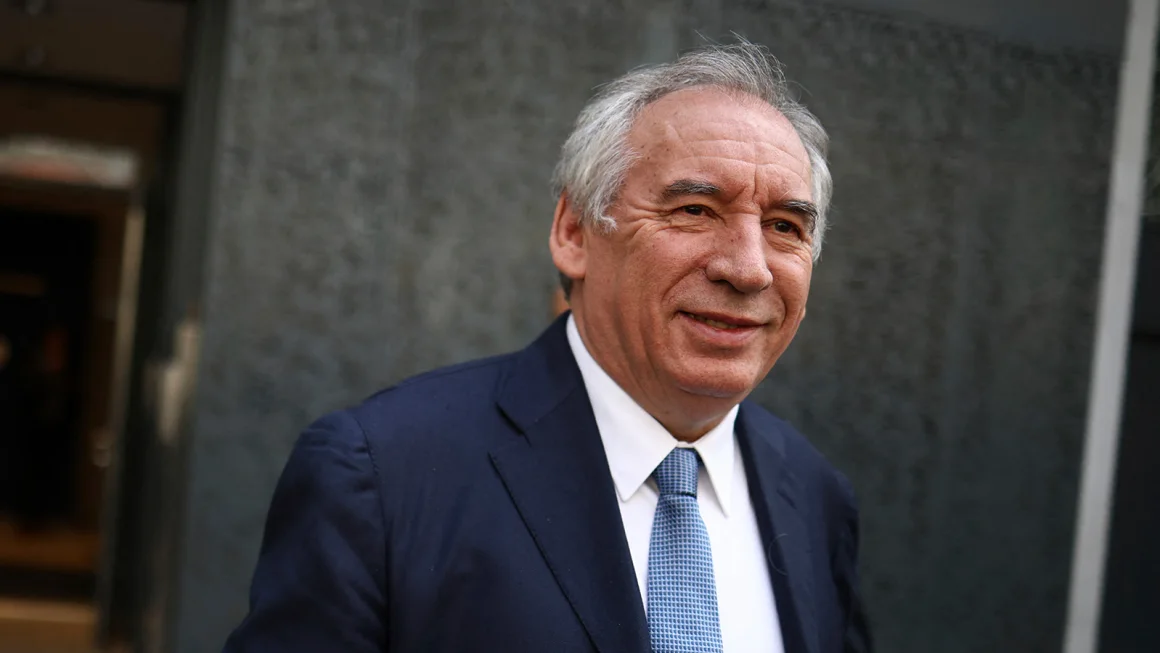
In a bid to stabilize his government and reclaim authority, French President Emmanuel Macron has appointed Francois Bayrou as the country’s new prime minister. The announcement, made on Friday, follows a week of political upheaval sparked by the resignation of former Prime Minister Michel Barnier, who lost a no-confidence vote in parliament.
Bayrou, a seasoned centrist politician and ally of Macron, assumes office at a critical juncture, tasked with navigating a fractured parliament and addressing a political crisis that has eroded the president’s influence.
A New Chapter Amid Crisis
President Macron’s decision to appoint Bayrou reflects a strategic move to consolidate support across political divides. However, Bayrou faces the daunting challenge of passing key legislation, including the national budget, through a deeply polarized National Assembly. The parliament is split between Macron’s centrist allies, a resurgent left-wing opposition, and a formidable far-right bloc.
In a statement, the Élysée Palace expressed confidence in Bayrou’s ability to “build consensus and advance reforms necessary for the progress of the French Republic.”
Bayrou’s Political Experience
Francois Bayrou, leader of the Democratic Movement (MoDem), has long been a prominent figure in French politics. Known for his centrist views and reputation as a mediator, Bayrou served as Minister of Justice under Macron’s first government and has maintained a close working relationship with the president.
Political analysts believe his appointment aims to bridge gaps within the divided parliament and quell growing public dissatisfaction with the government’s performance.
Key Challenges Ahead
Bayrou’s immediate priority will be to present and secure approval for the national budget. The process is expected to be fraught with tension, as opposition parties from both ends of the political spectrum have vowed to resist Macron’s policies.
Additionally, Bayrou must address the broader discontent among French citizens, who have increasingly voiced frustration over economic stagnation, social inequality, and perceived government inefficiencies.
The left-wing bloc, led by La France Insoumise, has criticized Macron’s administration for prioritizing corporate interests, while the far-right National Rally has accused the government of failing to protect French sovereignty and culture.
A Test for Macron’s Leadership
Bayrou’s appointment is seen as a litmus test for President Macron’s ability to maintain control over a government that has struggled to deliver on its promises. Macron, who secured a second term in office last year, has faced mounting challenges in uniting a fractured nation and navigating Europe’s shifting geopolitical landscape.
Observers are closely watching how Bayrou navigates the political minefield ahead, with many viewing his success as crucial to the survival of Macron’s presidency.
A Nation at a Crossroads
As Bayrou steps into his new role, France finds itself at a crossroads, grappling with political uncertainty and pressing socio-economic challenges. Whether the new prime minister can deliver stability and progress remains to be seen, but his appointment marks a pivotal moment in Macron’s administration.