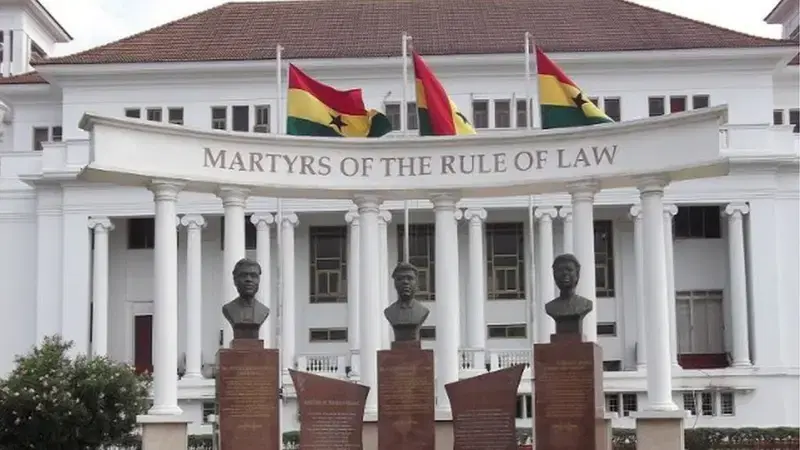
Ghana’s Supreme Court on Wednesday dismissed two legal challenges against the contentious Sexual Rights and Family Values Bill, which imposes strict penalties on LGBTQ activities. The ruling paves the way for the bill, already approved by Parliament in February, to potentially become law if signed by outgoing President Nana Akufo-Addo.
Background on the Bill
The legislation has sparked widespread international condemnation while enjoying significant public support in Ghana, a socially conservative West African nation. The bill stipulates prison sentences ranging from six months to three years for individuals engaging in LGBTQ relationships or activities.
Despite its approval by Parliament earlier this year, the bill requires presidential assent to be enacted into law. President Akufo-Addo, who leaves office on January 7 after completing his second term, has refrained from taking a stance, citing the need for clarity on the bill’s constitutionality from the Supreme Court.
Supreme Court’s Ruling
Delivering the judgment, Justice Avril Lovelace-Johnson, leading a seven-member panel of judges, stated, “It will be premature for this court to exercise its interpretive and enforcement jurisdiction to intervene. Consequently, the action fails.”
Justice Lovelace-Johnson emphasized that the Supreme Court could not rule against the legislation until it receives presidential assent, noting, “Until there is presidential assent to the bill, there is no act of which the Supreme Court will use its supervisory jurisdiction to overturn.”
The cases were brought forward by prominent figures, including Ghanaian broadcaster Richard Dela-Sky and university researcher Amanda Odoi, who argued the bill was unconstitutional and infringed on fundamental human rights.
Reactions and Concerns
The ruling has drawn sharp criticism from human rights advocates and international observers. Several countries, including the United States, have expressed concern about the bill, warning it undermines human rights and risks isolating Ghana on the global stage.
Ghana’s finance ministry has also raised alarms, cautioning that the legislation could jeopardize billions of dollars in World Bank funding and harm the country’s economic relationships.
Next Steps
As the Supreme Court has effectively removed legal obstacles, the decision now rests with President Akufo-Addo to either sign the bill into law or veto it before his term ends. His choice will likely have significant ramifications for Ghana’s international standing and domestic politics.
The ruling highlights a broader debate in Ghana and across Africa about LGBTQ rights, as similar legislation has been introduced in several neighboring countries. The outcome in Ghana could set a precedent for how the region approaches this contentious issue in the future.