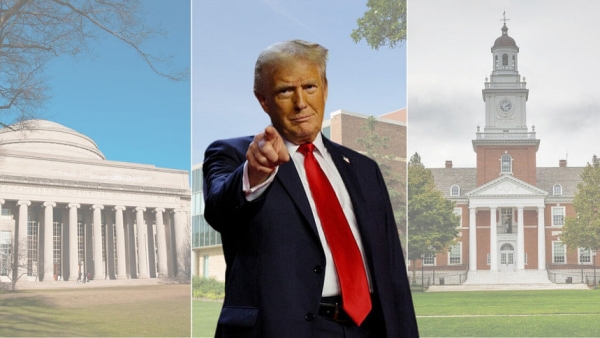
As President-elect Donald Trump prepares to return to the White House, U.S. universities are issuing urgent warnings to international students, including many Nigerians, about potential visa complications stemming from expected immigration policies.
During Trump’s first term, his administration enacted a travel ban targeting several predominantly Muslim countries, which caused significant disruptions for international students. In light of his impending inauguration on January 20, universities are encouraging students to return to the United States as a precautionary measure.
The University of California, Berkeley, posted a cautionary statement on its international student website, referencing the travel restrictions imposed during Trump’s initial administration. “Out of an abundance of caution, we are recommending a return to the United States prior to January 20,” the statement advised, acknowledging the uncertainty surrounding whether similar policies might be reinstated or legally challenged.
Cornell University’s Office of Global Learning issued a comparable alert, suggesting that a travel ban could “go into effect soon after inauguration” and might target countries previously affected under Trump’s administration, including Kyrgyzstan, Nigeria, Myanmar, Sudan, Tanzania, Iran, Libya, North Korea, Syria, Venezuela, Yemen, and Somalia.
“Students, faculty, and staff from these countries should be back in the U.S. before the term begins on January 21,” Cornell advised in its statement.
Columbia University also weighed in, with university spokesperson Samantha Slater emphasizing the institution’s proactive approach to monitoring government transitions. “As we do with administrative changes at all levels of government, Columbia is gathering relevant information on the incoming administration. We encourage international students to return to campus before the semester’s start date to avoid potential travel delays,” Slater said in an email to the Columbia Spectator.
Concerns Heightened by Past Policies and Rhetoric
Trump’s first term saw the implementation of the controversial “Muslim ban,” which blocked citizens from several Muslim-majority countries from entering the U.S. The policy sparked widespread protests and legal battles. More recently, Trump has expressed intentions to revoke visas for foreign students he considers “radical anti-American and anti-Semitic,” further stoking concerns among the international academic community.
Amid this backdrop, Trump has also proposed a more welcoming policy for some international students, suggesting in a June interview with The All-In Podcast that students graduating from U.S. universities should automatically receive green cards to remain in the country. However, these remarks stand in contrast to the Republican Party’s broader anti-immigration rhetoric, leaving many students uncertain about what lies ahead.
Growing Anxiety Among International Students
The warnings from universities reflect a broader unease among international students who fear being caught in the crossfire of shifting immigration policies. For students from countries previously targeted by travel bans or heightened scrutiny, the prospect of being unable to re-enter the U.S. to resume their studies looms large.
With Trump’s inauguration date fast approaching, universities are urging their international communities to act swiftly. Students are advised to consult their school’s international offices for guidance and make travel arrangements as soon as possible to avoid potential complications.
As the political climate evolves, U.S. universities remain committed to supporting their international students, offering resources and guidance to navigate these uncertain times.