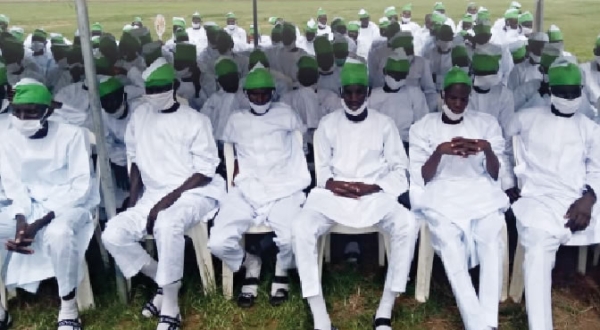
The Federal Government of Nigeria has spent approximately N1.4 billion over the last year and six months on the rehabilitation of repentant terrorists and the establishment of centres for terrorism trials, according to investigations by PUNCH.
The spending is part of efforts to strengthen the National Counter-Terrorism Centre (NCTC), which was established following the passage of the Terrorism (Prevention and Prohibition) Bill, signed into law by former President Muhammadu Buhari on May 12, 2022. In December 2022, the government announced plans to create two centres for the disarmament, deradicalisation, rehabilitation, and reintegration of former Boko Haram members and other extremists.
Funding Breakdown
Data from GovSpend, a civic technology platform, reveals that between December 2022 and May 2024, the Federal Ministry of Justice allocated N1.4 billion to these projects. On March 27, 2023, the ministry disbursed N612 million to three firms for various projects under Operation Safe Corridor. These included renovating abandoned structures for terrorism case trials and constructing dormitories for rehabilitation.
- N286.7 million was paid to El-Haby Concept Limited for renovating and furnishing a building for terrorism case trials at Giwa Barracks.
- N21.5 million went to Interprise Limited as consultancy fees for designing and supervising facilities for repentant terrorists.
- N303.7 million was given to Fosab Global Energy Service Limited as part of payments for constructing the rehabilitation centre.
In 2024, the ministry spent an additional N179 million on similar projects, including payments for computers and accessories to support terrorism prosecutions.
Secret Trials and Controversy
The NCTC revealed that between July and December 2024, over 325 terrorists were convicted during secret trials at the Kainji Detention Facility. Sentences ranged from death penalties to life imprisonment and terms of 20 to 70 years.
However, the secretive nature of these proceedings has sparked criticism from security experts and civil society organisations. Experts like Lekan Jackson-Ojo and Chidi Omeje have questioned the lack of transparency, arguing that open trials are essential for accountability and justice.
Kabir Adamu, another security expert, defended the government’s decision, citing security concerns and the sensitive nature of terrorism cases. “While secrecy may be warranted in some cases, the trials must adhere to standard procedures to ensure fairness and transparency,” Adamu stated.
Looking Forward
Despite completing Phase 5 and Phase 6 trials, the government has yet to announce when Phase 7 trials will begin. Efforts to obtain clarification from the Office of the Attorney General of the Federation were unsuccessful.
As Nigeria continues its fight against terrorism, debates over resource allocation, transparency, and justice remain central to the discourse, reflecting the complexity of addressing the aftermath of insurgency while upholding the rule of law.