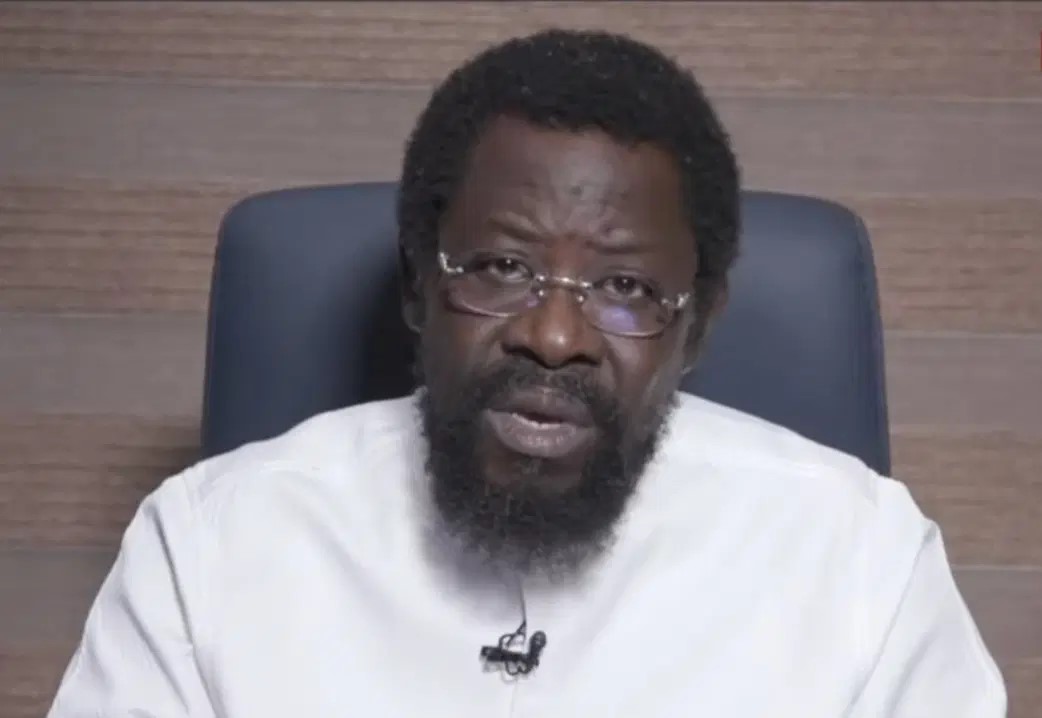
Human rights activist Dele Farotimi has publicly thanked Nigerians for their unwavering support during his nearly three-week detention over alleged defamation charges.
Farotimi was arrested on December 3 at his Lagos office by officers of the Ekiti State Police Command. He was subsequently transferred to Ekiti State, where he faced accusations of defaming renowned Senior Advocate of Nigeria, Afe Babalola, in his book Nigeria and Its Criminal Justice System.
Held in custody for 21 days, Farotimi regained his freedom on December 24 after fulfilling stringent bail conditions. These conditions included a ₦30 million bond, two sureties (one a property owner), the surrender of his international passport, and a commitment not to grant media interviews following his release.
Confirming his release, former presidential candidate Omoyele Sowore took to social media, stating, “I am pleased to report that Dele Farotimi is no longer being held at the prison yards in Ekiti State and is now returning home to Lagos.”
In a heartfelt live video shared after his release, Farotimi became emotional as he expressed his gratitude to Nigerians for rallying behind him.
“I am deeply moved,” he said, fighting back tears. “We often lose our humanity when we identify solely as Nigerians, but you all overlooked my ethnicity and religion to stand for justice. Nigeria didn’t happen to me because people spoke for me.”
He attributed his release to the collective solidarity of Nigerians from various walks of life, emphasizing how their voices and advocacy transcended societal divisions.
Farotimi’s arrest and subsequent detention sparked widespread criticism from human rights groups and activists, who described the charges against him as an attempt to suppress dissent and stifle free speech. His case became a rallying point for advocates of justice and accountability, culminating in a groundswell of support that ultimately led to his release.
As Farotimi resumes his activism, many observers are calling for continued vigilance against the misuse of legal systems to intimidate critics and undermine democratic principles in Nigeria.