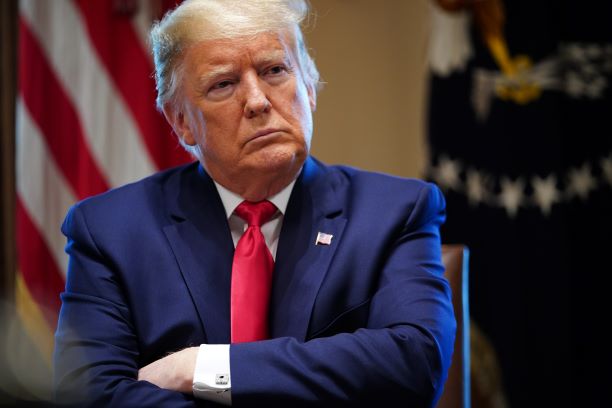
In a dramatic political development on Monday, former U.S. President Donald Trump reignited his controversial proposal for a merger between the United States and Canada, following the unexpected resignation of Canadian Prime Minister Justin Trudeau.
Trump took to his social media platform to pitch the idea of a unified North American nation. “If Canada merged with the US, there would be no tariffs, taxes would go way down, and they would be totally secure from the threat of the Russian and Chinese ships that are constantly surrounding them,” Trump wrote. “Together, what a great Nation it would be!!!”
The bold statement came just hours after Trudeau announced he would be stepping down as prime minister once the ruling Liberal Party selects a new leader. His resignation follows months of declining popularity, internal party strife, and mounting calls from top Liberal allies to step aside.
Trudeau, who has been in power since 2015, made the announcement during a press conference in Ottawa. “I intend to resign as party leader, as Prime Minister, after the party selects its next leader,” he told reporters. The prime minister’s departure marks the end of an era in Canadian politics that began with his landslide election victory nearly a decade ago.
While the timeline for Trudeau’s exit remains uncertain, he confirmed that the leadership race within the Liberal Party would be a “robust, nationwide competitive process.” Until then, Trudeau will continue to serve as a caretaker leader, overseeing Canada’s government during a crucial transition period.
The timing of Trudeau’s resignation aligns with Trump’s return to political power in the United States. With Trump set to assume office later this month, the possibility of strained U.S.-Canada relations looms large. Trump has previously threatened to impose a 25 percent tariff on all Canadian imports, a move that economists warn could wreak havoc on Canada’s economy. Trudeau had vowed to retaliate with countermeasures if such tariffs were implemented.
Political analysts believe Trudeau’s resignation could have significant implications for Canada’s handling of upcoming negotiations with Trump’s administration. “Trudeau’s exit creates uncertainty in Canada’s approach to the new U.S. leadership,” said political commentator Susan Myers. “The country will need strong leadership to navigate the potential trade wars and economic fallout.”
Trump’s proposal for a U.S.-Canada merger, while not new, remains a highly contentious topic. Critics argue that the idea undermines Canadian sovereignty and national identity, while supporters claim it could bring economic and security benefits to both countries.
Trudeau’s political journey has been marked by both triumphs and challenges. When he took over the leadership of the Liberal Party in 2013, he was widely seen as a fresh face in Canadian politics, though many noted his famous lineage. His father, Pierre Elliott Trudeau, served as one of Canada’s most iconic prime ministers, leaving a legacy of progressive policies and national unity.
Despite his early popularity, Trudeau’s government faced increasing criticism in recent years over issues such as ethics scandals, inflation, and pandemic management. The political crisis reached a boiling point in recent months, with several high-profile Liberal Party members publicly calling for change at the top.
As Canada prepares for its next chapter, the country’s political landscape remains in flux. The Liberal Party’s search for a new leader will be closely watched, with potential candidates already jockeying for position. Meanwhile, the possibility of a Trump-led U.S. government pursuing aggressive trade policies or even a formal merger proposal will likely dominate headlines in both nations.
For now, Canadians are left wondering what the future holds for their nation’s political and economic relationship with its southern neighbor. Trudeau’s departure, combined with Trump’s provocative statements, signals a period of uncertainty and potential upheaval on the North American continent.