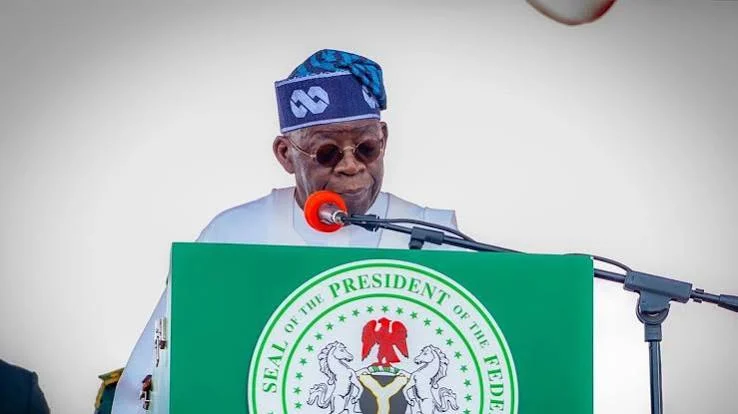
President Bola Tinubu has approved a new set of rules governing the conduct of Nigeria’s military personnel, expressly banning homosexuality, body piercings, tattoos, and disorderly behavior both on and off duty. The revised Harmonised Armed Forces Terms and Conditions of Service (HAF-TACOS), signed into law on December 16, 2024, outlines strict guidelines aimed at reinforcing military discipline and upholding ethical standards within the armed forces.
The new directive prohibits personnel from engaging in same-sex relationships, cross-dressing, and bestiality, labeling such acts as incompatible with the ethics of the armed forces. The policy also forbids amorous relationships between officers and subordinates, involvement in secret societies, and political affiliations.
Explicit Ban on LGBTQ+ Activities
Section 26 of the document explicitly bans all forms of LGBTQ+ activities within the military. It states:
“An officer must not engage in homosexuality, lesbianism, and bestiality. He/she is not to belong to, or engage in activities of the Lesbian, Gay, Bisexual, Transgender or Trans, Queer or Questioning, Intersex, Asexual or Agender, Two-Spirit (LGBTQIA2S+) group and cross-dressing, amongst others.”
The move reinforces Nigeria’s anti-LGBTQ+ stance, which is already enshrined in the country’s Same-Sex Marriage (Prohibition) Act of 2014. The military directive further solidifies the exclusion of LGBTQ+ individuals from the armed forces, with violators facing severe disciplinary action.
Ban on Tattoos, Body Piercing, and Drunkenness
Military personnel are also barred from tattooing and body piercing, regardless of whether they are on or off duty. The document emphasizes that soldiers must maintain a professional appearance and avoid any form of disorderly conduct, including brawls or public disgrace.
Additionally, the rules strictly prohibit drunkenness, stating:
“An officer must not at any time be drunk, whether on or off duty.”
Amorous Relationships and Financial Obligations
The new code of conduct forbids military personnel from engaging in amorous relationships with subordinates or their spouses. Officers are warned against inappropriate relationships that could compromise the chain of command or military discipline.
Personnel are also mandated to meet their financial obligations, including vehicle licenses and insurance payments. Failing to do so, or issuing a dud cheque, is considered a serious offence.
The document warns:
“An officer shall pay all just financial obligations in a proper and timely manner, especially those imposed by law and mutual contract. It is a very serious offence for an officer to be apprehended for failure to license or insure his vehicle and other legal financial obligations.”
Ban on Private Business and Misuse of Government Property
The directive also prohibits officers from engaging in private businesses while in service. It specifically forbids the use of government property for personal gain, as well as using one’s position or rank to influence commercial enterprises.
Furthermore, officers are instructed not to accept gifts, favours, or entertainment from subordinates to avoid compromising their authority.
No Membership in Secret Societies or Political Parties
The revised guidelines bar officers from holding membership in secret societies or political parties. They are also forbidden from participating in any form of political activities, even in observatory capacities.
The document clarifies that cultural and traditional religious societies that are open in membership and conduct are exempt from the ban.
“An officer shall not hold membership of any secret society or political party. He shall not participate, in any way, in activities concerned with such societies or parties, even in observatory capacities.”
Penalties Not Stated
While the new code outlines prohibited behaviors, it does not specify the punishments or disciplinary measures for violators. It remains unclear what consequences personnel will face for breaching these rules.
Analysts believe that the new guidelines are part of a broader effort to maintain discipline and uphold the reputation of Nigeria’s armed forces, especially as the country continues to face internal and external security challenges.
With these stringent measures in place, President Tinubu’s administration aims to strengthen the moral fabric of Nigeria’s military and ensure that officers maintain professional standards in both their personal and professional lives.