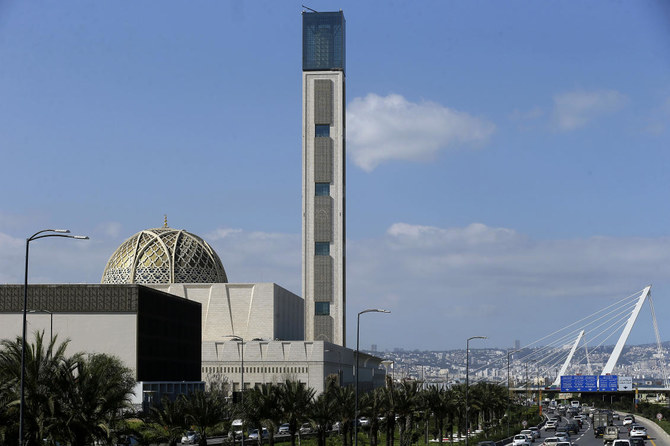
Algeria has revealed the completion of a monumental mosque along its Mediterranean coastline, marking a significant architectural achievement following a period of political unrest that hindered its construction progress.
The inauguration of the mosque, known as the “Great Mosque of Algiers,” took place on Sunday, with Algerian President Abdelmadjid Tebboune officiating the ceremony, as reported by the Associated Press.
Constructed by a Chinese construction firm throughout the 2010s, the Great Mosque of Algiers boasts the world’s tallest minaret, towering at an impressive height of 265 meters (869 feet). It is not only recognized as the largest mosque in Africa but also the third-largest globally. Situated outside Islam’s holy cities, the mosque accommodates a vast prayer room capable of holding up to 120,000 worshippers.
In addition to its grandeur, the mosque is equipped with modern amenities, including a helicopter landing pad and a library capable of housing up to one million books.
Despite its remarkable features, the mosque’s construction journey was fraught with challenges, including delays and disputes spanning seven years. One notable point of contention was the selection of the construction site, which some experts cautioned against due to its susceptibility to seismic activity.
However, the Algerian state dismissed these concerns, refuting claims of seismic risks in a statement released on Sunday via APS, the state news agency website.
The ambitious project came with a hefty price tag, amounting to $898 million. Former Algerian President Abdelaziz Bouteflika initiated the mosque’s construction, envisioning it as a landmark contribution and aiming to name it after himself, mirroring the Mosque Hassan II in Casablanca, Morocco.
The Mosque Hassan II, dedicated to the former King of Morocco, had previously held the title of Africa’s largest mosque, symbolizing the rivalry between neighboring Algeria and Morocco in claiming architectural supremacy in the region.