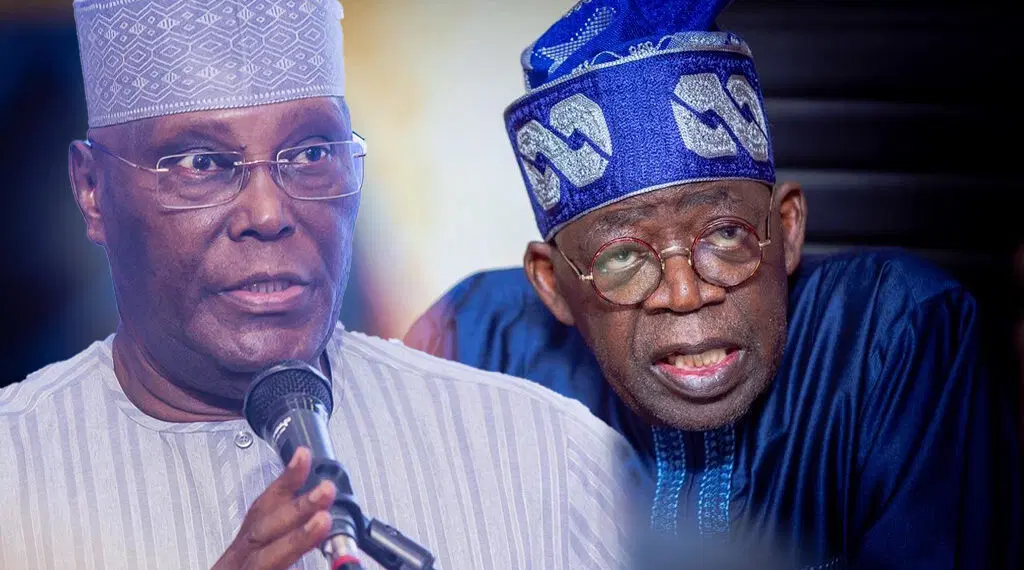
Former Vice President Atiku Abubakar has called on President Bola Tinubu to apologise to Nigerians and resign, citing what he described as a deepening credibility crisis surrounding the Presidential Foreign Investment Promotion Council (PFIPC) accounts controversy.
In a statement issued on Wednesday by his Senior Special Assistant on Public Communication, Phrank Shaibu, the African Democratic Congress (ADC) presidential candidate said conflicting testimonies from the Central Bank of Nigeria (CBN) and the Office of the Accountant-General of the Federation (OAGF) had raised serious questions about transparency and accountability within the federal government.
Atiku argued that the differing accounts presented by the two financial institutions before the House of Representatives had undermined public confidence in the Tinubu administration. He said the president should either order an independent investigation into the matter or accept responsibility by stepping down from office.
According to the former vice president, the contradictory positions taken by the CBN and the OAGF point to a broader crisis of credibility, insisting that Nigerians deserve a clear explanation of the disputed transactions.
He also criticised President Tinubu for remaining silent on the issue, warning that continued inaction would only fuel public suspicion. Atiku maintained that the president must clarify which version of events he accepts or explain why no decisive action has been taken.
The former vice president further faulted the Attorney-General of the Federation for not addressing the controversy, describing the silence as unhelpful in resolving the matter.
Atiku urged the National Assembly to summon both the Accountant-General of the Federation and the Governor of the Central Bank of Nigeria to appear jointly before its investigative committee under oath to provide a comprehensive account of the disputed transactions.
He added that the PFIPC controversy had evolved beyond questions about financial records, describing it as a test of accountability, institutional oversight and the credibility of the current administration.