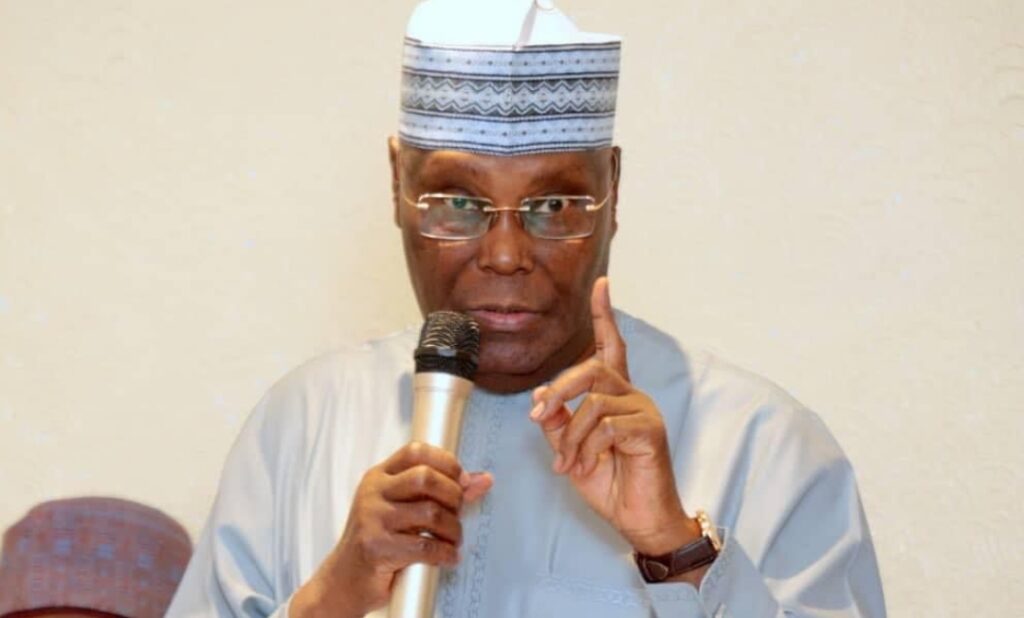
Former Vice President Atiku Abubakar has said he would consider restoring the petrol subsidy if elected president in 2027, arguing that Nigerians have yet to see how the funds saved from the policy have been used.
Atiku, who is the presidential candidate of the African Democratic Congress, ADC, made the remarks during an interview with BBC Hausa published on Friday while addressing questions about worsening economic hardship, food shortages and the plight of vulnerable Nigerians.
The former vice president said he did not oppose the removal of the subsidy in principle but was concerned about the management and utilisation of the resources expected to be generated by the policy.
“I did not oppose the removal of the oil subsidy, but where is the money? Where did it go?” Atiku asked.
According to him, the savings should have been invested in programmes aimed at reducing poverty, improving education, creating jobs and addressing insecurity across the country.
“It was intended to reduce poverty and help children attend school. Where is the money now?” he asked.
Atiku alleged that the Federal Government had not adequately demonstrated to Nigerians how the resources generated from the removal of the subsidy had been spent.
“It seems they are just stealing it,” he alleged.
He said the severe hardship facing Nigerians was one of the reasons he was considering the restoration of the subsidy, particularly if the government could not show how the savings were being used to improve the lives of citizens.
The former vice president questioned reports of trillions of naira allegedly saved since the removal of the subsidy.
“They talk about 30 trillion, where is the money, what was done with it?” he asked.
Atiku maintained that the resources should have been channelled into poverty reduction, youth employment, education, security and other development programmes.
“If they had used the money for development, to solve security problems, for education, and to create opportunities for the youth, it would be different,” he said.
The former vice president also highlighted the growing challenge of youth unemployment, recalling his proposal during the last presidential election to allocate $10 billion as capital support for young Nigerians seeking to establish businesses.
“At that time, when we calculated it, we estimated that allocating $10 billion… the programs we could build for the youth would ultimately reduce hardship for nearly 70 to 80 percent of the beneficiaries through the programs we intended to run,” he said.
He argued that similar investments could have been made using the resources generated from the removal of the subsidy to tackle unemployment and improve living conditions.
“Steps should have been taken to reduce poverty, curb youth unemployment, and tackle insecurity, among other issues,” Atiku said.
He stressed that his position was not simply an objection to subsidy removal but a demand for accountability over the savings generated by the policy.
“If elected, I will bring back the oil subsidy, and whoever stole the money must refund it,” he said.
However, Atiku added that his administration could still remove the subsidy if the funds generated were properly managed and channelled towards programmes that directly benefit Nigerians.
“If elected, I can remove the subsidy and use the money to do all these properly,” he added.
Atiku’s latest remarks come amid an intensifying political debate with the administration of President Bola Tinubu over the economic consequences of the removal of the petrol subsidy in 2023.
President Tinubu announced the end of the subsidy shortly after assuming office, arguing that the policy was no longer sustainable. The Federal Government has since maintained that the decision freed up resources for critical sectors of the economy.
However, Atiku has repeatedly challenged the government to account for the funds generated following the policy, insisting that Nigerians deserve to know how the savings have been utilised.
The subsidy issue is expected to remain a major subject of political debate ahead of the 2027 presidential election. While Atiku has pledged to restore it under certain circumstances, a presidential aide has criticised the proposal, arguing that it could create significant fiscal challenges for the government.
The debate has also focused on claims about the total resources generated since the removal of the subsidy. Recent reports cited Finance Minister Taiwo Oyedele as saying that the policy mobilised N15.8 trillion in additional resources for the Federation between June 2023 and December 2025.