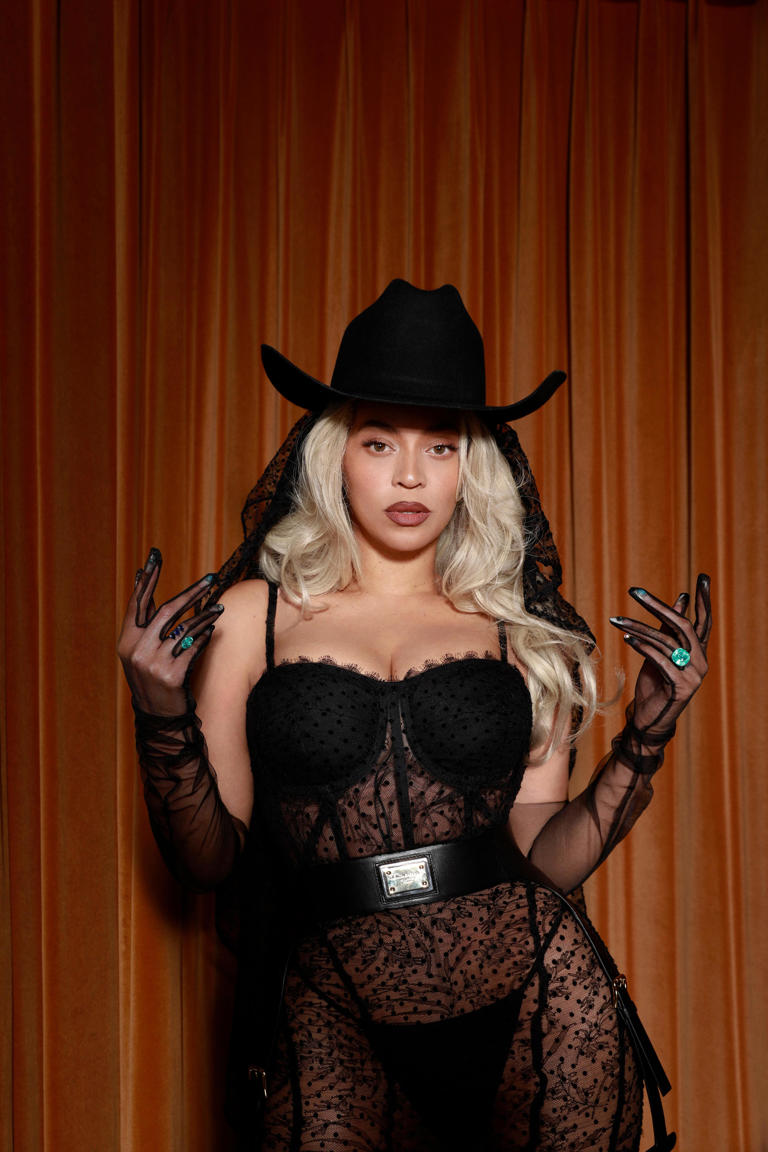

Beyoncé Knowles-Carter has shattered another glass ceiling in the music industry, becoming the first Black woman to claim the coveted top spot on Billboard’s Hot Country Songs chart. Her latest single, “Texas Hold ‘Em,” debuted at an impressive No. 1 position, marking a monumental achievement in her illustrious career.
But that’s not all – Beyoncé’s impact on the charts doesn’t stop there. Her track “16 Carriages” also made waves, securing the No. 9 spot on the Hot Country Songs chart, further solidifying her influence across multiple genres.
Billboard, the authority in music rankings, confirms Beyoncé’s dominance by revealing that she currently holds the No. 1 position on a staggering seven of their charts. From the Hot 100 to Hot Gospel Songs, Hot Dance/Electronic Songs to Hot Latin Songs, and Hot R&B Songs to Hot R&B/Hip-Hop Songs, Beyoncé reigns supreme, showcasing her versatility and widespread appeal.
This achievement is not just a milestone for Beyoncé but also a groundbreaking moment in the history of music charts. She becomes the first woman ever to top both the Hot Country Songs and Hot R&B/Hip-Hop Songs charts since their inception, highlighting her unparalleled talent and boundary-pushing artistry.
The significance of Beyoncé’s accomplishment is magnified when considering the historical context of Black artists on country music charts. While Black male artists like Louis Jordan and Nat King Cole made early strides in the genre, it wasn’t until 1969 that Charley Pride’s “All I Have to Offer You (Is Me)” reached No. 1 on the Hot Country Songs chart. Linda Martell’s “Color Him Father” followed suit, reaching No. 22 that same year, marking a pivotal moment for Black representation in country music.
Since then, progress has been gradual but notable. A handful of Black men have achieved chart-topping success on Billboard’s country charts, with Charley Pride leading the way. However, the journey for Black women has been more challenging, with only seven making notable appearances on the charts. Mickey Guyton notably reached No. 34 with her 2015 single “Better Than You Left Me,” reflecting the ongoing struggle for inclusivity and representation in the country music industry.
Beyoncé’s historic achievement not only celebrates her individual success but also serves as a beacon of hope and inspiration for aspiring artists and marginalized communities striving for recognition and acceptance in all facets of the music industry. As she continues to break barriers and defy expectations, Beyoncé’s legacy as a trailblazer and cultural icon remains unparalleled.