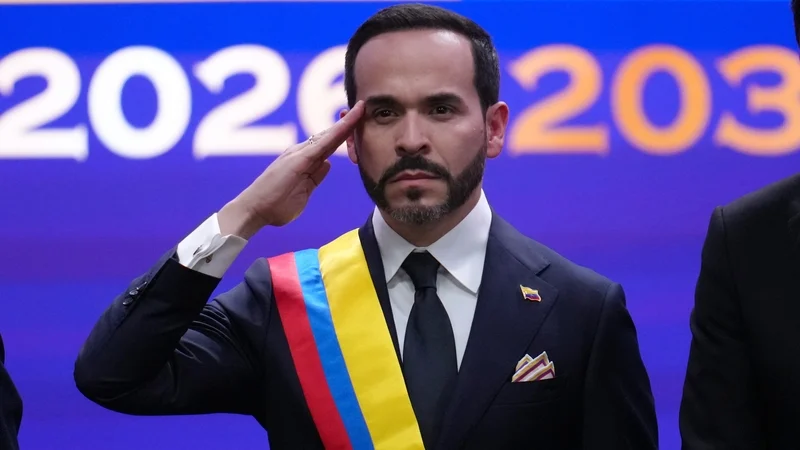
Colombia’s newly inaugurated President, Abelardo de la Espriella, has promised a sweeping crackdown on drug trafficking and armed criminal groups, declaring that his government will move aggressively to restore security and defeat what he described as “narco-terrorists.”
De la Espriella, a conservative political outsider and former lawyer, was sworn in as Colombia’s president on Friday, August 7, 2026, replacing left-wing leader Gustavo Petro. His inauguration marked a major shift in the country’s security and political direction, with the new president rejecting negotiations with armed groups in favour of a tougher military and law-enforcement approach.
Speaking to soldiers at a military base in Cali after his inauguration, De la Espriella said Colombia could no longer rely on dialogue with criminal and guerrilla organisations. He vowed to restore order and dismantle groups involved in drug trafficking, violence and illegal armed activity.
“The option of dialogue is completely exhausted,” he said, signalling an end to the peace-oriented strategy pursued by his predecessor.
The new president has accused armed groups of exploiting previous negotiations to expand their influence and strengthen their drug-trafficking operations. His administration is expected to place security at the centre of its early agenda, particularly in regions affected by cocaine production, illegal mining and armed violence.
De la Espriella has also pledged closer security cooperation with the United States. Washington has signalled strong support for the new administration, with the Trump administration announcing plans for significant security assistance to Colombia.
Among the measures associated with his hardline security agenda are increased military operations against armed groups, tougher action against drug-trafficking organisations and a possible resumption of aerial spraying of coca plantations.
The president’s approach represents a sharp departure from Petro’s “Total Peace” strategy, which sought negotiations with several armed and criminal groups. De la Espriella has argued that the policy failed to adequately contain the expansion of criminal organisations and Colombia’s drug trade.
His election and inauguration also signal a broader shift to the political right in Colombia and come amid growing concerns over violence, organised crime and the country’s high levels of cocaine production.
However, De la Espriella faces significant challenges, including a divided Congress, powerful criminal organisations and persistent violence in several parts of the country. His government will now have to demonstrate whether its promised military-focused strategy can reduce insecurity while addressing the economic and social conditions that have allowed Colombia’s illegal armed groups and drug networks to flourish.
For De la Espriella, the message at the start of his presidency was clear: his administration intends to abandon prolonged negotiations with armed groups and pursue a much more aggressive campaign to restore state control and defeat Colombia’s narco-terrorist organisations.