A Federal High Court in Lagos has declared unlawful the National Assembly’s controversial N110 billion expenditure on vehicles and allowances for lawmakers, ruling that the spending violated procurement regulations, constitutional provisions, and principles of public accountability.
Justice Yellim Bogoro delivered the judgment on May 6, 2026, in a suit filed by the Socio-Economic Rights and Accountability Project (SERAP) against Senate President Godswill Akpabio and Speaker of the House of Representatives Tajudeen Abbas.
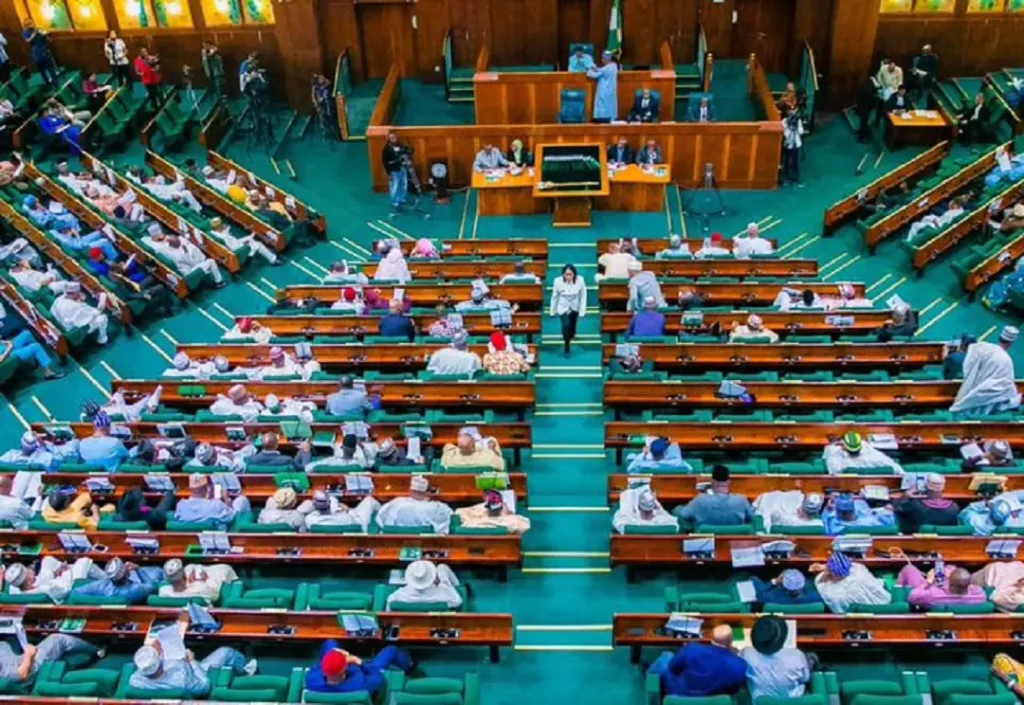
The court held that the allocation of N40 billion for the purchase of 465 vehicles and N70 billion in support allowances for newly elected lawmakers failed to meet legal standards governing public expenditure.
In addition to nullifying the spending, Justice Bogoro directed the leadership of the National Assembly to ensure that all future procurement and spending decisions strictly comply with due process, transparency, accountability, and value-for-money principles.
SERAP had instituted the suit in August 2023 after reports emerged that lawmakers planned to spend N40 billion on vehicles and N70 billion on support allowances despite worsening economic conditions across the country.
According to the court, the scale of the expenditure, combined with the absence of evidence showing compliance with procurement procedures, rendered the spending arbitrary and inconsistent with statutory requirements.
Justice Bogoro further ruled that the lawmakers who approved the expenditure were also its direct beneficiaries, describing the arrangement as a clear case of self-dealing and conflict of interest.
The judge noted that the court could not ignore Nigeria’s economic realities and the financial hardship faced by citizens, stressing that allocating such a large sum for lawmakers’ benefit reflected a failure to prioritize the public interest.
She rejected arguments by the defendants that the matter fell outside the court’s jurisdiction due to legislative autonomy, emphasizing that the doctrine of separation of powers cannot be used to shield unlawful conduct from judicial scrutiny.
“The court is concerned with the legality and constitutionality of legislative spending,” the judge stated, adding that public office should not be used for personal enrichment and that public officials must operate within constitutional limits and in good faith.
Justice Bogoro also held that the disputed expenditure undermined the fiduciary responsibility owed by public officials to Nigerians and was inconsistent with the oath of office required under the Constitution.
Addressing preliminary objections raised by the defendants, the court affirmed SERAP’s legal standing to bring the case, noting that Nigerian law now recognizes public-interest litigation and allows non-governmental organizations to challenge actions affecting public welfare.
The court also ruled that the absence of a formal pre-action notice did not invalidate the suit because the matter involved urgent issues of public interest.
SERAP Deputy Director Kolawole Oluwadare welcomed the judgment, describing it as a significant victory for transparency, accountability, and prudent management of public resources.
Human rights lawyer Femi Falana (SAN), who was quoted in SERAP’s statement, commended the ruling and argued that extravagant benefits for lawmakers could not be justified at a time when many Nigerians were grappling with economic hardship.
The court ultimately declared that the vehicle procurement and support allowances breached provisions of the Public Procurement Act, the Code of Conduct for Public Officers, and constitutional oath requirements, while ordering stricter compliance with due process in future legislative spending.