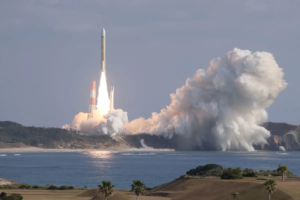
Japan’s space agency, JAXA, celebrated a triumphant launch of its long-awaited next-generation H3 rocket on Saturday, marking a significant milestone after years of setbacks and two previous failed attempts.
The H3 rocket, hailed as a potential competitor to SpaceX’s Falcon 9, promises to revolutionize space travel and could one day ferry cargo to lunar bases. Hiroshi Yamakawa, president of JAXA, expressed profound relief and joy, emphasizing the historic significance of the achievement.
The successful launch from the Tanegashima Space Center in southwestern Japan at 9:22 am (0022 GMT) was met with cheers and applause at the JAXA control center. Developed collaboratively by JAXA and Mitsubishi Heavy Industries, the H3 rocket represents a leap forward in terms of flexibility, reliability, and cost efficiency compared to its predecessor, the H-IIA launch system.
While the H3 is not reusable like SpaceX’s Falcon 9, its innovative technology offers greater thrust and cost-effectiveness, potentially making space exploration more affordable. Despite initial setbacks and technical challenges, scientists believe the H3’s unique design and capabilities could pave the way for groundbreaking advancements in space travel.
The successful launch comes on the heels of Japan’s recent achievement in landing an unmanned probe on the Moon, solidifying its position as a key player in space exploration. Despite delays caused by adverse weather conditions, Saturday’s launch marks a significant step forward in Japan’s quest for autonomous access to space and exploration of the solar system.