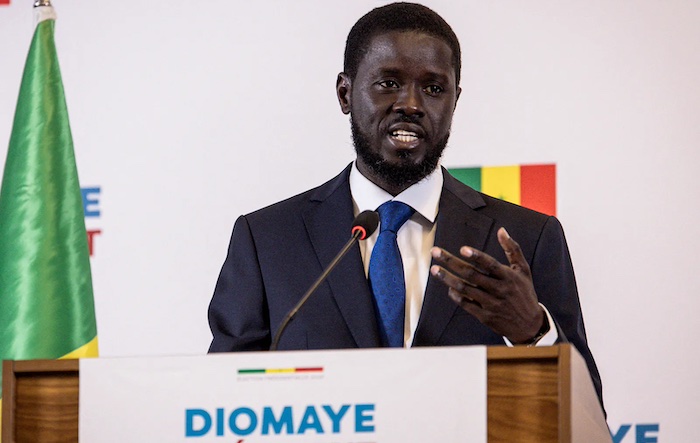
Senegalese President Diomaye Faye has launched a diplomatic effort to ease tensions between the Economic Community of West African States (ECOWAS) and the Alliance of Sahel States (AES), making Mali one of his first foreign destinations ahead of assuming leadership of the regional bloc.
Faye’s visit to Bamako comes at a critical moment for West Africa, as relations between ECOWAS and the military-led governments of Mali, Burkina Faso and Niger remain strained following their withdrawal from the regional organisation.
The Senegalese leader, who was elected Chairman of the ECOWAS Authority of Heads of State and Government during the bloc’s 69th Ordinary Summit in Abuja, is expected to officially take over leadership as the organisation confronts one of the biggest challenges in its five-decade history.
Political analysts view his decision to travel to Mali as an early indication that repairing ties with the AES will be a central focus of his chairmanship.
During meetings with Mali’s transitional leadership, Faye reportedly stressed the importance of maintaining dialogue despite political differences, arguing that regional stability, security and economic cooperation remain shared priorities for all West African nations.
Although neither side announced any agreement regarding Mali’s possible return to ECOWAS, officials familiar with the discussions described the talks as positive, suggesting both parties are willing to continue diplomatic engagement after months of frosty relations.
The renewed outreach comes as insecurity across the Sahel continues to worsen, with extremist violence posing significant threats to governments and communities across the region. Observers say closer cooperation between ECOWAS and the AES is increasingly important for tackling terrorism, strengthening border security, promoting trade and preserving the free movement of people.
Since taking office as Senegal’s president, Faye has consistently advocated diplomacy and dialogue rather than sanctions in addressing political crises involving Mali, Burkina Faso and Niger, maintaining that long-term regional peace requires sustained engagement with the military-led governments.
Relations between ECOWAS and the three countries deteriorated after successive military coups prompted the regional bloc to impose sanctions and demand a return to civilian rule. In response, the juntas accused ECOWAS of interfering in their internal affairs before announcing their withdrawal and creating the Alliance of Sahel States as an alternative political and security partnership.
The exit of the three Sahel nations significantly reshaped the regional landscape, reducing ECOWAS’ territorial reach and complicating efforts to coordinate security operations against armed extremist groups operating across the region.
With West Africa facing growing security, economic and humanitarian pressures, Faye’s diplomatic initiative has raised hopes that renewed engagement could help bridge divisions and lay the foundation for stronger regional cooperation.