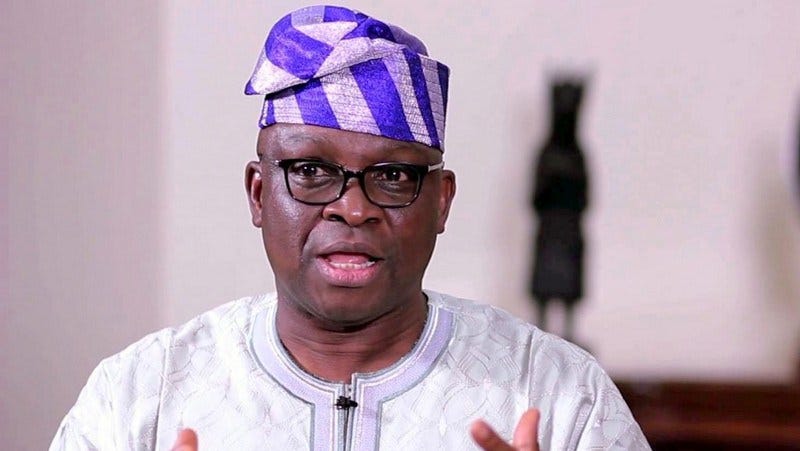

In a recent revelation, the National President of the Petroleum and Natural Gas Senior Staff Association of Nigeria (PENGASSAN), Festus Osifo, has asserted that the Federal Government of Nigeria is still providing subsidies for petroleum products. Osifo, who also holds the position of president at the Trade Union Congress (TUC), made this assertion during an appearance on Channels Television’s Politics Today program on Friday.
Osifo’s statement shed light on the ongoing subsidy situation in Nigeria, citing factors such as the cost of crude oil in the international market and the exchange rate between the Nigerian Naira and the US Dollar as key reasons for the continuation of subsidies by the government.
He remarked, “They [the government] are paying subsidy today. In reality today, there is subsidy because as of when the earlier price was determined, the price of crude in the international market was somewhere around $80 per barrel.”
Osifo went on to highlight the current market conditions, explaining, “But today, it has moved to about $93/94 per barrel for Brent crude. So, because it has moved, then the price [of petroleum] also needed to move.”
Furthermore, Osifo emphasized that in order for the government to discontinue the practice of subsidizing petroleum products, effective management of the exchange rate and increased supply of foreign exchange would be necessary. He stated, “So, if the exchange rate comes down today, we will not be paying subsidy. But with the exchange rate value and the price of crude oil in the international market, we have introduced subsidy.”
This disclosure by the PENGASSAN National President underscores the complexities and economic challenges faced by the Nigerian government in its efforts to manage petroleum product pricing and subsidy policies, particularly in the face of fluctuating global oil prices and currency exchange rates.