Written by: Musa Y.
Education Correspondent, Topflyers Magazine
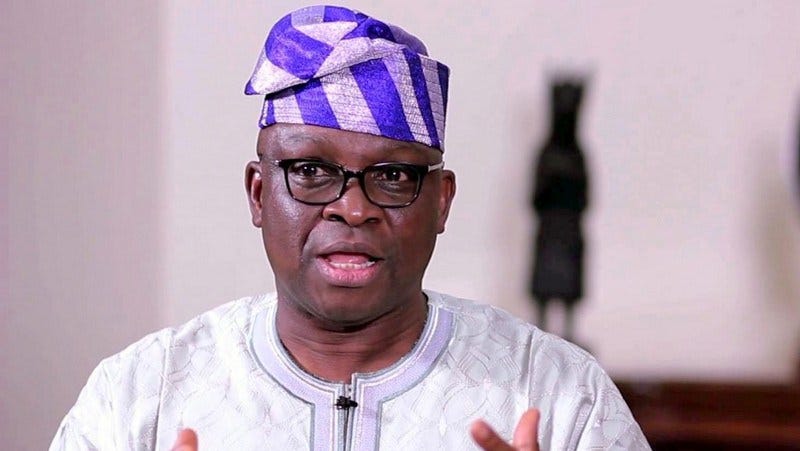
In a world still wrestling with the consequences of digital inequality and educational gaps, Mr. Hakeem Nafiu, a U.S.-based Nigerian scholar and international education consultant, has caught the attention of educators and policymakers for his groundbreaking contributions to early childhood education (ECE), teacher training, and the integration of educational technology in under-resourced communities. 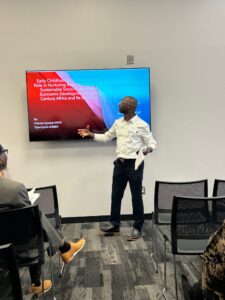
With an academic voice that echoes from American classrooms to African villages, Mr. Hakeem Nafiu has become a torchbearer for equity-centered, tech-powered education reform. His latest publication, “Enhancing Early Childhood Education through Technology Integration in U.S. Classrooms,” released in the June 2025 edition of the International Journal of Research and Innovation in Social Science (IJRISS), is already turning heads among policymakers, researchers, and global education bodies.
But this is no ivory tower paper gathering dust. Mr. Hakeem Nafiu’s research dives into the real world—tracking the use of digital storytelling, virtual manipulatives, and educational apps among 200 pre-K students and 50 educators across the U.S. What it reveals is urgent: technology has the potential to radically improve early learning—but only when it’s backed by infrastructure, teacher support, and inclusive policies.
“We can’t afford to treat access to learning technology as a luxury. It’s a fundamental right,” one education analyst remarked about the study. “Mr. Hakeem Nafiu’s work challenges leaders to take that seriously.”
What makes his research so powerful is not just the data—but the heart behind it. Born and raised in Nigeria, Mr. Hakeem Nafiu carries with him a deep commitment to rebalancing the scales of opportunity for children globally. And his impact has been building for years.
At the University of Georgia’s African Diaspora Conferences, Mr. Hakeem Nafiu made waves with presentations that connect early learning to cultural identity, ethics, and even spiritual development. This latest publication builds on years of sustained scholarly visibility. Mr. Hakeem Nafiu has presented at two high-level international education conferences hosted by the University of Georgia. 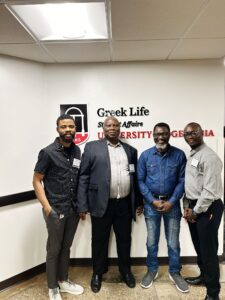
His 2019 paper, “Analysis of Maria Montessori’s Philosophy of Early Childhood Education and Its Implications for African Cultural Identity,” was presented during the African Diaspora Conference themed “Afrocentrism, Africanity, and the Emergence of the Global Africa Agenda.” in 2023, he returned to present his research titled “Early Childhood Education and Its Role in Nurturing Religious Values for Sustainable Socio-Cultural and Economic Development in 21st-Century Africa and Its Diaspora” at the 8th International Conference on Africa & Its Diaspora.
These presentations reflect his longstanding research interests, which include teacher professional development, educational leadership and ethics, philosophy of education, education policy and reform, and technology-enhanced learning in higher education.
This fusion of scholarship, culture, and practical reform is rare—and it’s changing conversations. Not just in conference rooms, but in ministries of education, school boards, and grassroots teacher circles across Africa and the diaspora.
Beyond academia, Mr. Hakeem Nafiu is the founder of OLAAN Global Academy, a platform dedicated to rethinking teacher training, early childhood instruction, and ethical educational leadership across Africa, North America, and the diaspora in general. Through his education think tank, Mr. Hakeem Nafiu is building more than research papers—he’s building a movement in the world of education.
“Every child deserves a shot at meaningful learning—regardless of where they’re born,” he recently said. “We must design systems that reflect that truth, from policy to pedagogy.”
His leadership hasn’t gone unnoticed. FirstNews Nigeria and The Guardian Nigeria have spotlighted his insights on education reform, while teachers and development agencies increasingly cite his work in shaping teacher training models and edtech strategies.
At a time when schools across the globe face a crisis of purpose—dealing with overwhelmed teachers, broken curricula, and digital deserts—Mr. Hakeem Nafiu offers not just critique, but clarity. His solutions are rooted in both data and empathy, guided by a clear moral compass and a belief in education as a universal equalizer.
Whether in a rural Lagos classroom or a tech-savvy Atlanta preschool, his message rings loud: A better future for our children is possible—but only if we dare to build it, together.