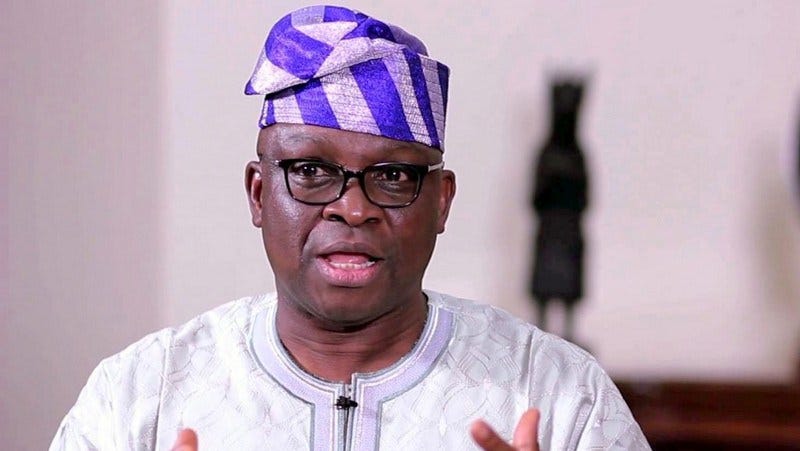
Lagos State Governor, Babajide Sanwo-Olu, has revealed that the state is grappling with a severe shortage of healthcare professionals, disclosing that Lagos requires an additional 40,000 doctors and 40,000 nurses to adequately serve its rapidly growing population.
The governor also said the state’s healthcare sector needs at least N100 billion beyond its current budget allocation to bridge critical funding gaps and sustain quality healthcare services.
Sanwo-Olu made the disclosure on Thursday while declaring open the second Eko Health Convention at the Oriental Hotel in Victoria Island, Lagos.
He identified inadequate manpower and insufficient funding as the most pressing challenges facing the state’s health system, noting that dwindling international donor support for disease control programmes has further increased the burden on government.
According to him, Lagos currently has only about 7,000 doctors, far below what is required to meet the healthcare demands of residents.
“Lagos needs about 40,000 doctors to serve this population properly. We have about 7,000. We need roughly 40,000 more nurses. Every doctor in Lagos today is, in effect, doing the work of 10,” the governor said.
He added that the healthcare sector also suffers from a substantial financial deficit.
“There is a shortfall of at least N100 billion between what our health budget provides and what this system genuinely requires. Donor financing, which supported much of our disease control for two decades, is contracting sharply and will not return in its old form,” he stated.
Despite the challenges, Sanwo-Olu said the state government had intensified efforts to strengthen the healthcare workforce through large-scale recruitment, improved welfare packages, and plans to establish a University of Medicine and Health Sciences.
He disclosed that recruitment had recently commenced across all 29 secondary healthcare facilities in the state, while accommodation and better working conditions were being provided to retain medical personnel and encourage professionals abroad to return.
The governor also highlighted progress under the state’s health insurance programme, Ilera Eko, revealing that more than 1.5 million Lagos residents have enrolled since the implementation of the compulsory social health insurance policy following the domestication of the National Health Insurance Authority Act.
“As at the end of May this year, the figure stood at 1,502,994. More than half are women, and utilisation is increasing, showing that coverage is translating into actual healthcare services,” he said.
Sanwo-Olu further disclosed that the Lagos State Health Management Agency’s Assistance in Distress Programme, launched in March, has already saved 18 lives by providing emergency medical care regardless of patients’ ability to pay.
He said the beneficiaries included victims of road traffic accidents, surgical emergencies, obstetric complications and stroke cases.
On digital healthcare reforms, the governor said the state is implementing the Lagos Smart Health Information Platform across public health facilities to enable seamless access to patients’ medical records, improve disease surveillance and enhance evidence-based health planning.
He added that the government is also investing in artificial intelligence and digital technologies to improve diagnosis, medical imaging and overall healthcare delivery.
Sanwo-Olu reaffirmed his administration’s commitment to building sustainable healthcare institutions, stressing that initiatives such as Ilera Eko, the health districts and the digital health platform are designed to outlive his tenure.
“We have kept our promises. Now we are building the systems that will keep them long after us,” he said.