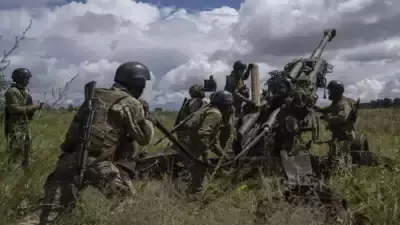
In a significant policy shift, Slovakia’s newly appointed populist Prime Minister, Robert Fico, declared on Thursday that his government would cease military aid to Ukraine, a decision that is likely to draw international attention and concern.
Addressing Members of Parliament, Fico reaffirmed his pre-election promise to halt the supply of weapons to Ukraine while still pledging continued humanitarian assistance to the war-torn nation. “I will support zero military aid to Ukraine… An immediate halt to military operations is the best solution we have for Ukraine. The EU should change from an arms supplier to a peacemaker,” he asserted during his parliamentary address.
Prime Minister Fico, who was set to attend the EU summit in Brussels later that day, also expressed his opposition to sanctions against Russia. He stated, “I will not vote for any sanctions against Russia unless we see analyses of their impact on Slovakia. If there are to be such sanctions that will harm us, like most sanctions have, I can see no reason to support them.”
These remarks come just one day after Fico’s three-party coalition government assumed office. The coalition comprises Fico’s left-wing Smer-SD, the far-right and pro-Russia SNS, and Hlas-SD, a breakaway party from Smer. Notably, Smer-SD secured victory in last month’s general election with a promise to terminate military support for Ukraine, raising concerns about potential divisions in Western support for Kyiv.
Shortly after his party’s electoral triumph, Prime Minister Fico emphasized, “The people in Slovakia have bigger problems than (dealing with) Ukraine,” advocating for peace talks, as he believed that “further killing will not help anyone.”
The coalition partner SNS shares Fico’s strong anti-refugee stance and populist tendencies. The party’s pro-Russian chairman and former parliamentary speaker, Andrej Danko, has been noted for his controversial statements, including his assertion in July that Russian-occupied territories were not “historically Ukrainian.” Danko has also garnered attention for his interactions with high-ranking Russian officials, such as shaking hands with Russian President Vladimir Putin, taking a selfie with Russian State Duma Chair Vyacheslav Volodin, and addressing Russian Foreign Minister Sergei Lavrov as “my dear friend.”