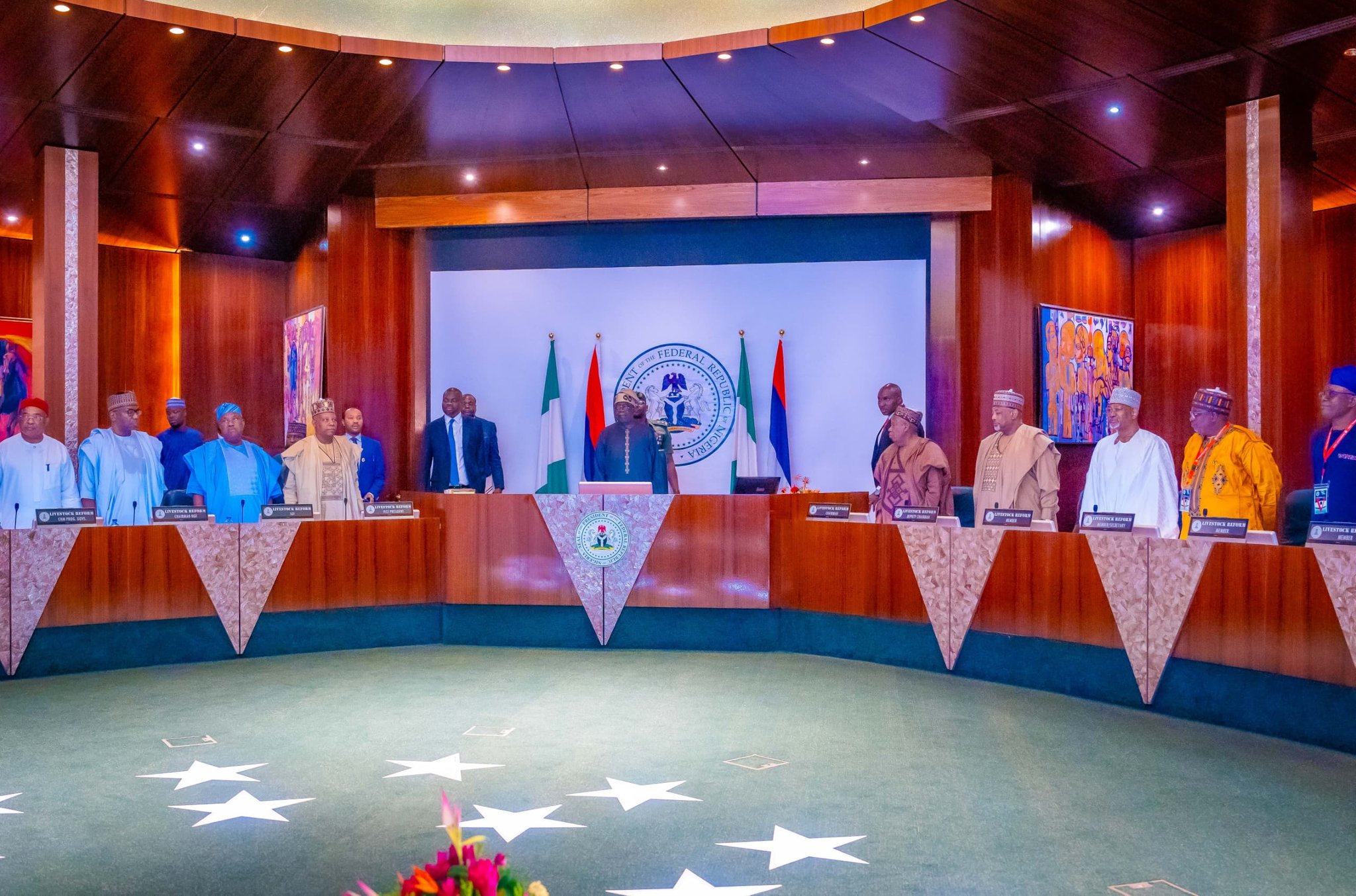
President Bola Ahmed Tinubu is expected to present his nominee for the position of Chairman of the Independent National Electoral Commission (INEC) to the National Council of State today at the Presidential Villa, Abuja, barring any last-minute changes.
The development follows the end of Professor Mahmood Yakubu’s tenure as INEC Chairman, which officially expires next month. Yakubu, who has led the electoral body since 2015, formally handed over on Tuesday, October 7, 2025, to the most senior National Commissioner, Dame May Agbamuche-Mbu, who now serves as Acting Chairman.
According to Vanguard, three names were initially under consideration for the top electoral post, with Professor Joash Ojo Amupitan emerging as the leading candidate. Described as “highly recommended,” Amupitan’s nomination is expected to be presented for the Council’s deliberation before formal announcement and Senate confirmation.
A presidency source confirmed that Amupitan, a Professor of Law and Deputy Vice-Chancellor (Administration) at the University of Jos, has already undergone the required security clearance.
Born on April 25, 1967, in Aiyetoro-Gbede, Ijumu Local Government Area of Kogi State, Professor Amupitan is a distinguished academic and legal scholar specializing in Law of Evidence, Corporate Governance, Corporate Law, and Privatisation Law. He has spent decades teaching and mentoring in Nigeria’s legal community, earning a reputation for integrity and intellectual depth.
If confirmed, Amupitan’s appointment would mark a notable shift from the approach of former President Muhammadu Buhari, whose delayed appointments at times left INEC without a full quorum, raising operational and constitutional concerns.
Under Section 153(1) and the Third Schedule of the 1999 Constitution (as amended), the appointment of the INEC Chairman requires the President’s nomination, consultation with the National Council of State, and subsequent confirmation by the Senate. The law stipulates that such appointments must be non-partisan and meet specific professional and moral standards.
However, reports suggest that some of President Tinubu’s earlier INEC appointments — both National and Resident Electoral Commissioners — did not go through the full consultation process with the Council of State.
The Socio-Economic Rights and Accountability Project (SERAP) has previously criticised the administration for allegedly appointing individuals linked to the ruling All Progressives Congress (APC) into INEC’s hierarchy, warning that such actions could undermine public confidence in the electoral system.
Sources within the Presidential Villa disclosed that President Tinubu has taken a “personal and deliberate interest” in the process of selecting Yakubu’s successor, describing the choice as one that will “reflect both competence and credibility.”
As of press time, however, indications suggest that the President may slightly delay the formal presentation to allow for final consultations and internal reviews before the Council of State meeting concludes.
If approved, the appointment of a new INEC Chairman is expected to shape Nigeria’s next electoral phase, with preparations already underway for upcoming off-cycle and general elections in several states.