A domestic flight carrying nearly 50 people has crashed in Russia’s remote Amur region, with no immediate signs of survivors, according to authorities. The aircraft, a twin-propeller Antonov-24 operated by Angara Airlines, disappeared from radar on Thursday while en route from Blagoveshchensk to the town of Tynda.
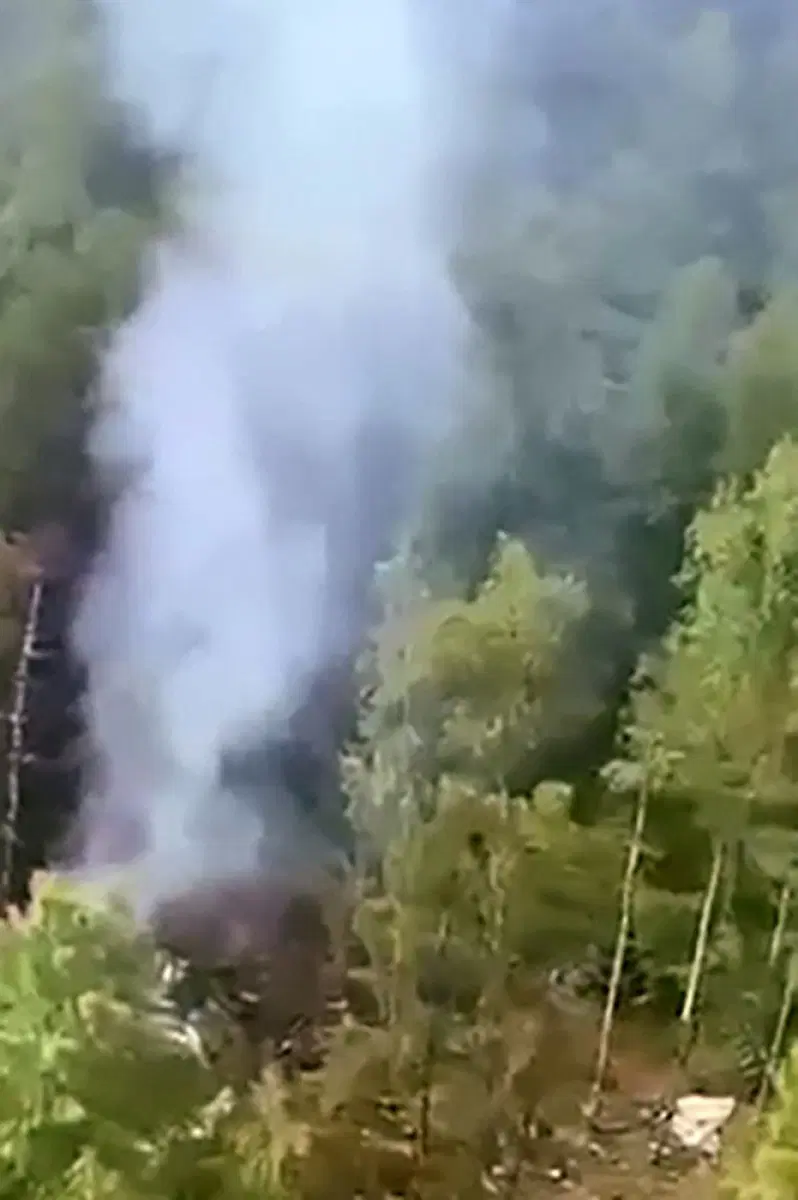
The crash occurred at approximately 1:00 p.m. local time (0400 GMT). A rescue helicopter later located the smoldering wreckage on a densely forested mountain slope, about 16 kilometers (10 miles) from Tynda. Videos released by Russian investigators show thick plumes of smoke rising from the crash site, deep within the forest.
Officials have not reported any survivors. The regional civil defense agency confirmed that 25 rescuers, along with five units of equipment and four standby aircraft, were deployed. However, rescue efforts have been hampered by difficult terrain.
“Ground access is limited due to the forested area, so most search operations are being conducted from the air,” a rescuer told Russia’s state news agency TASS.
The aircraft had 43 passengers and six crew members on board, including five children, according to Amur Governor Vassily Orlov. Conflicting early reports from emergency services initially stated the plane was carrying 40 passengers.
Russia’s Far Eastern Transport Prosecutor’s Office said the aircraft lost contact after attempting a second approach to Tynda Airport.
“While approaching Tynda Airport, the aircraft initiated a go-around for a second landing. It was after this maneuver that communication was lost,” the statement read.
The cause of the crash remains under investigation. No immediate information has been released regarding mechanical issues or weather conditions at the time of the incident.
TASS reported that the Antonov-24 involved was nearly 50 years old. “In 2021, the aircraft’s airworthiness certificate was extended until 2036,” the agency stated, citing an anonymous source in aviation services. This claim has not been independently verified.
The Antonov-24, a Soviet-era turboprop that entered service in 1959, has long been a staple of regional air travel in Russia. Despite efforts to modernize its fleet, Russia’s vast and remote regions still rely heavily on older aircraft, which have been involved in a number of fatal accidents over the years.
Angara Airlines, based in Irkutsk, has yet to release an official statement regarding the crash.
Authorities say recovery and investigation efforts will continue, though the challenging geography and ongoing search for remains are expected to take time.