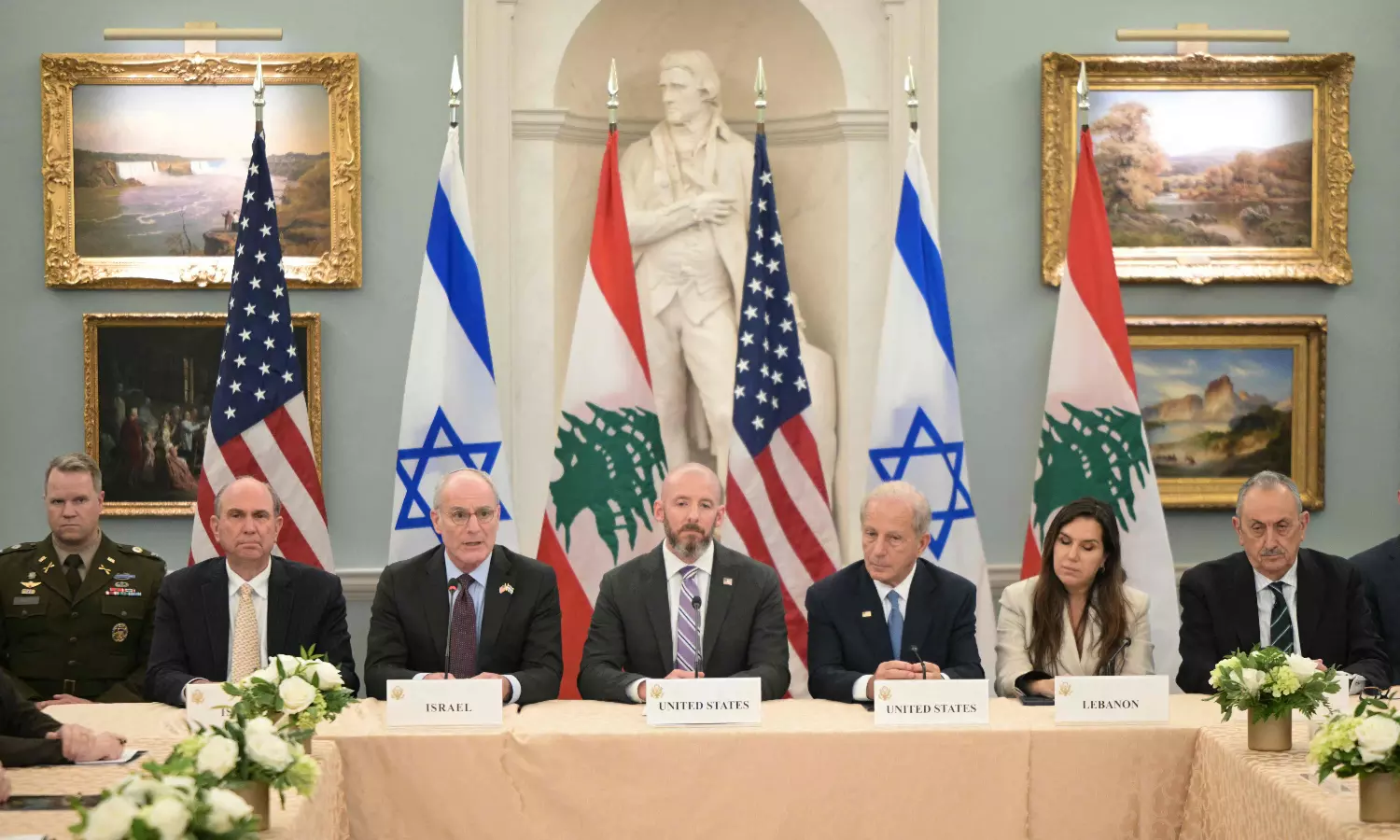
Israel and Lebanon have renewed a fragile ceasefire agreement and agreed in principle to establish security zones in southern Lebanon where Hezbollah fighters would be prohibited, as part of a new United States-backed effort to ease tensions along the volatile border.
The agreement emerged after a fourth round of mediation talks in Washington and is intended to curb ongoing hostilities while laying the groundwork for broader negotiations between the neighboring countries.
According to a joint statement released by the United States, the ceasefire arrangement depends on a complete halt to attacks by Hezbollah and the withdrawal of the group’s operatives from the area between the Israeli border and the Litani River, approximately 30 kilometers north of the frontier.
Under the proposed framework, the Lebanese Armed Forces would assume exclusive authority in designated pilot security zones, with all non-state armed groups barred from operating within those areas. The statement also emphasized the parties’ opposition to any effort by state or non-state actors to influence Lebanon’s future through force or coercion.
While officials hailed the agreement as a step toward stability, details regarding the exact locations and enforcement mechanisms of the proposed zones remain unclear. Representatives from Israel and Lebanon are expected to meet again on June 22 to continue discussions aimed at reaching a broader settlement.
The latest diplomatic initiative follows an earlier partial ceasefire that reportedly included a commitment by Israel to refrain from strikes on Beirut in exchange for Hezbollah suspending attacks on northern Israeli communities.
Despite the renewed agreement, violence persisted on the ground. Lebanese authorities reported fresh Israeli air strikes across southern Lebanon, resulting in multiple casualties. Lebanon’s Health Ministry said six people, including Syrian and Palestinian nationals, were killed in a strike near the coastal city of Tyre.
The ministry also accused Israeli forces of targeting an ambulance in the Chehour area, killing two paramedics and seriously injuring another. Lebanese officials condemned the incident as a violation of international humanitarian law, which protects medical personnel during armed conflicts.
The Lebanese army separately announced the death of one soldier in an Israeli air strike near Nabatieh and reported injuries to two others following an attack on a military vehicle. Military officials described the incidents as part of a pattern of strikes targeting army personnel and infrastructure.
On the Israeli side, the military reported intercepting a hostile aircraft and two projectiles launched from Lebanon into northern Israel. Hezbollah later acknowledged firing rockets at Israeli troop positions, saying the attack was a response to alleged Israeli violations of the ceasefire.
Hezbollah leaders, however, distanced themselves from the US-mediated negotiations. Senior political council member Mahmoud Qamati dismissed reports of a comprehensive ceasefire arrangement and said the group did not recognize the outcome of the Washington talks.
The agreement also faced criticism within Israel. National Security Minister Itamar Ben-Gvir argued that the arrangement could ultimately strengthen Hezbollah by allowing the group time to regroup.
Fighting between Israel and Hezbollah escalated sharply after the Lebanese group launched rockets into Israel in March, prompting an extensive Israeli air campaign and ground operations in southern Lebanon. Previous ceasefire efforts brokered by the United States failed to halt the violence.
According to Lebanese authorities, more than 3,500 people have been killed since the conflict began, while the United Nations estimates that over one million residents have been displaced. Israel says 30 of its citizens, including soldiers and civilians, have died during the fighting.
The United States has intensified diplomatic efforts amid concerns that continued clashes in Lebanon could undermine broader regional negotiations involving Iran. Tehran has insisted that any lasting regional ceasefire must include Lebanon and has warned that further attacks on Beirut could trigger a wider escalation.
The renewed truce now faces a critical test as negotiators seek to transform a temporary arrangement into a more durable peace while violence continues on both sides of the border.