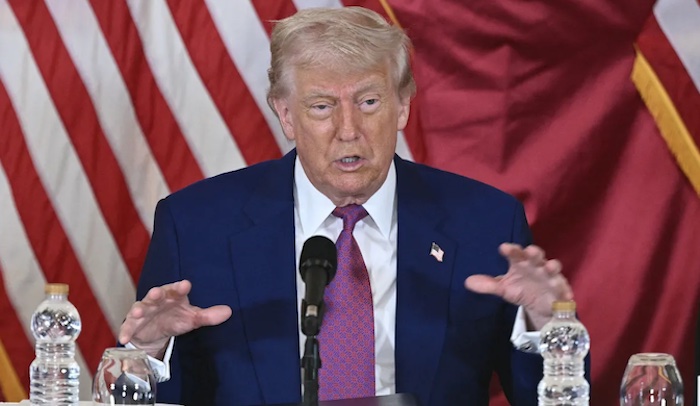
The administration of US President Donald Trump has imposed new tariffs ranging from 10% to 12.5% on imports from 60 trading partners, including the European Union, China and several other major economies, citing concerns over inadequate enforcement of bans on forced labour.
The new duties came into effect at 12:01 a.m. EDT on Friday, replacing a temporary 10% global tariff that had been in place for 150 days. Goods already in transit before the deadline will remain exempt until July 28.
According to a notice published in the Federal Register, the tariffs apply to approximately 99.4% of US imports. However, several categories—including oil and gas, fertilisers, selected food products, aircraft and parts, critical minerals, and goods already covered under national security tariffs such as steel, aluminium, copper and automobiles—are excluded from the measures.
The latest trade action follows a February ruling by the US Supreme Court that struck down Trump’s earlier “reciprocal” tariffs of between 10% and 50%, finding they exceeded presidential authority under emergency powers.
Unlike the previous tariffs, the new duties are being imposed under Section 301 of the Trade Act of 1974, a legal framework widely regarded as more likely to withstand court challenges.
US Trade Representative Jamieson Greer said the policy is intended to combat forced labour and promote fair trade practices.
“The United States has had a forced labour import ban for nearly a century, and rigorously enforces it. It’s well past time for our trading partners to do the same,” Greer said.
He added that the tariffs are designed to address both human rights concerns and trade distortions while improving conditions for workers globally.
Under the new policy, imports from countries including Argentina, Bangladesh, Britain, Cambodia, Canada, Ecuador, El Salvador, Guatemala, Honduras, India, Indonesia, Jordan, Malaysia, Mexico, Pakistan, Sri Lanka and Trinidad and Tobago will attract a 10% tariff.
The European Union, Japan, South Korea, Taiwan and Switzerland will face tariff rates that, when combined with existing duties, amount to either 10% or 12.5%.
Meanwhile, 38 other countries—including Vietnam and China—have been assigned a 12.5% tariff. The Trump administration has also informed Beijing that tariffs on Chinese goods are expected to return to the 20% level agreed during the November 2025 trade truce between President Trump and Chinese President Xi Jinping, without exceeding that threshold.
The move has drawn criticism from several US trading partners.
European Union foreign policy chief Kaja Kallas challenged Washington’s justification for the tariffs, arguing that labour protections within the EU are stronger than those in the United States.
Australia, Brazil and Norway also criticised the decision, describing the measures as unjustified and calling for their removal.
Canada, which was recently hit with separate US tariffs on $20 billion worth of exports, adopted a more conciliatory stance, saying it would continue engaging with Washington to resolve outstanding trade issues.
Trade analysts believe the administration’s reliance on Section 301 strengthens its legal position.
Former White House trade adviser Kelly Ann Shaw said the policy largely maintains the existing trade framework while expanding the list of exempt products by more than 470 items.
Former US Commerce Department official Ryan Majerus added that Section 301 gives the administration broad authority to modify tariffs once they are in place, making the policy more resilient against legal challenges.
A senior Trump administration official rejected claims that the new measures merely replace the expired global tariffs, insisting they are specifically targeted at addressing forced labour concerns and creating a more level playing field for American businesses.