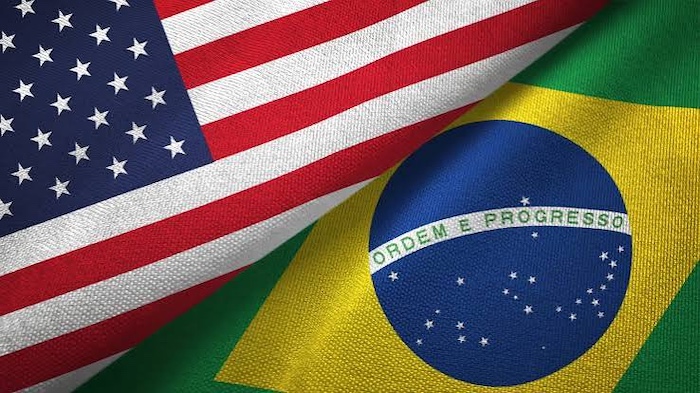
The United States has imposed a 25 percent tariff on most imports from Brazil, escalating trade tensions between the two countries and signaling the start of a broader tariff strategy that could affect dozens of other trading partners.
The new tariff, announced by the Office of the United States Trade Representative (USTR), will take effect on July 22 following a Section 301 investigation into what Washington described as unfair trade practices by Brazil. The move comes after a U.S. Supreme Court ruling weakened a key component of President Donald Trump’s earlier tariff framework.
The latest action marks the first major implementation of the administration’s revised trade policy, with nearly 80 Section 301 investigations now underway. Countries and economic blocs that could face similar measures include China, the European Union, India, Japan, South Korea and Mexico.
The tariff follows a proposal unveiled in June to impose punitive duties on Brazilian products over concerns related to digital trade policies and illegal deforestation. According to U.S. Trade Representative Jamieson Greer, negotiations with Brazil over the past year failed to resolve the issues identified by Washington.
Greer said the United States remains open to further discussions aimed at addressing the concerns raised during the investigation.
Brazilian President Luiz Inácio Lula da Silva strongly criticized the decision, describing it as unjustified and announcing plans to respond under Brazil’s Reciprocity Law. He also said the government would pursue the matter through the World Trade Organization’s dispute settlement process.
The announcement triggered a sharp exchange between officials in both countries. U.S. Secretary of State Marco Rubio accused the Brazilian government of failing to engage constructively during negotiations, while Brasília rejected the allegations and defended its trade policies.
The new tariff will apply to thousands of Brazilian exports, including sugar, agricultural machinery, clothing, electrical equipment, paper and steel products. However, the United States excluded several key exports from the measure, including beef, coffee, rare earth minerals, energy products, aircraft and aircraft components. Organic honey, pig iron and unflavoured instant coffee were also added to the exemption list.
The trade dispute extends beyond tariffs. The USTR’s investigation has also scrutinized Brazil’s instant payment platform, Pix, which U.S. officials claim places credit card companies at a competitive disadvantage. Brazilian authorities have denied the allegations.
Further trade measures could follow, as Brazil is also under a separate Section 301 investigation examining alleged forced-labour links within global supply chains. That review is expected to conclude on July 24 and could recommend an additional 12.5 percent tariff, potentially raising the total duties on some Brazilian products to 37.5 percent.
The latest development underscores Washington’s growing reliance on Section 301 investigations to support new trade actions after legal challenges weakened previous tariff programs.