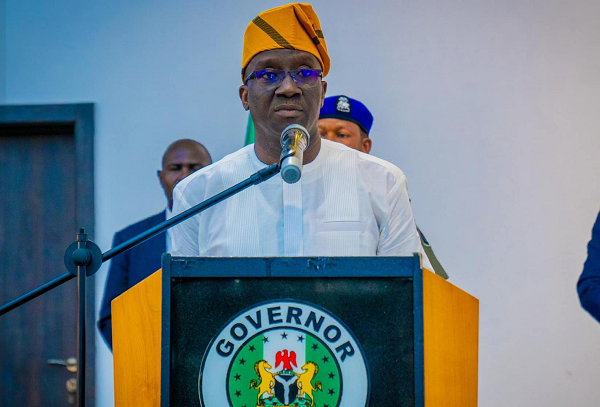
The PRP presidential candidate says security expenses and poor infrastructure are driving up crude production costs, arguing that lower fuel prices could ease inflation and improve Nigerians’ productivity.
Donald Duke, presidential candidate of the People’s Redemption Party (PRP), has criticised Nigeria’s high crude oil production costs, arguing that the country spends almost as much securing its crude oil as it does extracting it.
Speaking during an interview with ARISE NEWS on Thursday, Duke said security challenges and deteriorating infrastructure had increased the overall cost of producing crude oil in Nigeria to between $25 and $45 per barrel, despite the actual extraction cost ranging from $12 to $15.
According to him, addressing these challenges could reduce production expenses, lower petrol prices and ease the financial pressure on households and businesses.
“The actual production cost of crude in Nigeria is anywhere between $12 and $15. What takes it up to $25 or $45 is security costs and dilapidated infrastructure,” Duke said.
He questioned the justification for spending an additional $10 to $15 per barrel on security, arguing that such expenses significantly undermine the economic benefits Nigeria should derive from its oil resources.
Duke also referenced efforts to reduce production costs to approximately $20 per barrel, noting that improved security and infrastructure could help achieve more sustainable operating costs.
Duke Defends Proposal to Reduce Petrol Prices
The former Cross River State governor defended his proposal to reduce petrol prices, maintaining that Nigeria’s status as a major oil-producing country should translate into more affordable energy for its citizens.
He said the government’s economic policies should prioritise citizens’ productivity rather than focus narrowly on revenue generation.
“I think the fundamental objective of government is the productivity of its citizens. So you’ve got to tackle all the things that are inimical to the productivity of your citizens,” he said.
Duke described energy as a critical driver of economic activity, arguing that high petrol prices increase the cost of transportation, production and essential services, ultimately contributing to inflation.
He noted that Nigeria reportedly produces between 1.7 million and 1.8 million barrels of crude oil daily, yet Nigerians continue to face high domestic fuel prices.
Explaining his proposed pricing model, Duke estimated transportation costs at about $38 per barrel and refining expenses at approximately $10 per barrel, producing a combined figure of $48 before other considerations.
He further argued that revenue from petroleum by-products could help reduce the final cost of petrol to consumers.
Duke clarified that his original proposal was to reduce petrol prices to ₦300 per litre, rather than ₦200 as some had suggested.
He acknowledged, however, that existing crude oil commitments, including forward-sale arrangements associated with loans under the current administration, could make the ₦300 target difficult to achieve immediately.
According to him, blending available domestic crude with additional supplies purchased from oil producers operating in Nigeria could still bring prices down significantly.
“If you take what you have and buy it back from your JV partners and blend and put it together and blend the prices, the average, it will not be 300. It will be far less than what you’re paying today,” he said.
When asked whether ₦700 or ₦800 per litre would be a more realistic benchmark under the circumstances, Duke indicated that such prices could be considered where the crude oil was not directly available to the government.
Proposes Crude-for-Products Arrangement
Duke proposed that the government consider a contract-refining arrangement under which it would supply crude oil to a refinery and retain ownership of the resulting petroleum products.
He compared the proposal with previous crude-for-product swap arrangements, arguing that the government could negotiate refining costs and manage the distribution and sale of the finished products.
Under the proposed arrangement, the government would agree on a price with the refinery, pay the refining fee and retain the products and revenue generated from their sale, including proceeds from by-products.
Duke said such an approach could provide greater control over pricing and help reduce the burden of high fuel costs on the economy.
He also rejected suggestions that cheaper petrol would inevitably encourage cross-border smuggling, arguing that the government should improve border surveillance rather than penalise citizens for weaknesses in enforcement.
He suggested that fuel could be dyed with a distinctive colour to make Nigerian petroleum products easier to identify if diverted into neighbouring countries.
Duke maintained that the government should develop practical solutions to smuggling instead of allowing the threat to prevent policies aimed at making fuel more affordable.
Criticises Lagos-Calabar Coastal Highway
Beyond the petroleum sector, Duke renewed his criticism of the Lagos-Calabar Coastal Highway project, questioning its feasibility, cost and economic justification.
He argued that the project, which he referred to as the Lagos Coastal Highway, was not sufficiently justified given Nigeria’s financial constraints and the existence of alternative road infrastructure connecting parts of the coastal region.
Duke questioned the decision to embark on an expensive coastal route while the country was struggling to fund essential services and other infrastructure projects.
He also raised concerns about the terrain and the cost of constructing sections of the road across difficult areas, including parts of the Niger Delta.
According to him, constructing a road across Bayelsa State was not necessarily impossible, but the financial implications required careful consideration.
Duke further questioned the rationale behind reported plans to divert the proposed route towards the East-West Highway, asking whether the existing road had been adequately considered during the initial planning stages.
He also alleged that aspects of the coastal highway project could facilitate land acquisition interests rather than serve a purely public transportation objective.
Duke said Nigeria could not afford to continue borrowing heavily for major infrastructure projects without adequately addressing urgent needs in healthcare, education and other public services.
He cited what he described as limited releases for healthcare funding compared with the sector’s budget allocation, arguing that government spending priorities required closer scrutiny.
Calls for Economic Growth Over Revenue Collection
Duke criticised the economic direction of President Bola Tinubu’s administration, arguing that the government was placing excessive emphasis on revenue collection rather than expanding economic activity and improving citizens’ purchasing power.
He said high interest rates were discouraging businesses from borrowing, investing and expanding operations, thereby limiting job creation and economic growth.
According to him, businesses cannot thrive when borrowing costs are prohibitively high and consumers are struggling with rising prices.
Duke also questioned the government’s approach to managing inflation, arguing that high fuel prices remain a major contributor to the cost of goods and services across the country.
He maintained that reducing energy costs would improve business productivity and help ease inflationary pressures.
The PRP candidate further argued that Nigeria was not generating sufficient public revenue relative to the size of its economy.
He said the government should broaden its revenue base by encouraging production across different sectors instead of relying excessively on petroleum-related income.
Duke warned that an economy overly dependent on oil revenues would remain vulnerable unless the government promoted industrialisation, domestic production and employment.
He also challenged the government’s approach to foreign exchange management, arguing that the naira’s value should be managed with a clear understanding of the country’s foreign currency supply and demand.
According to him, the government could not effectively manage the currency without addressing the factors driving demand for foreign exchange.
He urged policymakers to focus more on domestic production and less on imports, warning that large foreign reserves should not automatically be interpreted as evidence of economic success.
Duke argued that an economy that depends heavily on importing finished goods effectively supports employment and manufacturing activity in other countries instead of developing domestic industries.
Identifies Healthcare, Education and Productivity as Priorities
Asked about his immediate priorities if elected president, Duke identified energy, healthcare, education, infrastructure and citizens’ productivity as areas requiring urgent attention.
He described the country’s economic situation as critical, saying high energy costs were among the factors restricting businesses and weakening household finances.
Duke also questioned the relationship between workers’ wages and the rising cost of living, noting that many employees struggle to cover basic expenses despite earning regular salaries.
He cited the cost of petrol as an example of the financial pressure on workers, arguing that a salary that cannot adequately cover essential transportation expenses reflects deeper economic problems.
However, he declined to promise an immediate salary increase, saying his priority would be to reduce the cost of goods and services that consume workers’ earnings.
“I didn’t say I would increase salaries. No, I can’t sit down on this chair and say I’m going to increase salaries because there’s so many things you’ve got to look at,” he said.
“What I will strive to do is reduce the cost of those things that grapple at our salaries.”
He maintained that reducing living costs, improving access to finance and creating an environment in which businesses can grow would be more sustainable ways to improve Nigerians’ living standards.
Warns of Political and Economic Challenges Ahead of 2027
Duke also criticised opposition parties that have expressed support for President Tinubu, comparing the political situation to aspects of the transition programme under former military ruler Sani Abacha.
He argued that opposition parties should provide credible alternatives and hold the government accountable rather than align themselves with the administration without adequately challenging its policies.
The PRP presidential candidate warned that Nigeria could face serious consequences if political leaders continued to prioritise political manoeuvring over addressing the country’s economic challenges.
He urged Nigerians and political leaders to take the country’s direction seriously, warning against what he described as a failure to respond adequately to mounting problems.
Duke’s comments come as economic debates ahead of the 2027 presidential election increasingly centre on petrol prices, inflation, foreign exchange management, public spending and the broader question of how Nigeria can translate its natural resources into improved living standards for its citizens.
He maintained that the next administration should focus on expanding productive economic activity, reducing the cost of living and ensuring that government policies support employment, investment and sustainable growth.