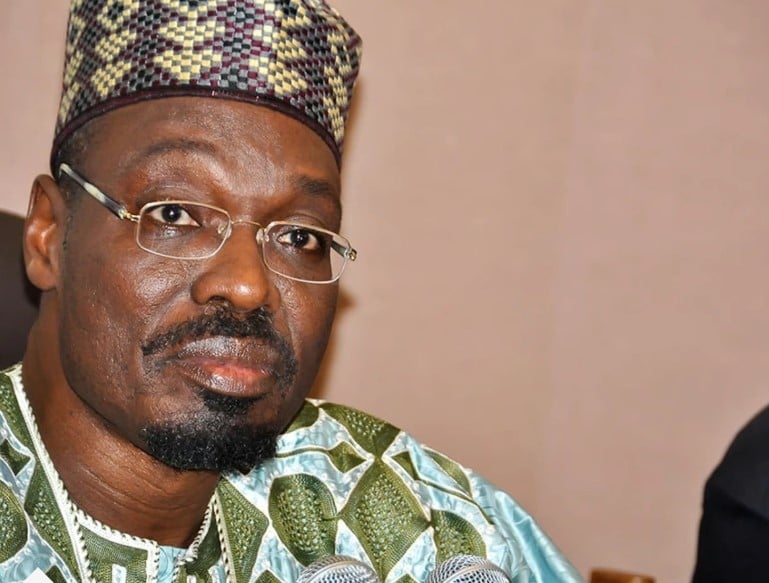
Yaoundé, Cameroon — Cameroon’s opposition candidate, Issa Tchiroma Bakary, has declared himself the winner of Sunday’s presidential election, setting the stage for a tense political standoff with incumbent President Paul Biya, who has ruled the country for over four decades.
In a statement shared on Facebook on Tuesday, Tchiroma claimed a “clear victory” and urged the government to “respect the will of the people” as reflected at the ballot box.
“Our victory is clear. It must be respected,” he wrote. “The government must accept the truth of the ballot box or risk plunging the country into turmoil. The people have chosen.”
The opposition leader, who served as Minister of Employment and Vocational Training before breaking ranks with Biya, announced plans to publish detailed vote tallies by region in the coming days to support his claim.
However, according to Cameroonian law, only the Constitutional Council is empowered to release official election results — a process that could take up to two weeks. The government has described this as a “red line that must not be crossed,” warning against premature declarations of victory.
The claim has reignited memories of Cameroon’s 2018 presidential election, when opposition candidate Maurice Kamto also declared himself winner ahead of the official announcement. Kamto was later arrested, and his supporters’ protests were violently dispersed by security forces, resulting in numerous detentions.
President Biya, 91 years old and Africa’s longest-serving head of state, is seeking another term after 43 years in power, despite mounting frustration over economic stagnation, corruption, and ongoing separatist unrest in the country’s Anglophone regions.
Tchiroma’s campaign, fueled by youth activism and anti-establishment sentiment, has tapped into growing public desire for political change. In recent weeks, he has drawn large crowds at rallies, especially in the northern and western regions, calling for a “new beginning for Cameroon.”
On social media, images of polling station tally sheets and blackboards showing provisional vote counts have circulated widely, with both Biya’s and Tchiroma’s camps claiming to have won. Election observers have yet to issue a comprehensive report on the credibility of the voting process.
Political analysts say the situation could escalate if the Constitutional Council delays the announcement or if the official results differ significantly from figures circulated online.
“The danger is that both camps are hardening their positions,” said a local political observer in Yaoundé. “If not carefully managed, this could lead to street protests and unrest similar to what we saw in 2018.”
As the nation awaits the official declaration of results, security forces have reportedly increased their presence in major cities, including Yaoundé and Douala, to preempt possible demonstrations.
The government has not issued an official response to Tchiroma’s self-declared victory, but officials have reiterated that any announcement outside the legal framework is “invalid and destabilizing.”