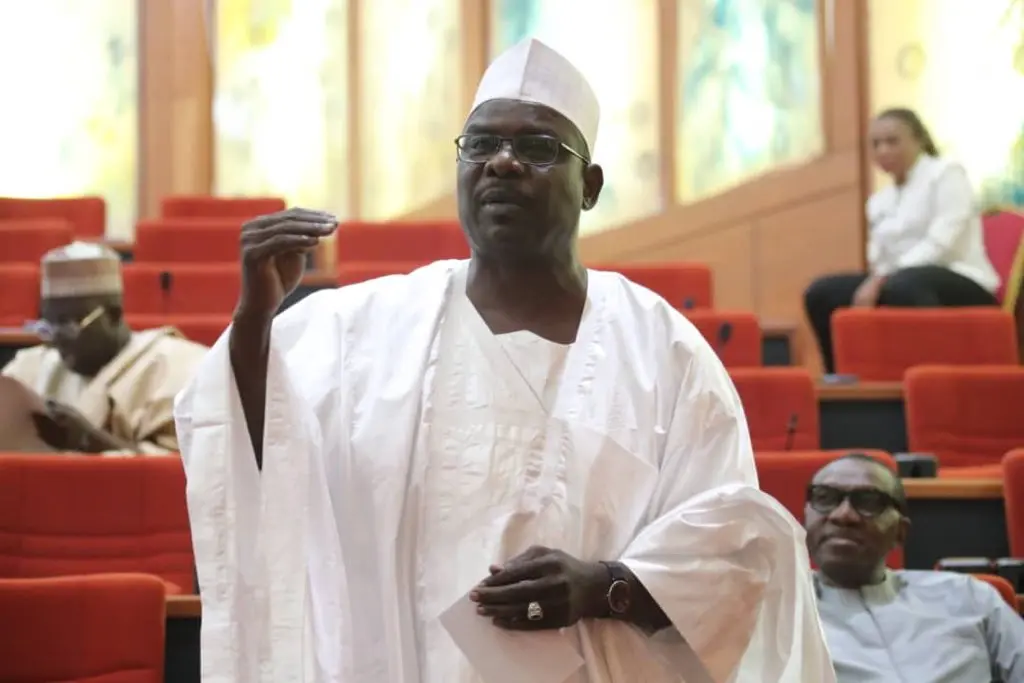
Chief Whip of the Nigerian Senate, Senator Ali Ndume, has criticized the Nigerian government, labeling its leaders as “kakistocrats and kleptocrats.” Ndume made these remarks in an interview with Arise Television on Thursday.
He expressed his dismay at the current state of governance, saying, “The government is also populated by kleptocrats, but unfortunately that is not what the president is up to; he really meant renewed hope, but you can only do that when you have people around you that are on the same type of thinking.”
Ndume raised concerns about recent government policies, specifically mentioning the cyber crime levy, which faced significant public opposition. He noted, “When the president realized that he had not heard about it, he quickly suspended it.” He also highlighted the severe issue of hunger and food scarcity, pointing out that inflation has risen to 40%.
“In some places, even with your money, you won’t find the food items you want to buy, which is very dangerous,” he added. Ndume cited recent UN and World Food Programme figures, which now rank Nigeria as a hotspot for severe food crises and food insecurity. “For people like me, I have to be scared because I’m 64 years old with 10 children, 20 grandchildren, and I don’t have a passport or visa to anywhere,” he said.
The senator also criticized the limited access to the president, stating that some ministers only meet the president during council meetings and that the president is often the first to leave. “I’m the chief whip, and if the chief whip can’t have access to the president, the new senators won’t have access either,” he lamented. He contrasted this with former President Obasanjo’s administration, where any senator could see the president within 24 hours.
Ndume expressed concern that the president is “caged in” and that there are no visible efforts by the government to address pressing issues like climate change. He stressed the need for the president to harness Nigeria’s natural and human resources, urging him to “get the right people into office” and populate his government with democrats. “The president needs people who will realize his dream and tell him when something is wrong,” he said.
Despite supporting the removal of the fuel subsidy, hoping it would eliminate corruption and allow savings to benefit the people, Ndume suggested introducing food stamps to manage the subsidy issue better. He recounted sending messages to people in the presidential villa about public anger, only to receive responses blaming the opposition.
“When people in power start responding like that, then I’m worried for the president and myself; there’s a problem out there,” he concluded.