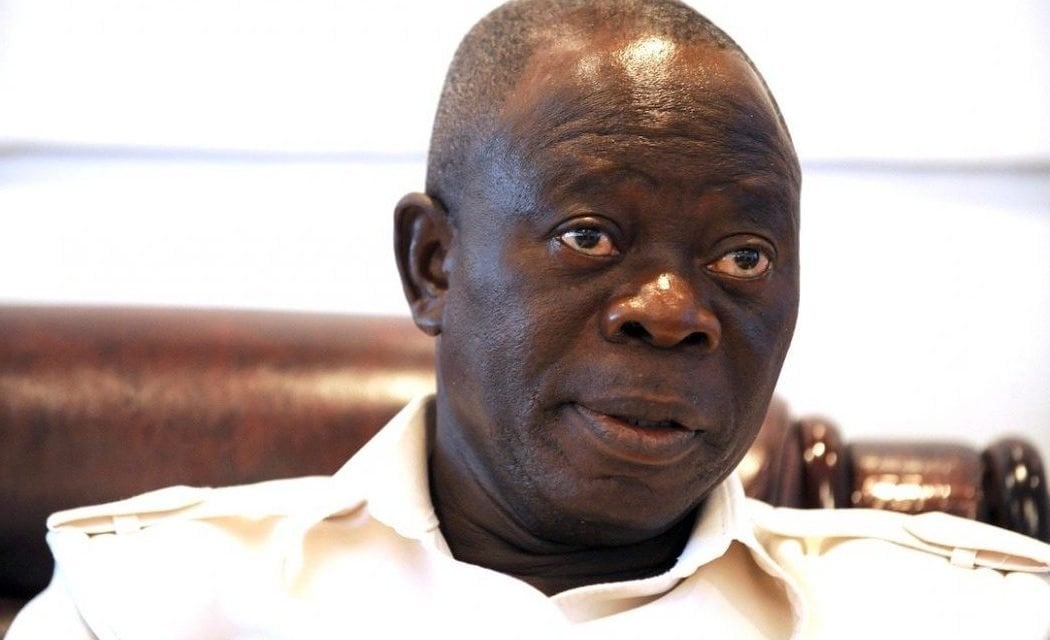
Nigeria’s Senate has intensified calls for decisive action against rising xenophobic attacks on Nigerians in South Africa, with Adams Oshiomhole urging the Federal Government to revoke the operating licences of major South African companies, including MTN Group and MultiChoice Group, owners of DSTV.
Speaking during plenary on Tuesday, Oshiomhole called for a firm response rooted in the principle of reciprocity, arguing that Nigeria must move beyond expressions of sympathy and adopt concrete economic measures.
He proposed the nationalisation of MTN Group, citing what he described as the company’s substantial profit repatriation despite ongoing hostility toward Nigerians in South Africa. He also urged authorities to withdraw the licence of MultiChoice Group, alleging exploitative practices.
The remarks came as the National Assembly condemned the latest wave of xenophobic violence and called on the Federal Government to take urgent diplomatic and protective steps to safeguard Nigerian citizens abroad.
Lawmakers linked the recurring attacks to internal political tensions in South Africa, warning that anti-immigrant rhetoric has increasingly influenced public attitudes toward foreign nationals.
Contributing to the debate, Senator Victor Umeh described the situation as alarming, noting that many Nigerians now live in fear and are unable to move freely. He urged the African Union to intervene and consider sanctions.
Similarly, Senator Abdul Ningi warned that Nigeria could explore retaliatory measures if the attacks persist, emphasizing that the country has options to respond.
Senate President Godswill Akpabio also condemned the violence, describing it as unacceptable and vowing that a delegation from the National Assembly would engage with South African lawmakers to address the crisis.
The debate was triggered by a motion sponsored by Osita Izunaso, highlighting growing concerns over the safety, dignity, and rights of Nigerians in South Africa.
The development underscores mounting pressure on Nigerian authorities to adopt a tougher stance, as repeated xenophobic incidents continue to strain relations between Africa’s two largest economies and spark calls for both economic countermeasures and stronger protections for citizens abroad.