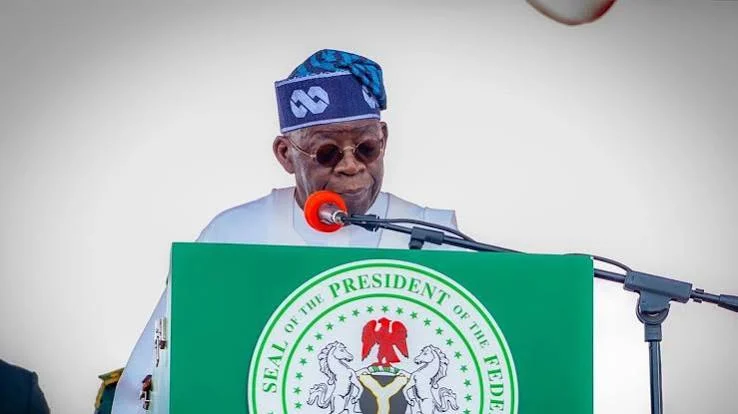
LAGOS—The pan-Yoruba socio-political organization, Afenifere, has issued a strong critique of President Bola Tinubu’s economic policies, claiming they have exacerbated poverty among Nigerians. In a statement released yesterday by its Publicity Secretary, Justice Faloye, Afenifere urged President Tinubu to reconsider his economic strategies to alleviate the growing hardship faced by the populace.
Reflecting on Tinubu’s first year in office, Afenifere highlighted significant economic challenges. “The economy has experienced severe turbulence during the one-year administration of President Bola Tinubu, worsening the previous administration’s economic legacy,” the statement read.
The organization called for a more nuanced understanding of economic dynamics to curb inflation, currency devaluation, rising unemployment, homelessness, and widespread poverty. Afenifere criticized the removal of subsidies and increased taxation, arguing that these measures have drained money from the economy, thereby stifling economic growth.
“It is an illogical economic belief that the subsidy removals and tax increases that remove money from the economy will stimulate economic growth,” Faloye stated. He further condemned the adoption of neo-liberal theories, noting that such policies have led to companies shutting down and leaving the country due to skyrocketing fuel and electricity costs, resulting in rampant inflation and reduced real incomes.
Afenifere also pointed out that these policies have crowded out productive sectors from accessing essential loans, with restrictive interest rate hikes failing to curb inflation effectively. The organization criticized the government’s reckless spending and excessive borrowing, which they argue contradict the principles of sound economic management.
The statement also took issue with the government’s policy of floating the Naira without proper regulation of market speculators and hoarders. “Stopping government funding of the forex market was bound to lead to massive devaluation as witnessed,” Faloye explained. He emphasized that Nigeria’s foreign exchange, primarily derived from oil and gas, should stimulate the economy rather than fund the political elite.
Afenifere accused the Tinubu administration of compounding the problems inherited from the Buhari administration through inept economic management. The group pointed out that while Tinubu’s tenure as Lagos State governor is credited with increased Internally Generated Revenue, this did not translate into substantial infrastructural development.
“It appears that President Tinubu is still possessed by this mindset of taxing the poor to transfer to the privileged, especially cronies,” the statement read. Afenifere criticized various new tax schemes, including communication and cybersecurity taxes, and highlighted the impracticality of mandating underfunded universities to contribute a percentage of their earnings to the government.
The organization concluded with a stark warning about the potential consequences of continued economic mismanagement. “At the end of the first year of Tinubu’s administration, the question is whether our continued arrested economic development is due to corruption or incompetence,” Faloye remarked. He urged for an end to the “Monkey dey work, baboon dey chop” economic dispensation before Nigeria’s sociopolitical fabric is irreparably damaged.
Afenifere’s statement calls for urgent action to address the economic plight of Nigerians and ensure that policies are directed towards sustainable growth and equitable prosperity.