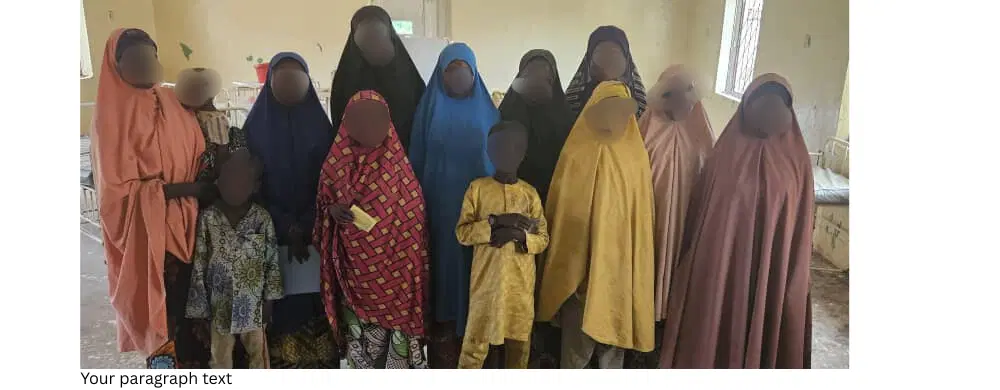
At least 62 kidnap victims have regained their freedom in Katsina State after a decisive air raid by the Nigerian Air Force (NAF) disrupted the hideout of a notorious bandit kingpin, Muhammadu Fulani, in the Jigawa Sawai community of Danmusa Local Government Area, near the Zamfara border.
The operation, conducted on Saturday evening, forced the armed criminals to abandon their camp, giving the captives a rare opportunity to escape.
Confirming the development, the Katsina State Commissioner for Internal Security, Dr. Nasir Mu’azu, said the coordinated strike left the bandits in disarray.
“The air raid created an opening for dozens of hostages to flee in different directions. Twelve victims are currently receiving treatment at Matazu General Hospital, while 16 others are being held for care and profiling at an Army forward operating base in Kaiga Malamai,” he disclosed.
Survivors recounted that during the intense bombardment, the bandits fled into nearby forests, leaving them unguarded. Most of those rescued were among villagers abducted on August 11 during a night raid on Sayaya village in Matazu LGA.
The dreaded Muhammadu Fulani gang has long been linked to multiple assaults across Katsina and neighbouring Kano State, including highway ambushes, mass kidnappings, and village attacks.
To forestall further violence, an Air Force Quick Response Wing has now been stationed in Matazu and Bakori LGAs.
“Troops are actively monitoring the area to secure more rescues. The overall security situation remains calm,” Dr. Mu’azu added.
Katsina State Governor, Dikko Umaru Radda, commended the “gallant efforts” of the security forces, assuring that his administration remains committed to ending the menace of banditry.
“We will continue to support military and security operations until our communities are safe again,” the governor pledged.
Nigeria’s north-west and central regions have for years been plagued by armed groups—locally called bandits—responsible for widespread killings, kidnappings, and extortion, particularly targeting vulnerable rural settlements, schools, and major roads.
The latest rescue offers hope to families who have long endured the terror of abductions but also underscores the persistent challenge of insecurity in the region.