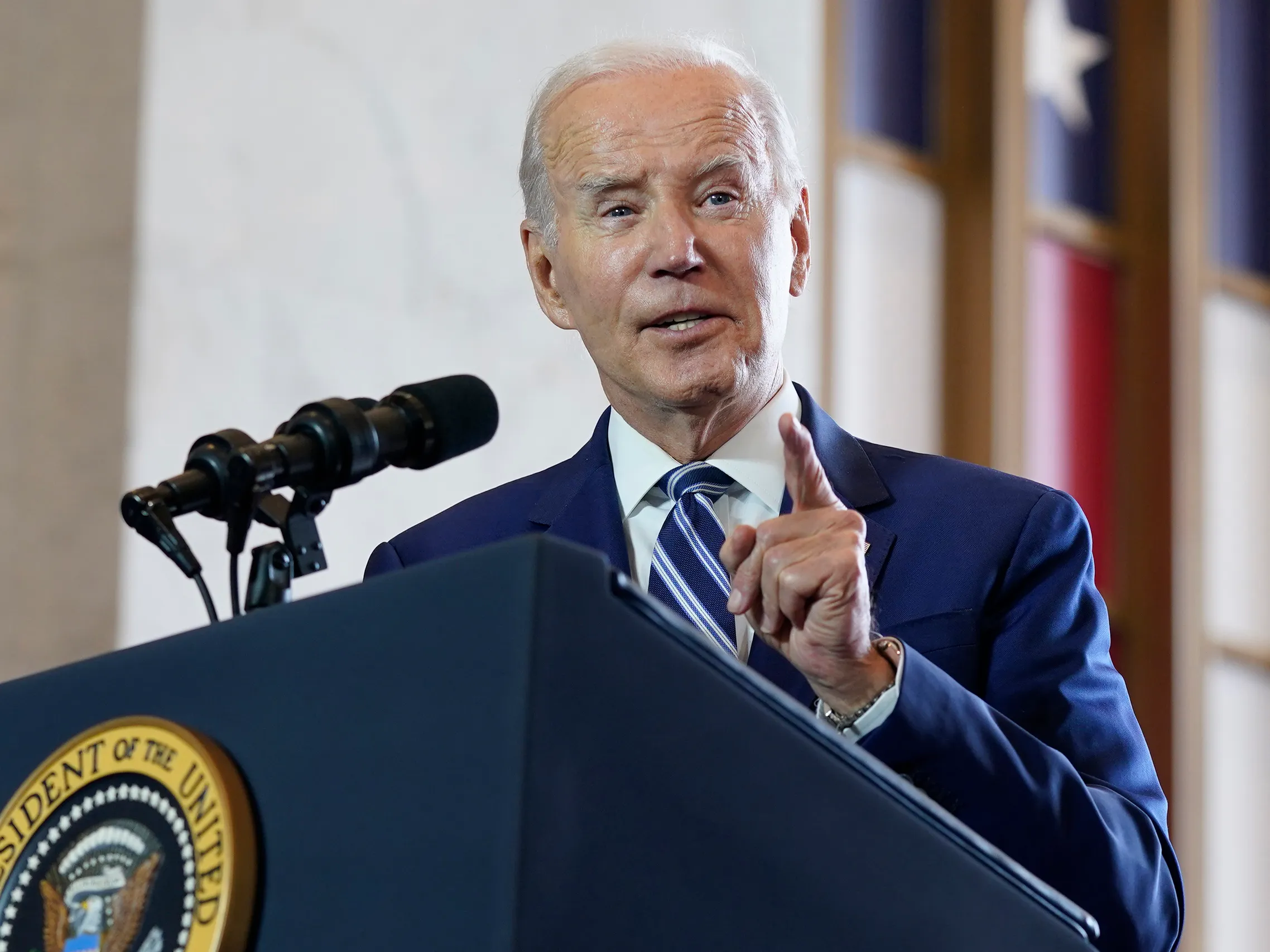
As U.S. President Joe Biden delivers his final address at the United Nations General Assembly (UNGA) this week, his focus extends beyond the immediate global issues. Behind the diplomatic engagements, Biden is working to cement his legacy on the world stage, mindful of the possibility that Donald Trump, his Republican predecessor, could make a White House comeback.
Biden’s UN appearance comes at a time when international leaders are nervously eyeing the 2024 U.S. presidential election. A Trump victory, particularly over Vice President Kamala Harris, the Democratic nominee, would likely signal a return to the former president’s isolationist and hardline foreign policies. This prospect has led many to fear a disruption of the alliances and diplomatic efforts that Biden has worked to restore during his presidency.
Having decided not to seek a second term, Biden officially endorsed Harris in July, making this UNGA his last as president. The 81-year-old leader is determined to ensure that his accomplishments—especially those related to rebuilding U.S. leadership on the global stage—endure beyond his administration. According to one White House advisor, Biden’s objective is to make his policies “irreversible.”
During his time at the UNGA in New York, Biden will deliver a keynote address, expected to highlight the successes of his administration in areas ranging from climate change to international conflicts, such as those in Gaza, Ukraine, and Sudan. White House Press Secretary Karine Jean-Pierre emphasized that Biden would use his speech to reaffirm the effectiveness of his approach and to lay out a “vision” for how U.S. leadership should continue.
“When President Biden came to office nearly four years ago, he pledged to restore American leadership on the world stage,” Jean-Pierre said. “This week is about outlining how that vision has produced results and how it should move forward.”
Biden’s Focus on International Alliances and Legacy
A central theme of Biden’s presidency has been the restoration of U.S. alliances that were strained during Trump’s time in office. Trump’s foreign policy frequently questioned the value of longstanding Western alliances, threatening to withdraw U.S. support if allies did not increase defense spending. In contrast, Biden has prioritized rebuilding these relationships. Over the weekend, he hosted a summit in his hometown of Wilmington, Delaware, with the leaders of Japan, India, and Australia—a group known as “The Quad”—to further emphasize his commitment to multilateral cooperation.
On the environmental front, Biden has made reversing Trump-era policies a cornerstone of his administration. While Trump pulled the U.S. out of the Paris Climate Agreement, Biden re-entered the accord and has worked to create lasting momentum for climate action. His National Climate Advisor, Ali Zaidi, remarked on Monday that Biden seeks to ensure “irreversible momentum behind climate action,” underscoring his administration’s goal to make long-term progress.
In the realm of foreign conflict, Biden’s relationship with Ukraine has starkly contrasted Trump’s approach. While Trump often praised Russian President Vladimir Putin and was tepid in his support for Ukraine, Biden has been a staunch advocate for Kyiv in its defense against Russia’s invasion. On Thursday, Biden is set to host Ukrainian President Volodymyr Zelensky at the White House for discussions on continued U.S. support.
Middle East Challenges and the Gaza Ceasefire
One of Biden’s most pressing global challenges has been the escalating conflict in the Middle East, particularly in Gaza. Despite efforts to broker a ceasefire before leaving office, the situation in Gaza remains increasingly volatile. Recent Israeli airstrikes on Hezbollah positions in Lebanon have killed over 500 people, exacerbating tensions in the region.
A senior U.S. official noted that Biden’s UNGA address will touch on the escalating violence in the Middle East and his efforts to promote peace. “The fact that we do have Gaza, Ukraine, and Sudan issues in our world just underscores the need for that kind of cooperation,” the official said, stressing the importance of international diplomacy.
A Legacy in the Making
Biden’s appearance at the UNGA is part of a broader strategy to solidify his achievements at home and abroad. As his presidency nears its conclusion, Biden has urged his administration to “sprint to the finish,” promoting key policies that reflect his vision. Last week, he held a cabinet meeting where he encouraged officials to push forward with his agenda and emphasized that his policies must leave a lasting impact.
Biden’s Director of Communications, Ben LaBolt, echoed these sentiments, stating in a memo to White House staff that the administration must focus on securing its accomplishments for the future. In a pointed comment aimed at Trump, LaBolt noted that Biden has restored “decency and dignity to the White House.”
In an emotional moment on Sunday, former President Bill Clinton presented Biden with the “Clinton Global Citizen Award” in a surprise ceremony in New York, highlighting the respect Biden has garnered on the world stage.
As Biden bids farewell to world leaders at the UN, he hopes to ensure that the progress made under his administration will not be undone—whether by a Trump presidency or any other future leader.