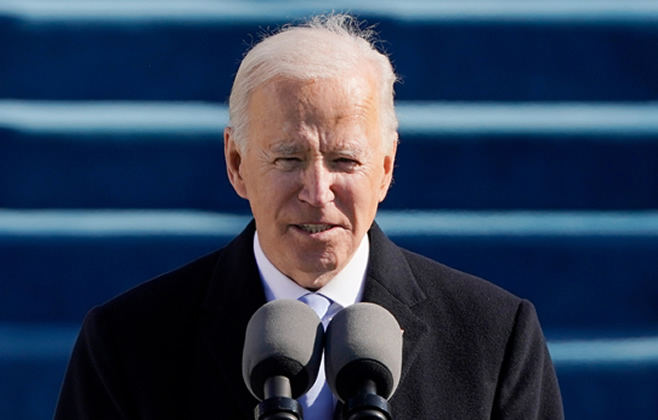
Washington, D.C.: In a significant move reflecting his stance against capital punishment, U.S. President Joe Biden on Monday commuted the death sentences of 37 federal inmates to life imprisonment without parole. The decision, coming less than a month before he leaves office, underscores his administration’s commitment to ending federal executions, which had been halted under his presidency.
The announcement arrives amidst growing advocacy from anti-death penalty groups urging Biden to address the fate of federal death row inmates before the expected inauguration of President-elect Donald Trump. Trump, during his first term, oversaw a historic wave of federal executions, resuming the practice in 2020 after a 17-year hiatus.
A Bold Decision and Its Implications
Biden’s commutations leave only three federal death row inmates facing execution, all of whom were convicted of heinous hate crimes or acts of terrorism. Among those who remain are:
- Dzhokhar Tsarnaev, the perpetrator of the 2013 Boston Marathon bombing.
- Dylann Roof, a white supremacist who murdered nine Black parishioners at a South Carolina church in 2015.
- Robert Bowers, responsible for the 2018 mass shooting at Pittsburgh’s Tree of Life synagogue, which left 11 Jewish worshippers dead.
The 37 individuals whose sentences were commuted had been convicted of crimes ranging from murdering fellow inmates to killing prison guards and committing murders during bank robberies.
“These commutations align with the moratorium my administration has imposed on federal executions, except in cases involving terrorism and hate-driven mass murders,” Biden explained in an official statement.
Biden’s Commitment to Ending Federal Executions
President Biden emphasized that his decision was guided by a deep conviction to halt the use of capital punishment at the federal level.
“I condemn these murderers, grieve for the victims, and ache for the families who have suffered unimaginable loss,” Biden said. “But guided by my conscience and experience, I am more convinced than ever that the federal death penalty must be stopped.”
During his presidency, Biden had imposed a moratorium on federal executions, aligning with his campaign promise to oppose the death penalty. His administration’s move marked a sharp contrast to Trump’s tenure, which saw 13 federal executions in just six months — the highest number under any U.S. president in over a century.
Historical Context and Future of Capital Punishment in the U.S.
The United States remains divided on the issue of the death penalty. While 23 states have abolished it, six others, including California and Pennsylvania, have moratoriums in place. However, at the state level, executions have continued, with 25 carried out in 2024.
Biden’s action has drawn both praise and criticism. Advocates against capital punishment view it as a step toward national abolition, while opponents argue it undermines justice for victims and their families.
Looking Ahead
President-elect Trump has signaled plans to expand the scope of capital punishment, including proposals to apply it to migrants and traffickers involved in drug and human smuggling.
As Biden prepares to leave office, his commutations serve as a defining moment in his administration’s legacy on criminal justice reform. “The day will come when the federal death penalty is abolished entirely,” Biden said, expressing hope that his actions will inspire lasting change.
The last federal execution was carried out on January 16, 2021, just days before Trump left office. Whether the resumption of federal executions will occur under the incoming administration remains a contentious question.