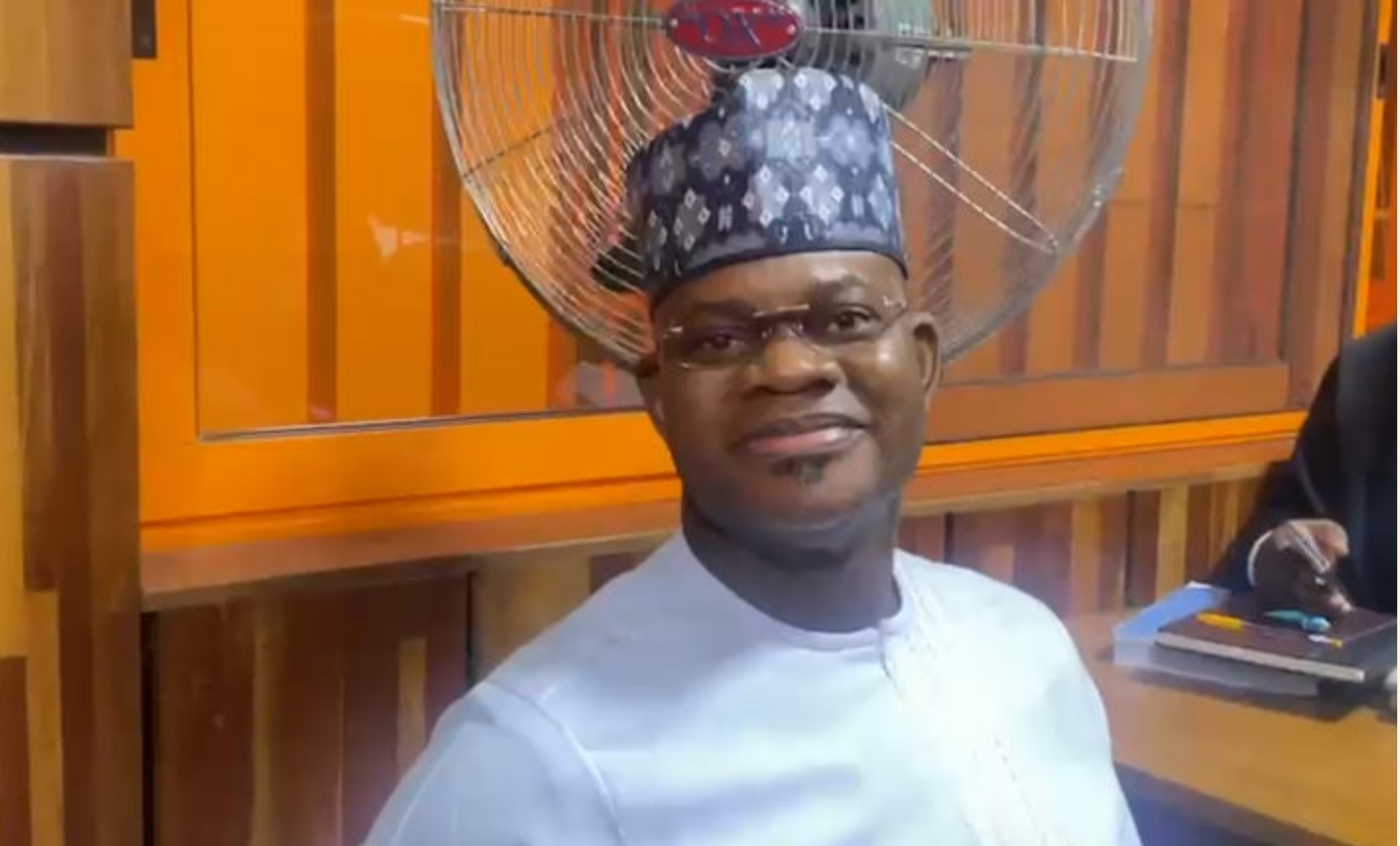
The Federal High Court in Abuja has adjourned the ongoing trial of former Kogi State Governor, Alhaji Yahaya Bello, over alleged money laundering and fraud involving ₦80.2 billion to January 29, 2026.
Bello, who served as governor from 2016 to 2024, is standing trial on a 19-count charge filed by the Economic and Financial Crimes Commission (EFCC), accusing him of misappropriating public funds and engaging in financial transactions beyond his lawful income.
At the resumed sitting on Tuesday, the seventh prosecution witness, Olomotame Egoro, a compliance officer with Access Bank Plc, completed his testimony and was discharged by the court after taking questions from both sides.
During the session, EFCC counsel, Kemi Pinheiro (SAN), sought to tender a set of documents through the witness — marked as Exhibits 33 (1–11) and 34 — believed to contain financial details relevant to the case.
However, Bello’s lawyer, Abdullahi Yahaya (SAN), objected to the admissibility of the documents, arguing that the certificate of identification attached to them was not signed by the testifying witness but by one Faruk Idiaro, raising questions about authenticity.
In response, Pinheiro maintained that while the certificate was signed by a different officer, the content of the main bank records remained valid and directly linked to the transactions under investigation.
After a brief recess, the court resumed proceedings, during which the witness clarified details contained in the Kogi State Government House Administration account statement, covering transactions from December 2018 to August 2021. He explained the seven columns in the document and what each represented in the financial records.
Justice of the Federal High Court, after hearing both arguments, adjourned the case to January 29, 2026, for continuation of trial.
The EFCC’s case against Bello is part of a broader investigation into alleged large-scale misappropriation of public funds during his tenure as governor. The former governor, however, has consistently denied all allegations, maintaining that the charges are politically motivated.