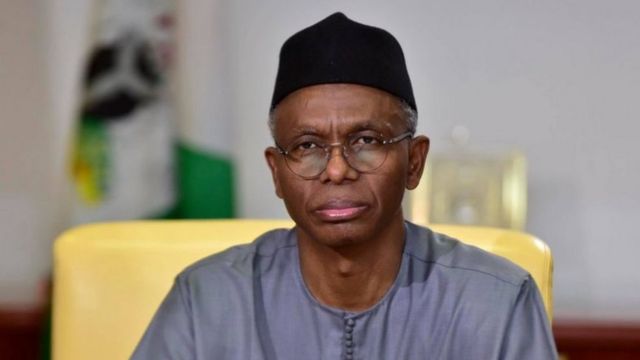
The Federal High Court in Abuja on Monday granted bail in the sum of N100 million to former Kaduna State governor, Nasir El-Rufai, who is facing trial over the alleged unlawful interception of the telephone communications of the National Security Adviser, Nuhu Ribadu.
Delivering the ruling, Justice Joyce Abdulmalik ordered El-Rufai to provide a surety who must be a federal civil servant of at least Grade Level 17 and resident in either Maitama or Asokoro districts of Abuja.
The court further directed that the surety must deposit the original Certificate of Occupancy of a landed property valued at no less than the bail amount and provide evidence of salary payments for at least three months, alongside a verified bank letter.
Additional conditions require the surety to submit an affidavit of means, a recent passport photograph, a departmental verification letter, and a six-month tax clearance certificate.
Justice Abdulmalik also ordered the former governor to surrender his international passports and barred him from travelling outside the country without court approval.
As part of the bail terms, El-Rufai is expected to report to the headquarters of the Department of State Services every last Friday of the month by 10 a.m. to sign an attendance register pending the conclusion of the trial.
The judge warned that any violation of the bail conditions would result in an automatic revocation of the bail. The court also directed the defendant to submit a letter of attestation from the chairman of the Kaduna Traditional Council and ordered an accelerated hearing of the matter.
El-Rufai, who served as Kaduna governor from 2015 to 2023 and previously held office as Minister of the Federal Capital Territory under former President Olusegun Obasanjo, is facing a five-count amended charge filed by the DSS.
The security agency alleged that the former governor admitted during an appearance on Arise TV’s “Prime Time” programme on February 13 that he aligned with others to unlawfully intercept the communications of the NSA.
According to the prosecution, the alleged act contravenes provisions of the Cybercrimes (Prohibition, Prevention, etc.) Amendment Act, 2024, as well as the Nigerian Communications Act 2003.
The DSS further accused El-Rufai of failing to report knowledge of the alleged phone interception to security authorities and of acting with others still at large in a manner that endangered public safety and national security.
However, the former governor has challenged the charges, arguing that comments he made during the television interview were casual remarks and not confessional statements under the law.
In his application seeking to quash the charges, El-Rufai maintained that statements made during a public television discussion could not legally amount to a confession because they were not obtained under caution or within the framework required by law.
The case was adjourned for accelerated hearing.