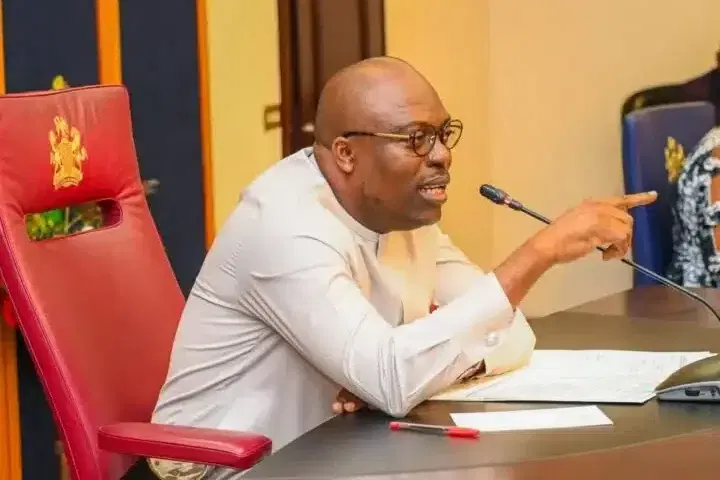
A Rivers State High Court in Port Harcourt has ruled that Governor Siminialayi Fubara has the legal right to conduct government business with the lawmakers who retained their seats in the State House of Assembly. The court also dismissed a suit seeking to compel the governor to present the 2024 budget to 27 aggrieved lawmakers who allegedly lost their seats due to defection.
The judgment, delivered on December 20 by Justice Sika Aprioku, affirmed that the governor is constitutionally allowed to transact business with the remaining legislators, following a political crisis that saw the defection of a majority of lawmakers from the state assembly.
Background of the Legal Dispute
The case, marked PHC/3552/CS/2024, was filed by the Registered Trustees of the Association of Legislative Drafting and Advocacy Practitioners. The suit named the Rivers State Government, Governor Siminialayi Fubara, and the Attorney General of the state as defendants.
The claimants sought a court order compelling Governor Fubara to re-present the N800 billion 2024 budget to the 27 defected lawmakers led by former Speaker Martins Amaewhule, arguing that the initial budget presentation was invalid without the participation of the full house.
The claimants questioned the failure to engage the assembly faction led by Amaewhule in the budget process, insisting that the governor must comply with legislative protocols.
Court’s Ruling
Justice Aprioku dismissed the suit, stating that Governor Fubara is not obligated to transact business with lawmakers who vacated their seats by defecting to other political parties. The judge noted that defection automatically results in the loss of a legislative seat, according to constitutional provisions.
“The governor cannot carry on business with those who defected and by that act of defection, lost their seats,” the ruling stated.
Justice Aprioku drew a parallel to the administration of former Governor Nyesom Wike, who conducted state business with only six members of the assembly when their numbers fell below the required two-thirds majority.
The court affirmed that Governor Fubara can legally engage with the remaining lawmakers led by the new Speaker, Oko-Jumbo, to carry out state affairs such as budget presentation, appointments, and legislative approvals.
Implications of the Judgment
The judgment clarified that until the Supreme Court delivers a verdict on the legal status of the 27 defected lawmakers, Governor Fubara can only transact business with the remaining assembly members.
The ruling also specified that the governor can proceed with key functions, including:
- Presenting budgets
- Appointing the Chief Judge and President of the Customary Court
- Screening commissioners and other appointees
The court stated that any further engagement with the defected lawmakers would require legal intervention or fresh elections conducted by the Independent National Electoral Commission (INEC).
Dismissal of Claims and Cost Awarded
Justice Aprioku dismissed the claimants’ request for declaratory and injunctive reliefs, labeling the suit as lacking merit. The court further awarded N500,000 in costs against the claimants in favor of the defendants.
The certified true copy of the judgment reads in part:
“That the claimant’s claim seeking declaratory and injunctive reliefs for the representation of the 2024 budget to the former 27 lawmakers, who defected and automatically vacated their seats, lacks merit and is accordingly dismissed.”
The judge maintained that the governor’s actions are constitutionally valid and in line with legal precedents.
Next Steps for the Aggrieved Lawmakers
The court advised the defected lawmakers to either challenge their status in court or await new elections for their vacant seats.
Legal experts suggest that this ruling could set a precedent in cases involving legislative defection and the implications for parliamentary representation and state governance.