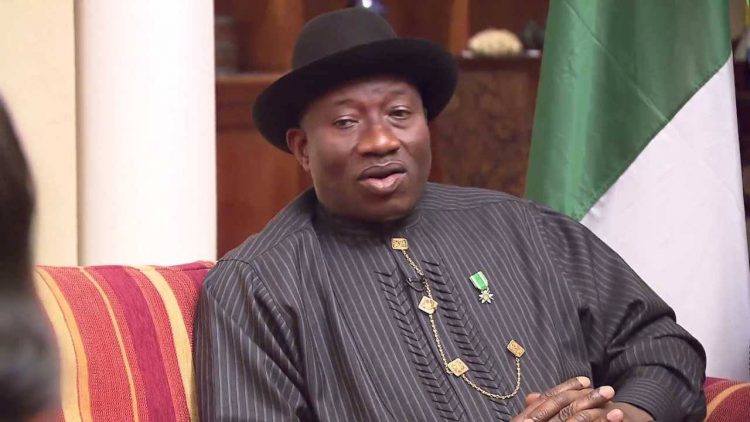
A Federal High Court in Abuja is expected to hear a suit today seeking to stop former President Goodluck Jonathan from contesting the 2027 presidential election amid renewed debate over constitutional term limits and growing speculation surrounding his political future.
The suit, marked FHC/ABJ/CS/2102/2025, was instituted by lawyer Johnmary Jideobi, who is asking the court to declare Jonathan ineligible to seek the presidency again under the provisions of the 1999 Constitution.
Justice Peter Lifu had earlier ordered that hearing notices be served on all parties after some defendants reportedly failed to file their responses within the required period.
Jonathan was listed as the first defendant in the matter, while the Independent National Electoral Commission and the Attorney-General of the Federation were joined as second and third defendants respectively.
The plaintiff is seeking an order restraining the former president from presenting himself to any political party as a candidate for the 2027 election, as well as an order preventing INEC from accepting or publishing his name as a presidential candidate.
According to court filings, the plaintiff asked the court to determine whether, based on Sections 1 and 137(3) of the Constitution, Jonathan remains eligible “under any circumstances whatsoever” to contest for Nigeria’s highest office.
Jideobi argued that Jonathan had already exhausted the constitutional limit after completing the tenure of late President Umaru Musa Yar’Adua following his death in 2010 and subsequently serving another full term after winning the 2011 presidential election.
In an affidavit filed in support of the suit, Emmanuel Agida, who deposed on behalf of the plaintiff, said reports suggesting Jonathan could return to the presidential race prompted the legal action.
The affidavit maintained that allowing Jonathan to contest again and potentially win the election would amount to him taking the presidential oath for a third time, which the plaintiff argued would violate constitutional provisions on tenure limits.
The plaintiff further warned that failure by the court to intervene could allow a political party to nominate Jonathan as its candidate, thereby creating what he described as a constitutional breach.
The case comes amid heightened political discussions over the 2027 elections and speculation about Jonathan’s possible return to active politics.
Speaking recently at a public event, Jonathan urged young Nigerians to continue advocating for peaceful and credible elections, stressing that national peace remained essential for development.
The former president also expressed concern over low voter turnout in Nigeria, describing it as one of the poorest he had observed compared to other African countries where he had monitored elections.
Jonathan linked Nigeria’s economic difficulties and increasing migration challenges to years of poor leadership and inadequate long-term planning, urging leaders to build a nation capable of inspiring future generations.
However, he did not directly confirm or deny reports linking him to a possible presidential bid in 2027.