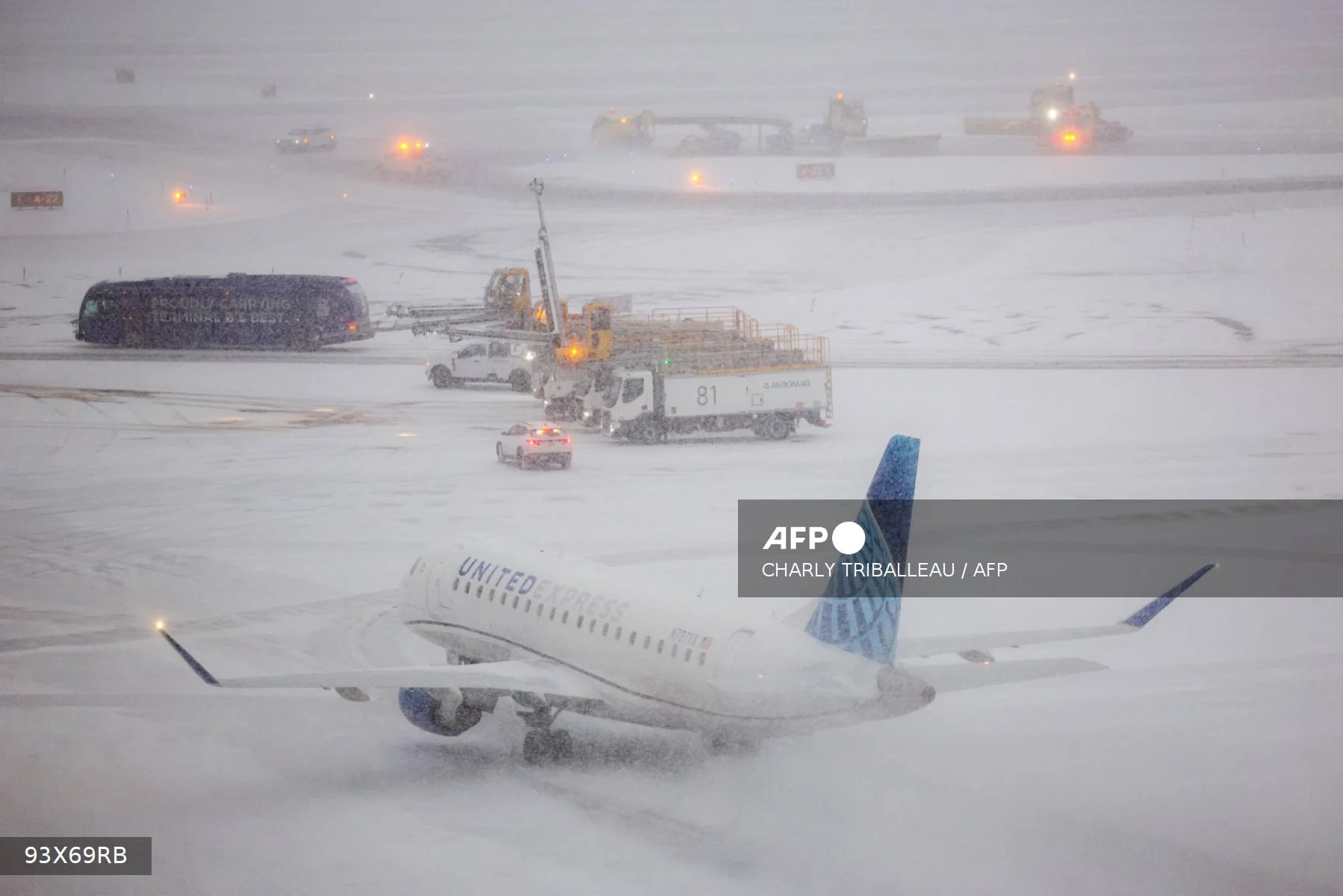
At least 30 people have died across the United States after a powerful winter storm swept through large parts of the country, leaving more than half a million homes without electricity and disrupting thousands of flights.
The sprawling storm system unleashed heavy snowfall, freezing rain, sleet and fierce winds from New Mexico to Maine, while an intense Arctic air mass tightened its grip on affected regions, complicating recovery efforts.
The National Weather Service warned that much of the northern half of the country is expected to experience temperatures “continuously below freezing through February 1,” adding that several southern states recorded unusually low temperatures for the season.
Although skies began clearing in some areas, persistent snowfall in the Northeast dumped more than 22 inches of snow in parts of Connecticut, while Boston, Massachusetts, reported over 16 inches.
Authorities linked the storm to dozens of fatalities, citing causes ranging from hypothermia to traffic accidents and recreational incidents involving sleds, ATVs and snowploughs. In Maine, seven people were killed when a small aircraft crashed during takeoff amid snowy conditions, according to the Federal Aviation Administration.
Elsewhere, a man was discovered unresponsive in New Jersey with a shovel in his hand, while eight people were found dead in New York City as temperatures plunged. Officials said investigations were ongoing to determine whether all the deaths were directly related to the storm.
Power restoration began gradually across southern states, but as of Tuesday morning, more than 540,000 customers were still without electricity, data from Poweroutage.com showed. Tennessee, Texas, Mississippi and Louisiana were among the hardest hit.
The severe weather also paralysed travel nationwide, with more than 9,000 flights cancelled or delayed.
Stranded passengers crowded major airports, including Dallas–Fort Worth, where traveller Alan Vazquez said he had been waiting since Sunday. “We don’t know if we are going to make it or not,” he said.
In Nashville, Mayor Freddie O’Connell reported that ice-laden trees continued to collapse, knocking out power lines that had already been repaired. Cities across the country opened emergency warming centres to shelter residents from the cold.
National Weather Service meteorologist Allison Santorelli said recovery efforts were hampered by the storm’s wide reach, preventing northern states from sharing resources with less-prepared southern communities.
“Many of these locations don’t have the means or equipment to handle events like this,” she said. “We’re especially worried about people who are still without power.”
Meteorologists attributed the extreme conditions to a distorted polar vortex — a mass of cold Arctic air that occasionally stretches southward, sending frigid temperatures across North America. Scientists note that such disruptions may be occurring more frequently, possibly linked to climate change, though natural variability remains a factor.
Dave Radell, a National Weather Service meteorologist in New York, explained that the storm produced unusually dry, fluffy snow, allowing strong winds to whip it around easily, reducing visibility and slowing road-clearing operations.