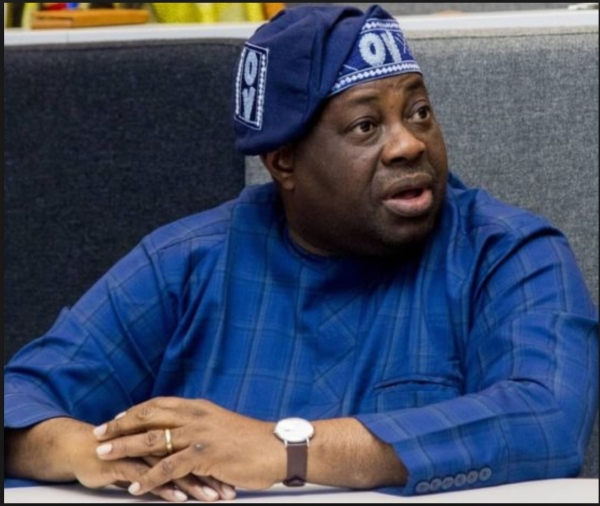
Prominent Nigerian media entrepreneur and publisher of Ovation Magazine, Dele Momodu, has revealed that a presidential aspirant in the 2022 Peoples Democratic Party (PDP) primary allegedly distributed $30,000 to each of the 774 delegates to secure their votes. Momodu disclosed this during an interview on the Key to Keys podcast, lamenting the influence of money on Nigeria’s political landscape.
Monetized Politics and Regret Over Nomination Form
Momodu, who participated in the 2022 PDP primary, expressed regret over spending nearly N50 million on the party’s presidential nomination form, describing the process as “heavily monetized.” He vowed not to run for any party’s presidential ticket again unless adopted as a consensus candidate.
“Unless a major political party decides to adopt me through a consensus that Dele Momodu is best suited to change and lead Nigeria, then I can consider it,” he said. “But if I have to pick my money to go and buy a presidential nomination form of about N100 million, I won’t bother. I spent about N50 million last time—money that could have been invested elsewhere—and nobody voted for me. Not even one vote, because everything was monetized.”
Allegations of Delegate Bribery
Momodu’s remarks shed light on the role of financial inducements in Nigerian politics. He detailed how one aspirant reportedly distributed $30,000 to each delegate, a sum amounting to over $23 million for the 774 delegates nationwide. He criticized the system, accusing politicians of hoarding untraceable wealth and leveraging raw cash to manipulate outcomes.
“There was one of the candidates who paid as high as $30,000 per delegate. How do you compete with that?” Momodu asked. “These are people who have stolen the country blind, especially those in oil-rich areas. They have so much money in raw cash—untraceable by banks. If today you ask some politicians for $500 million to become President, they will find it. People like us, where will we even start?”
Challenges in Competing Against the Political Elite
Momodu highlighted the disparity between ordinary aspirants and Nigeria’s political elite, whom he accused of using vast, unregulated cash reserves to dominate elections. He argued that this financial control translates into disrespect for ordinary Nigerians and hinders the emergence of credible leaders.
“It’s not easy to compete with these people, and that’s why they insult Nigerians anyhow. The amount of money available to them in raw cash is unimaginable. There’s no country in the world where people control raw cash like Nigeria.”
Broader Implications for Nigeria’s Democracy
Momodu’s revelations underscore the challenges facing Nigeria’s democracy, particularly the monetization of its electoral process. Critics argue that such practices undermine the integrity of elections, limit participation to only the wealthy elite, and perpetuate corruption within the political system.
The publisher’s candid admission has reignited conversations about the need for electoral reforms, financial transparency, and greater accountability in Nigeria’s political processes.