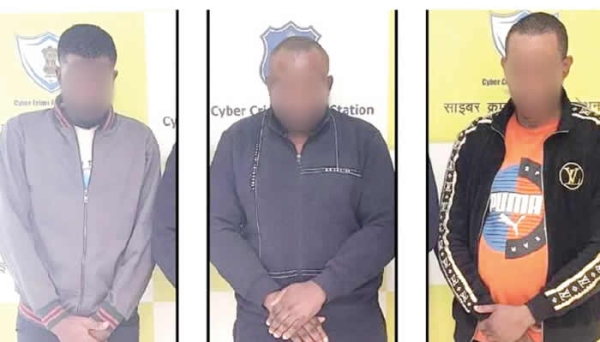
Indian authorities have arrested three Nigerian nationals in Delhi for allegedly orchestrating a cyberfraud scheme that defrauded an Indian woman of over ₹2.62 lakh. The suspects, identified as Lezhu John, Gibril Mohammed, and Egboola Ekena, are accused of running a large-scale cybercrime racket, police confirmed on Saturday.
The Fraud Scheme
According to the Cybercrime Police, the victim connected with one of the suspects on Instagram, where he posed as “Sohn Yunmin,” a purported chemical engineer from the United States. Using fake credentials, the suspect built a rapport with the victim and convinced her to transfer money under false pretenses.
The fraud began when the suspect claimed he needed ₹50,000 to buy machinery, which the victim transferred willingly. Soon after, she received calls from another accomplice, posing as a customs officer named Niharika, demanding additional payments for a parcel purportedly containing U.S. dollars.
Over time, the victim transferred a total of ₹1.69 lakh to various accounts. She later realized she had been duped and filed a complaint at the Cybercrime Police Station.
Extensive Cybercrime Network
Investigations uncovered that the suspects were part of a sophisticated cybercrime operation involving over 500 bank accounts used to execute fraudulent transactions. Authorities revealed that more than 900 complaints have been filed across India in connection with these accounts.
“The accused were using multiple fake identities and had numerous photographs of men and women stored on their phones, which were used to create fraudulent social media profiles,” said M.M. Rajput, Assistant Commissioner of Police (Cybercrime) in Vadodara.
The suspects allegedly targeted victims by exploiting social media platforms and building fake relationships. The trio operated a network that defrauded numerous individuals across the country, according to police findings.
Legal Implications
If convicted, the suspects face a minimum sentence of three years under Section 66D of the Indian Information Technology Act (2000) and the Indian Penal Code. Section 66D stipulates:
“Whoever, by means of any communication device or computer resource, cheats by personation shall be punished with imprisonment of either description for a term which may extend to three years, and shall also be liable to a fine, which may extend to ₹1 lakh.”
Tracking and Arrest
The police used bank transaction details to trace the suspects, leading to their arrest in Delhi. Authorities are currently investigating the full extent of their operations and the total number of victims.
Ongoing Investigation
The suspects have yet to be formally charged in court, and it remains unclear when legal proceedings will commence. The case has raised alarm over the growing prevalence of cybercrimes in India and the need for enhanced public awareness about online fraud.
Law enforcement agencies have urged citizens to exercise caution while interacting with strangers on social media and to report suspicious activities promptly. Meanwhile, the Cybercrime Police continue to probe the network, aiming to dismantle its operations and prevent further victimization.