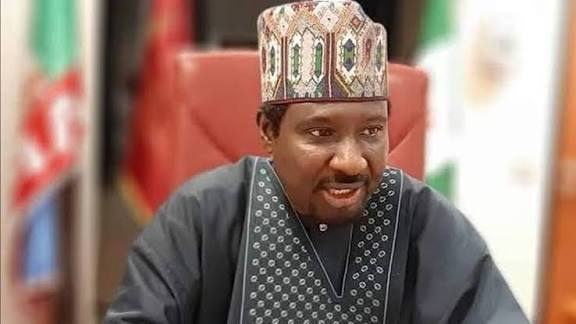
Nigeria’s Deputy Senate President, Senator Barau Jibrin, has issued a sharp rebuke to U.S. President Donald Trump over his recent remarks describing Nigeria as a “disgraced country” and threatening possible military intervention over the alleged persecution of Christians.
In a statement captured in a widely circulated video, Jibrin described Trump’s comments as “un-American” and a clear violation of international law, urging him to withdraw the threat and tender an apology to Nigerians.
“For the President of the United States to say, ‘We will attack you, and Nigeria is a disgraced country,’ is quite unacceptable,” Jibrin said. “If there are issues, they must be addressed through the proper international channels, such as the United Nations, not through unilateral threats.”
His condemnation has been echoed by several northern organizations, including the Northern Elders’ Forum (NEF), the Miyetti Allah Cattle Breeders Association of Nigeria (MACBAN), and the Arewa Youth Consultative Council (AYCC), all of whom decried Trump’s comments as an attempt to interfere in Nigeria’s internal affairs.
NEF spokesperson, Professor Abubakar Jiddere, accused the U.S. of hypocrisy, claiming that its interventions in other nations—such as Iraq, Libya, and Afghanistan—have led to instability rather than peace. He insisted that Nigeria has the capacity to manage its domestic challenges without foreign intrusion.
MACBAN’s National President, Alhaji Baba Othman-Ngelzarma, dismissed the allegations linking the association to religious extremism as “baseless and malicious.” He emphasized that MACBAN remains a law-abiding body representing pastoral communities across the country and is preparing documents to clarify its position.
Similarly, AYCC National President, Zaid Ayuba, suggested that Trump’s comments were motivated by economic interests tied to Nigeria’s vast natural resources. He called on the Nigerian government to respond through diplomatic channels and warned that any U.S. military action would endanger innocent citizens.
“The United States has a long history of prolonged involvement in countries it invades,” Ayuba noted. “Such action would only destabilize Nigeria and worsen the plight of ordinary people.”
The unified response from Nigerian leaders and civil groups underscores the nation’s firm rejection of foreign threats and its insistence on resolving disputes through diplomacy and international law.