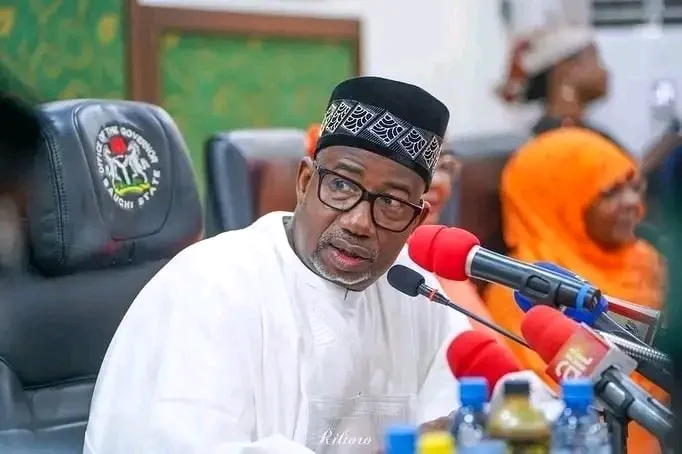
The Economic and Financial Crimes Commission (EFCC) has rejected claims by Bauchi State Governor, Bala Mohammed, that it is being used by political opponents to persecute him and members of his administration.
In a statement posted on its official X handle on Friday, the anti-graft agency described the allegations as “wild” and “far-fetched,” stressing that it operates independently and without political interference.
The commission was reacting to comments attributed to Mohammed, in which he alleged that the EFCC was being influenced by political interests, particularly the Minister of the Federal Capital Territory, Nyesom Wike, to target him and his aides.
“The EFCC is an independent agency created to fight economic and financial crimes,” the statement said. “The commission is non-partisan and discharges its mandate without affection or ill will. Any attempt to portray it as an agency that panders to the demands of political interests is mischievous and condemnable.”
The EFCC said it was improper for the governor to link its activities in Bauchi State to the influence of any political office holder, noting that no individual has the power to direct its investigations.
“It is derogatory for Mohammed to ascribe the commission’s activities in Bauchi State to the influence of Mr Wike,” the statement added. “No political office holder is in a position to influence the investigative activities of the commission.”
The agency further stated that Mohammed was standing trial for money laundering at the time he was elected governor, adding that the case was only suspended due to the constitutional immunity attached to his office.
“If Bala Mohammed wants to be honest, he would have revealed to Nigerians that he was standing trial for money laundering at the time he won the election as governor. Only constitutional immunity has put that case in abeyance,” the EFCC said.
On ongoing cases involving some Bauchi State Government officials, the commission said the facts had already been presented before the courts and urged the public to review the charge sheets to determine whether the cases were politically motivated or the outcome of investigations.
The EFCC also dismissed claims that it was exaggerating matters by linking some cases to terrorism financing, insisting it was simply enforcing existing laws.
“It is hypocritical for opposition politicians to cry persecution whenever one of their own is investigated, yet remain silent when members of the ruling party face similar charges,” the statement noted, adding that the commission had recently arraigned a senior member of the ruling party without any such accusations.
The anti-graft body advised the governor to concentrate on governance and allow it to carry out its mandate of sanitising Nigeria’s financial system.
Mohammed had earlier accused the EFCC of political persecution following the commission’s legal actions against officials in his administration, alleging that the moves were intended to pressure him into defecting from the Peoples Democratic Party to the ruling All Progressives Congress.