Former Kaduna State Governor, Nasir El-Rufai, has criticised the Senate over changes made to provisions on electronic transmission of election results in the proposed Electoral Act amendments, declaring his support for the protest led by former Labour Party presidential candidate, Peter Obi.
Speaking during an interview on Trust TV on Monday, El-Rufai said he would have personally joined the protest at the National Assembly if he had been in Nigeria. He accused lawmakers, particularly in the Senate, of undermining electoral transparency by altering the requirement for real-time electronic transmission of results.
El-Rufai argued that mandatory real-time transmission from polling units is critical to preventing electoral manipulation and enhancing the credibility of elections. According to him, resistance to the reform is driven by political interests rather than concern for democratic integrity.
“It’s unfortunate I have not been able to return to Nigeria. I would have joined Mr Peter Obi and other party leaders in protesting to the National Assembly to restore the real-time and mandatory transmission of results from the polling unit,” he said.
The former governor alleged that the ruling party’s opposition to real-time transmission was motivated by survival instincts, noting that such a system would drastically reduce rigging. He added that while the House of Representatives appeared supportive of the reform, the Senate had yet to fully embrace it.
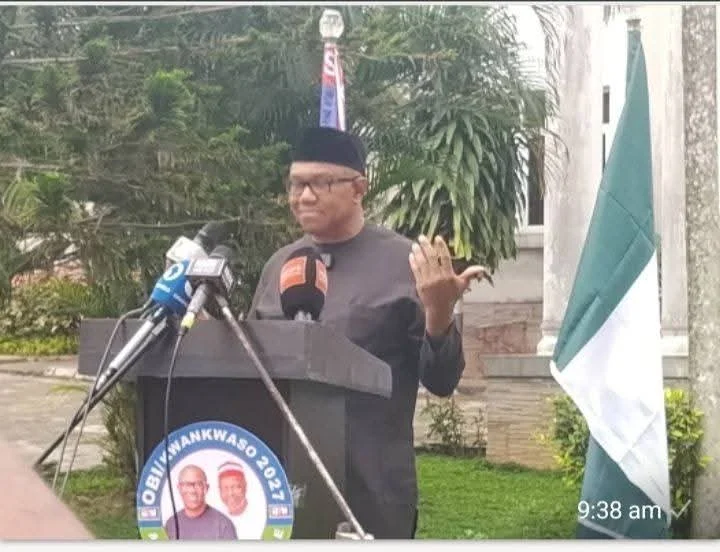
PUNCH Online had earlier reported that Obi on Monday led hundreds of protesters to the National Assembly Complex in Abuja to oppose the Senate’s decision to delete the phrase “real-time” from provisions on electronic transmission of results in the Electoral Act Amendment Bill.
The protest, tagged “Occupy the National Assembly,” was organised by members of the Obidient Movement alongside pro-democracy groups, who described the Senate’s action as a deliberate attempt to weaken electoral transparency ahead of the 2027 general elections.
The controversy followed the Senate’s passage of the Electoral Act 2022 (Repeal and Reenactment) Amendment Bill, 2026, through third reading last week. Critics argue that removing “real-time” from the relevant sections opens the door to post-election manipulation, despite assurances from the Senate that electronic transmission had not been scrapped entirely.
During the protest, demonstrators marched from the Federal Secretariat to the National Assembly, chanting solidarity songs and carrying placards with inscriptions such as “Our votes must count,” “No to electoral robbery,” and “Protect democracy now.”
Security operatives from the Nigeria Police Force, the Nigerian Army and the Nigeria Security and Civil Defence Corps barricaded access to the complex, forcing protesters to stage their rally outside the main gate.
Addressing journalists, Obi warned that Nigeria’s democratic progress was under threat, stressing that credible elections remain central to national development. He urged lawmakers to clearly guarantee electronic transmission of results in law, insisting that past experiences showed the dangers of loopholes in the electoral process.
“We don’t want any glitch again. We want things to come back to normal,” Obi said, calling on the National Assembly to reverse the contentious amendment.