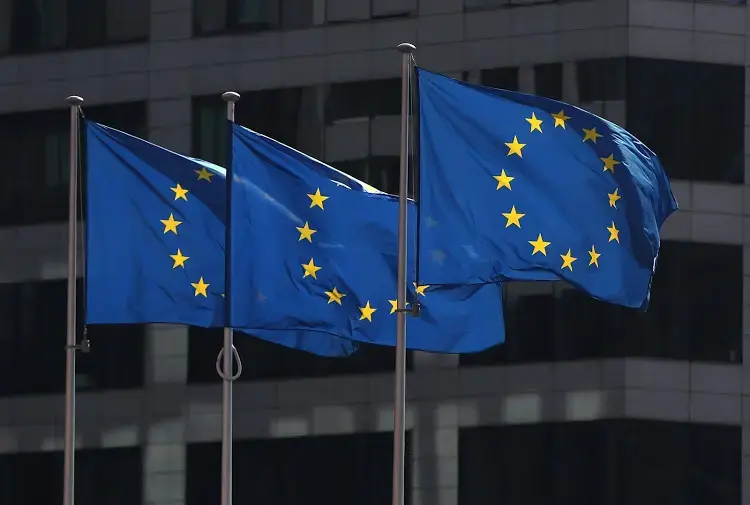
The European Union (EU) has unveiled plans to allocate a staggering €150 billion over four years, until 2027, to bolster infrastructure development in Nigeria and several other African countries. This momentous commitment comes as part of the EU’s ambitious Global Gateway Initiative, aimed at enhancing connectivity, fostering sustainable development, and reinforcing economic ties between the EU and its partner countries, Nigeria included.
The announcement was made by the EU Commissioner for International Partnerships, Jutta Urpilainen, during the formal launch of the Global Gateway Initiative held in Abuja on Thursday.
The Global Gateway Initiative is meticulously designed to underpin infrastructure development across various sectors, including transportation, energy, and digital networks. It will also extend its support to agriculture, economic growth, healthcare, education, and environmental protection while promoting cooperation and partnerships with partner countries like Nigeria.
In her statement, Urpilainen highlighted the need for resilient global connections amid the increasing fragmentation of the world. She referenced recent global events, such as Russia’s conflict with Ukraine, the military takeover in Niger, and the escalation of the Israel-Palestine conflict, as compelling reasons for countries to seek collaboration and partnership.
She stated, “In such a world, the Global Gateway strategy is our positive offer to build resilient connections in the world through strategic partnerships to jointly address the challenges of our times, from fighting climate change to improving health systems. Together, we intend to mobilize 300 billion Euros in investments by the year 2027, with half of them earmarked for Africa; it is 150 billion Euros by the year 2027. Nigeria features prominently in the Global Gateway investment package.”
The EU’s commitment extends to supporting the rollout of 5G technology in Nigeria to bolster the digital economy, as well as exploring potential loans to aid Small and Medium Enterprises (SMEs) in the digital and print sectors. The energy sector will also receive significant financial support, including the development of mini-grids and small hydropower plants for various purposes.
Furthermore, the EU is actively involved in the rollout of digital identification systems and mobile network expansion in Nigeria. Plans are in motion to construct a line connecting Katsina and Daura, with proposals to enhance the Nigeria-Benin interconnection within the West African power framework.
Urpilainen stressed the transformative power of education and unveiled an empowerment project in northwestern Nigeria, conducted in collaboration with the Nigerian government. This project aims to promote quality basic education in the northern regions. Moreover, Nigeria has been a major beneficiary of the student mobility and higher education cooperation project under Erasmus+, with more than 2,020 Nigerian students receiving scholarships to study in the EU in 2022.
The EU’s commitment to a long-term partnership with Nigeria through the Global Gateway Initiative aims to achieve shared goals and objectives across various sectors, including agriculture, energy, health, digital, education, and social protection.
Mr. Bosun Tijani, the Minister of Communication, Innovation, and Digital Economy, lauded the Global Gateway Initiative’s alignment with President Bola Ahmed Tinubu’s Renewed Hope agenda. Tijani emphasized that this initiative is a pivotal step toward a developed Nigeria that benefits all its citizens and enables the government to fulfill its key focus areas.
Tijani also highlighted the historical and cultural ties between Africa and Europe, noting that leveraging these ties would contribute to a more resilient global economy. He emphasized the importance of Nigeria’s role in this partnership, particularly within the Ministry of Communication, Innovation, and Digital Economy, to unlock the nation’s potential and support its young, dynamic population.
He stated, “Nigeria is a country that is extremely blessed; not only are we blessed with natural resources that can provide opportunities for us to help meet global challenges and food security, we are also blessed with a very young, agile population.”
Tijani concluded by underscoring the Nigerian government’s commitment to creating opportunities for young people to participate in the global economy. The EU’s substantial investment aligns perfectly with this mission, fostering cooperation and shared prosperity in Nigeria and beyond.