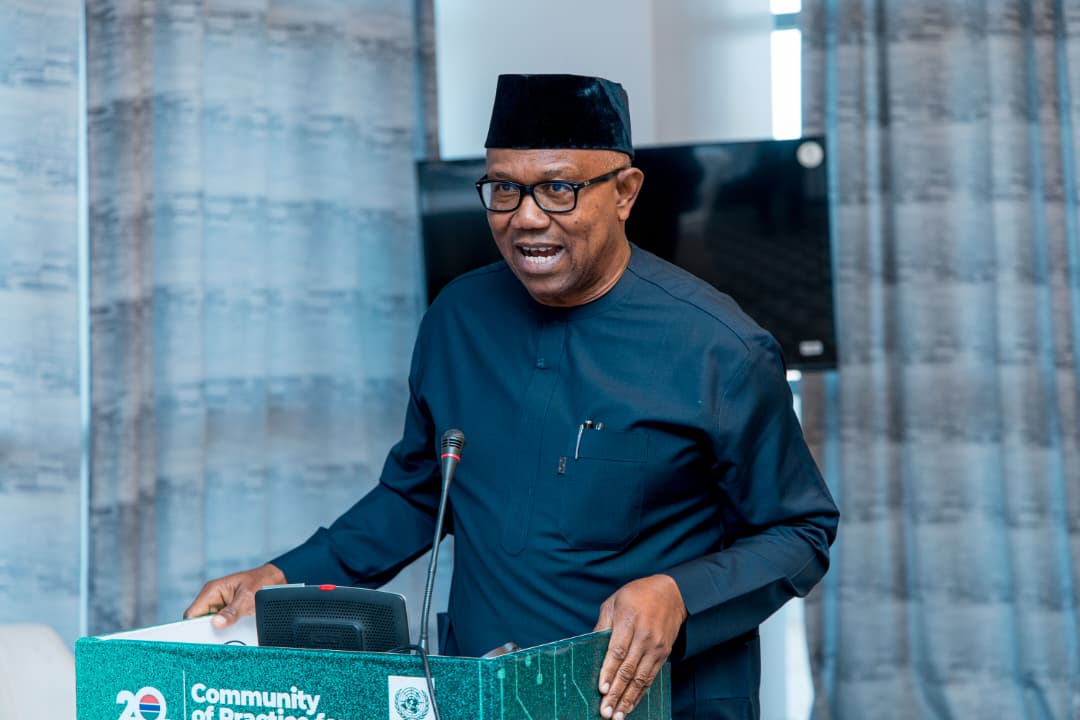
Former Labour Party presidential candidate, Peter Obi, has declared that he would serve only one term of four years if elected president of Nigeria, saying nothing would make him remain in office beyond that period.
Obi made the declaration during an interview scheduled to air on News Central TV on Thursday, where he spoke extensively on governance, political stability, and the country’s worsening economic situation.
In a video clip from the interview that has circulated widely on social media, the former Anambra State governor stressed that he had no intention of extending his stay in office beyond a single tenure.
“I want to be a one-term president because of stability. I would not stay a day, with a gun to my head, longer than four years,” Obi said.
The former governor explained that his position was rooted in his belief that Nigeria needs purposeful leadership focused on reforms and national recovery rather than prolonged political ambition.
Obi also used the interview to criticise the administration of President Bola Ahmed Tinubu, accusing the government of implementing economic policies that have worsened hardship across the country.
According to him, Nigerians are currently experiencing one of the toughest economic periods in recent history, marked by rising inflation, increased borrowing, high food prices, and declining purchasing power.
He expressed concern over the growing cost of living, arguing that many families and businesses are struggling to survive amid current economic realities.
Obi maintained that government policies should focus more on productivity, investment in critical sectors, and improving the welfare of citizens rather than deepening the nation’s debt burden.
The former Labour Party candidate emerged as one of the leading opposition voices after the 2023 presidential election, where he contested against Tinubu of the All Progressives Congress and former Vice President Atiku Abubakar of the Peoples Democratic Party.
Obi finished third in the fiercely contested election but retained a strong support base, particularly among young Nigerians and urban voters, many of whom rallied behind his campaign message centred on accountability, transparency, and economic reform.
Since the election, he has consistently criticised the Tinubu administration’s handling of the economy, especially following the removal of fuel subsidy and the floating of the naira, policies which have triggered sharp increases in transportation, food, and living costs nationwide.
Political observers say Obi’s latest remarks about serving only one term may further shape discussions ahead of the 2027 general elections, as opposition figures continue to position themselves against the ruling party.