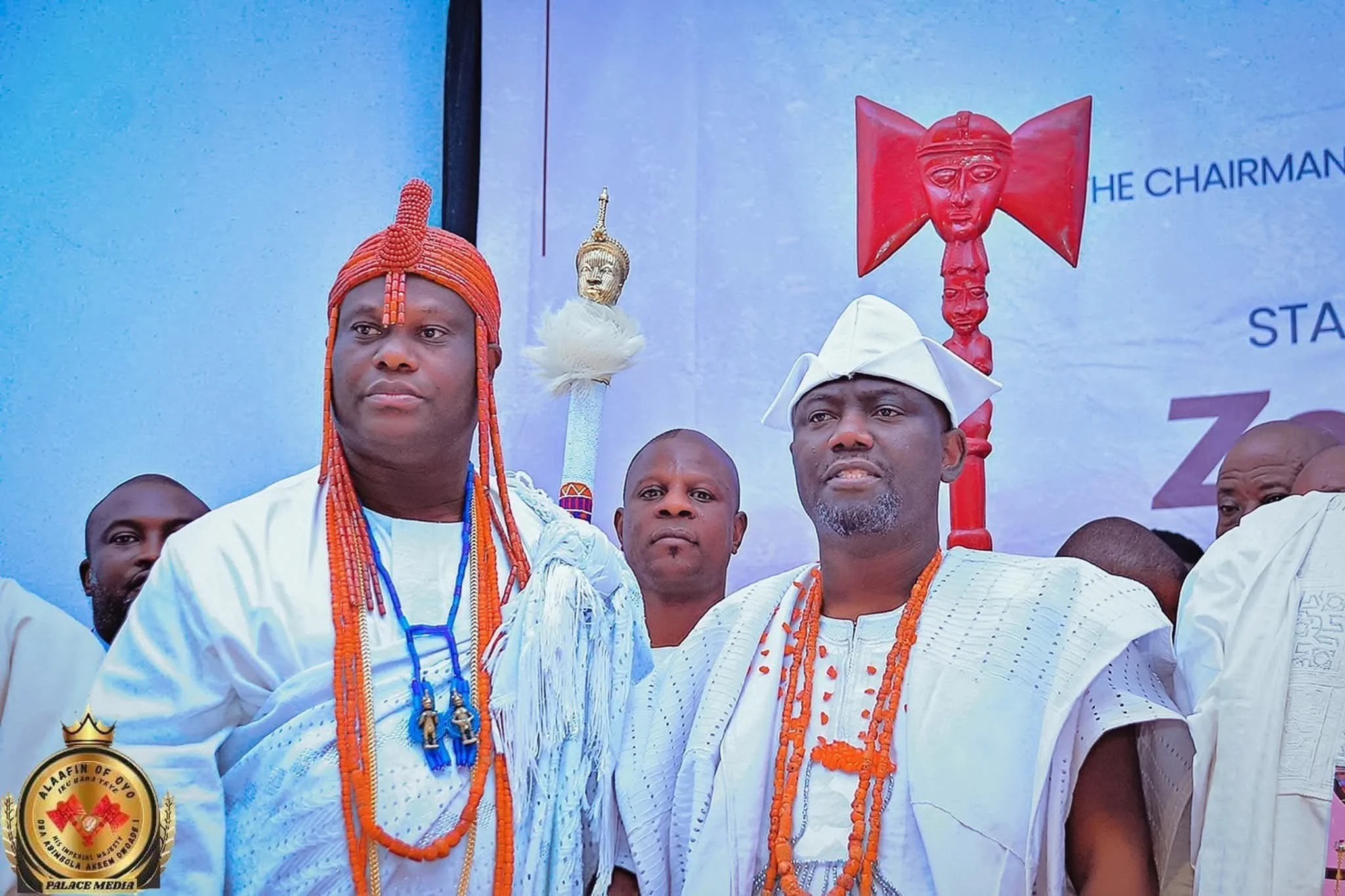
The recent conferment of chieftaincy titles on First Lady Oluremi Tinubu and her son, Seyi Tinubu, by two foremost Yoruba monarchs has reignited a long-standing debate over traditional authority and hierarchy in Yorubaland.
The titles, bestowed separately by the Ooni of Ife, Oba Adeyeye Ogunwusi, and the Alaafin of Oyo, Oba Abimbola Owoade, have triggered renewed arguments among supporters of both royal stools over which throne holds supreme traditional authority.
On December 7, Oba Ogunwusi installed the First Lady as Yeye Asiwaju Gbogbo Ile Oodua during activities marking his 10th coronation anniversary in Ile-Ife. The title was previously held by the late Hannah Idowu Dideolu Awolowo, wife of the late nationalist leader, Chief Obafemi Awolowo.
The ceremony drew a wide array of dignitaries and traditional rulers, including the Sultan of Sokoto, Alhaji Muhammadu Sa’ad Abubakar; the Olu of Warri, Ogiame Atuwatse III; and the Soun of Ogbomoso, Oba Ghandi Afolabi, among others.
Two weeks later, on December 21, the Alaafin of Oyo conferred the title of Okanlomo of Yorubaland on Seyi Tinubu at a ceremony in Oyo town. The title is traditionally reserved for individuals regarded as highly respected and widely accepted within the Yoruba socio-cultural space.
The event was attended by traditional rulers, political leaders, business figures and guests from within Nigeria and the diaspora.
However, the conferment reopened an unresolved disagreement between the two monarchs’ camps. In August, the Ooni had installed Ibadan businessman, Dotun Sanusi, with the same Okanlomo of Yorubaland title—an action the Alaafin openly rejected.
At the time, Oba Owoade, through his Director of Media and Publicity, Bode Durojaiye, reportedly demanded that the Ooni revoke the title, insisting that only the Alaafin has the authority to bestow chieftaincy titles bearing the name “Yorubaland.”
Reiterating that position during Seyi Tinubu’s installation, the Alaafin declared that history and law vested such authority solely in the Oyo throne.
“The law is clear. History is settled. Chieftaincy titles that bear the name Yorubaland—whose meaning and influence are not confined to a single kingdom—fall under a singular, established authority, and that authority is the throne of Oyo,” the monarch said.
The statement sparked reactions across the South-West, with many interpreting it as a direct rebuttal of the Ooni’s actions.
Speaking with Saturday PUNCH, the Salu of Edunabon in Osun State, Oba Adesoji Oladepo, defended the Ooni’s actions, insisting that the Ife monarch remains the spiritual head of all Yoruba kings.
“The Ooni’s position as the head of monarchs in Yorubaland is incontestable,” Oladepo said, arguing that Yoruba kings historically trace their beaded crowns to Ile-Ife.
He cited the presence of several prominent monarchs at ceremonies organised by the Ooni as evidence of broad traditional support, contrasting it with what he described as limited attendance at the Alaafin’s event.
“All Yoruba kings inherited their beaded crowns from the Ooni, who himself wears a distinct crown symbolising his primacy. Nobody should attempt to compete with or lord it over the Ooni,” he added.
Efforts to obtain an official response from the Alaafin’s palace were unsuccessful, as his spokesperson declined comment.
However, a senior aide to the Alaafin, who spoke on condition of anonymity, maintained that Oba Owoade’s position was grounded in historical records and legal precedent.
“Kabiyesi was stating verifiable historical facts. Titles bearing ‘Yorubaland’ fall exclusively under the authority of the Alaafin. There is no rivalry or bitterness between the Alaafin and the Ooni. Any suggestion of a feud is a distortion,” the aide said.
The renewed debate has once again highlighted the sensitive balance of tradition, history and symbolism among Yoruba royal institutions, with observers urging restraint to prevent cultural disagreements from escalating into broader divisions.