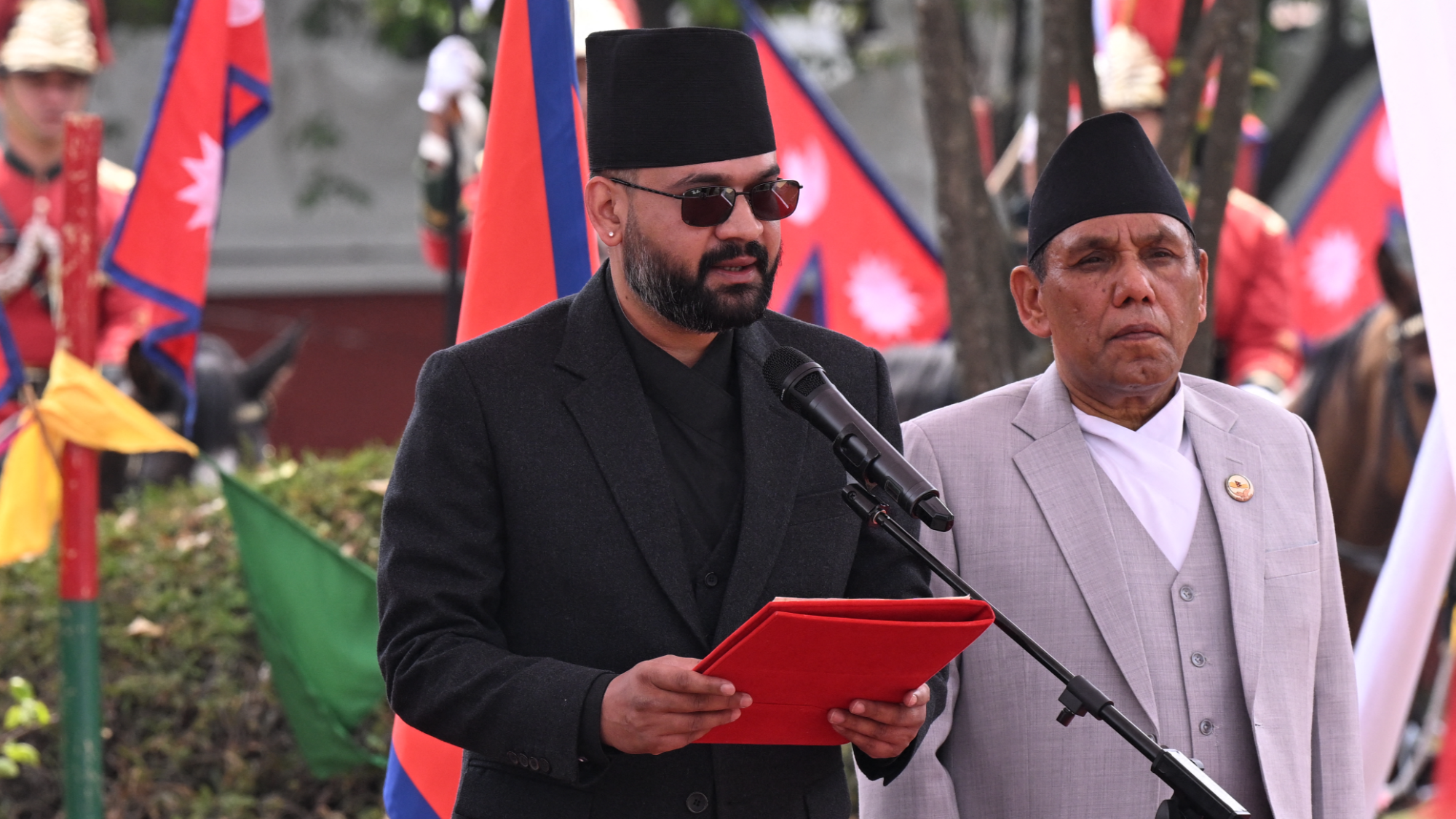
Balendra Shah has been sworn in as Nepal’s prime minister following a decisive election victory that signals a major shift in the country’s political direction.
The 35-year-old leader took the oath of office on Friday at the presidential residence in Kathmandu, becoming one of the youngest heads of government in Nepal’s recent history and the first Madhesi to hold the position.
Shah, a former rapper turned politician, led the Rastriya Swatantra Party to a commanding win, securing 182 seats in the 275-member parliament during the March 5 elections. The landslide result reflects growing public demand for reform, particularly among young voters.
The vote marked the first national election since the deadly anti-corruption protests that erupted in September last year, leaving dozens dead and exposing deep frustration over governance, unemployment, and inequality.
Political analyst Puranjan Acharya said the new administration faces immediate pressure to deliver tangible results.
“The first test of the new government lies in transparent and prompt service delivery, as citizens expect early signs of good governance,” he said.
Among Shah’s early challenges will be addressing the findings of an investigative panel into the protest crackdown, including calls to prosecute those held responsible. The report is said to implicate former Prime Minister K.P. Sharma Oli.
Nepal, a Himalayan nation of about 30 million people, continues to grapple with economic hardship, with roughly 20 percent of its population living in poverty. Thousands of citizens leave the country each day in search of better opportunities abroad, highlighting persistent employment challenges.
The country’s long-standing political instability also remains a concern. Since 1990, Nepal has seen more than 30 governments, none of which completed a full term.
In the latest election, the Nepali Congress secured 38 seats, trailing far behind Shah’s party, while the Communist Party of Nepal (Unified Marxist-Leninist) won 25 seats.
With a strong mandate and heightened public expectations, Shah now faces the task of restoring stability and rebuilding trust in government institutions.