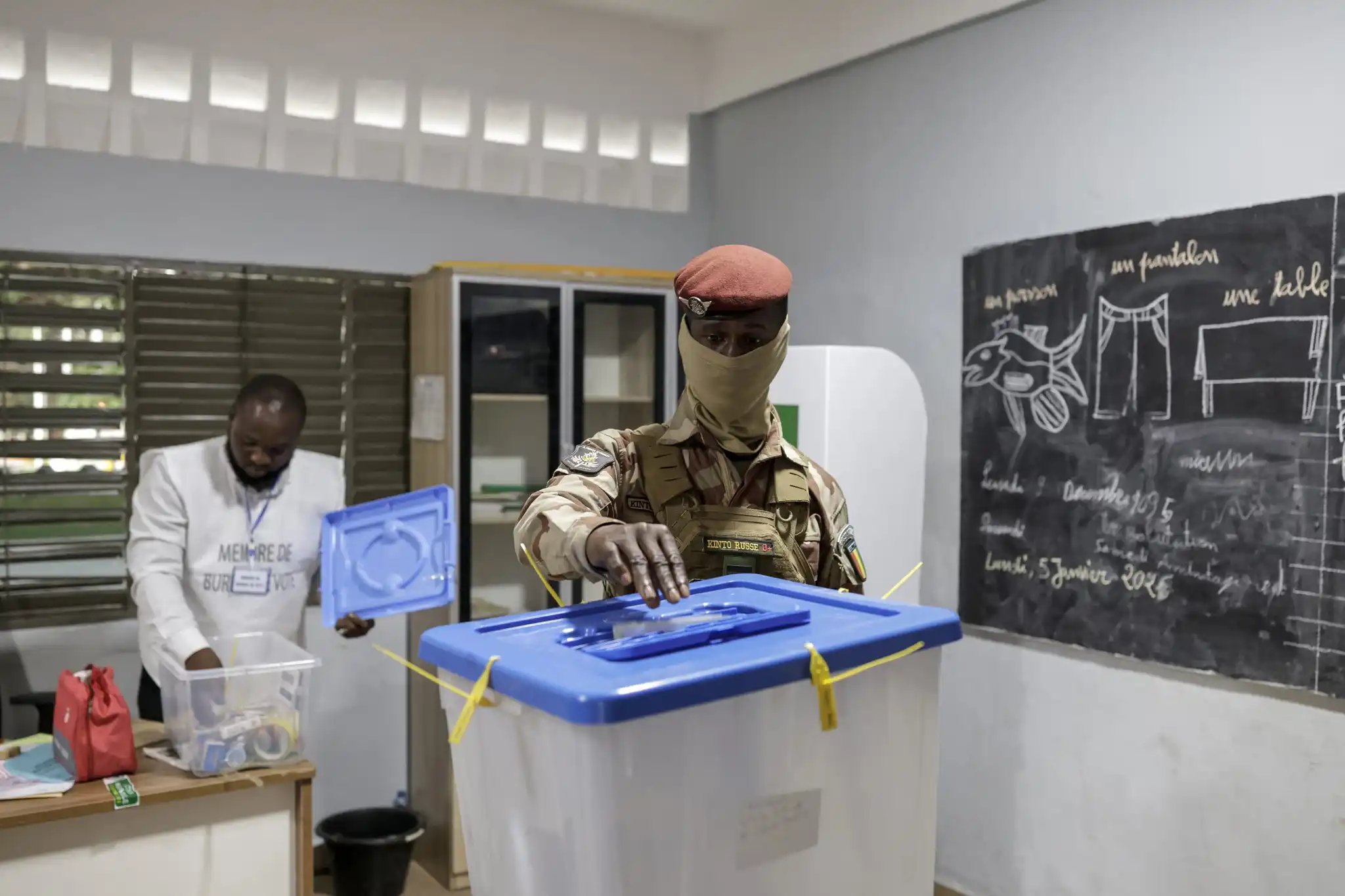
Guineans on Sunday went to the polls in a presidential election widely expected to be won by junta leader Mamady Doumbouya, nearly four years after he led the military coup that toppled former president Alpha Condé.
Doumbouya’s decision to contest the election marks a reversal of his earlier pledge to oversee a transition to civilian rule and refrain from seeking elective office. He had promised to hand over power by the end of 2024 but is now running as an independent candidate.
The election has been overshadowed by controversy, with major opposition figures barred from participating and reports of a clampdown on dissent. United Nations High Commissioner for Human Rights Volker Türk said on Friday that the campaign period was characterised by intimidation of opposition actors, alleged politically motivated enforced disappearances and restrictions on media freedom.
Guinea’s opposition has called for a boycott of the vote in the mineral-rich country, where more than half of the population lives in poverty, according to World Bank data.
Doumbouya seized power in September 2021, ending Guinea’s first sustained democratic experiment that began with the election of Alpha Condé in 2010. Analysts say the country has since returned to authoritarian rule.
“Guinea has effectively reverted to what it has mostly known since independence in 1958 — authoritarian governance, whether civilian or military,” said Gilles Yabi, founder of the West African think tank Wathi.
About 6.8 million registered voters are eligible to choose among nine candidates, including Doumbouya, 41. Polls are scheduled to close at 6:00 p.m. GMT, with provisional results expected within 48 hours, according to the head of the General Directorate of Elections, Djenabou Touré.
With his remaining challengers relatively unknown, observers say Doumbouya is likely to secure victory in the first round.
The election follows the adoption of a new constitution in a September referendum boycotted by the opposition. The constitution permits members of the ruling junta to run for office and extends presidential terms from five to seven years, renewable once.
Opposition figures including former prime minister Cellou Dalein Diallo have dismissed the process as an “electoral charade” designed to legitimise the military’s grip on power. Diallo, along with former president Condé and ex-prime minister Sidya Touré, was barred from contesting due to residency and age restrictions under the new constitution.
Analysts say voter turnout and the credibility of the process will be key indicators of the election’s legitimacy. This is the first presidential vote since 2006 to be organised directly by a government ministry rather than an independent electoral commission.
Despite political tensions, Guinea has maintained relatively strong ties with France and other international partners, unlike neighbouring Mali, Burkina Faso and Niger, which are also under military rule.
In campaign messages shared online, Doumbouya has highlighted infrastructure projects, anti-corruption efforts and the launch of operations at the Simandou iron ore mine, one of the world’s largest. While such initiatives have raised public expectations, analysts caution that questions remain about Guinea’s future economic governance after the election.