By JONATHAN SONIA FAVOUR
In today’s world, technology has become dominant and an important factor to consider in our daily activities. When machines were introduced, we explained how they made our tasks easier, faster, and more efficient than manual labour. But how true is this?
Then digital technology came into the picture. Technology became known for its speed, accuracy, efficiency, durability, and longevity. It also introduced the ability to record and store information for a very long time, making work much easier, faster, and more efficient than before.
Think about the time when post offices were recognised for the hard work they put in to ensure that handwritten letters were delivered to recipients without damage. Consider how much time, patience, and effort were required to ensure that communication took place. Think about how long it took to receive feedback on information passed through such means, because communication without feedback is not complete.
Today, we have smartphones, and communication flows seamlessly. A message is sent, feedback is received instantly, and we continue with our lives.
Thank God for technology! Indeed, it has helped mankind in so many ways. Technology enables fast communication, instant feedback, measurable results, and interaction with people from all over the world in an instant.
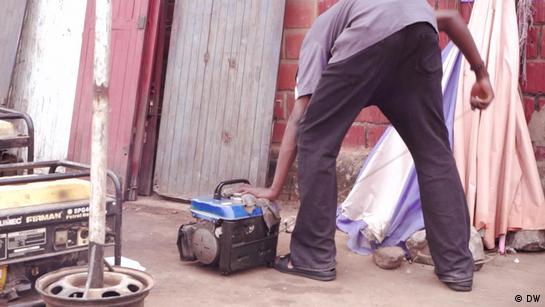
Technology has undoubtedly been helpful to mankind. However, in a continent like Africa, especially in Nigeria, where power outages are inevitable, can we truly say that technology has helped us when we do not have the privilege of a steady electricity supply?
A nation like Nigeria is blessed with talent, skills, creative minds, academics, professionals, entrepreneurs, and many others. But how can someone give their best when their laptop is not charged, their camera battery constantly signals that the battery is low, and their phone has run out of power?
How can an academic study or conduct research when their laptop is out of power? Yes, you may say that this is why books and other materials are available for research. But think about it: without electricity, even having access to adequate lighting to read books can become a challenge.
There is relevant information that may not be available in books but is stored online. You may suggest using a manual torchlight or even a candle, but when the torchlight’s battery dies and the candle burns out, there may be nothing left to rely on.
The world runs digitally, but technology cannot function effectively without electricity.
What could be the possible solution to this problem in Nigeria? Should we return to the way things were in the past, to the era before electricity and modern technology? Doing so would make it seem as though the rest of the world is moving forward while Nigeria is being left behind.
But wait! Think about it: why is there still no steady electricity supply even after people pay their bills? What is the root cause of this problem?
The major reasons for Nigeria’s electricity challenges are not necessarily a lack of resources but include the mismanagement of available resources, corruption, outdated infrastructure, and failure to invest adequately in the power sector. We have gas, water, and sunlight that could contribute significantly to meeting our energy needs, yet we continue to struggle with the will and capacity to maintain and modernise the systems that generate and deliver electricity.
If we fix the system and embrace alternative sources of power, Nigeria can survive and thrive in this digital world.
This article is not intended to complain or blame anyone. Rather, it seeks to address the challenge of electricity in a world increasingly driven by digital technology. I hope that the solutions to this problem will be taken seriously and implemented.
This is for a better Nigeria.